
Choosing your first instrument sets the foundation for your musical journey. When evaluating a specific model like the Enya EUC25D concert ukulele, the decision goes beyond brand recognition. This guide provides a structured framework to help you assess its playability, construction, and setup requirements, ensuring it aligns with your physical comfort and learning goals as a complete beginner.
Assessing Playability and Physical Comfort
Selecting the right ukulele size is the first step toward comfortable practice. A concert ukulele, with a scale length of approximately 15 inches (38 cm) and a total length of about 23 inches (58 cm), offers a practical middle ground for beginners. This size provides a slightly longer fretboard and wider fret spacing than a standard soprano model, making it easier for players with average to larger hands to press down on chords without feeling cramped.
The physical posture required to hold a concert-sized instrument is highly manageable for both adults and older children. You can comfortably cradle the curved body against your ribs with your forearm while your fretting hand moves freely along the neck. This balance helps prevent shoulder tension and allows you to focus entirely on learning basic chord shapes.
Products mentioned in this guide
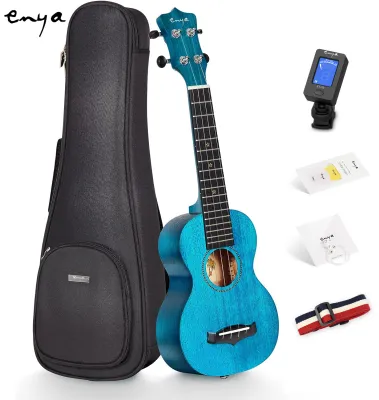
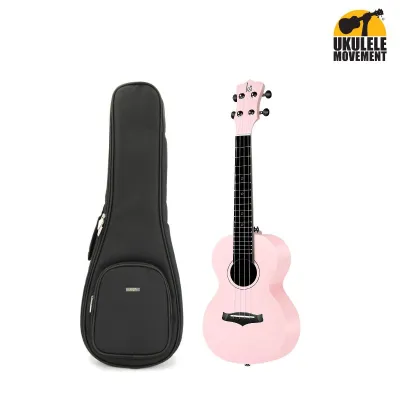
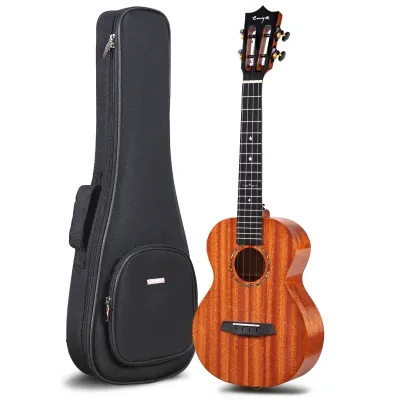
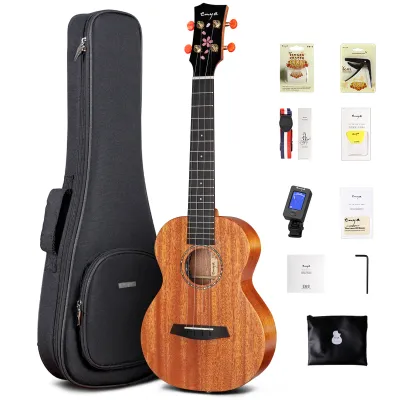
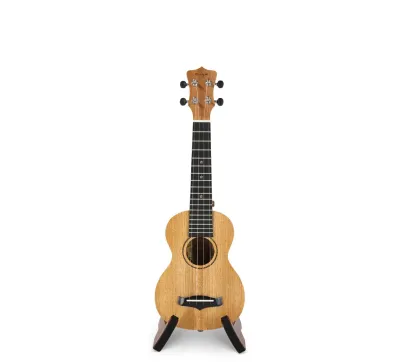
Prices are valid at publication and may change. Please refer to the product page for the latest price.
String action—the height of the strings above the fretboard—directly impacts how much effort is required to play. High action forces you to press down hard, leading to rapid finger fatigue and soreness, which can discourage daily practice. Conversely, excessively low action causes the strings to buzz against the metal frets. When inspecting the instrument, check that the string height at the 12th fret is roughly 2.5mm to 3.0mm, which is generally considered comfortable for beginners.
The neck profile and fretboard finish also play a significant role in hand comfort. A smooth, satin-finished neck allows your thumb to slide effortlessly during chord transitions. Run your fingers gently along the edges of the fretboard to check for sharp fret ends; well-finished frets should feel smooth and flush with the wood, preventing scratches or discomfort during active play.
Verifying Build Quality and Material Specs
Understanding the materials used in construction helps you gauge the instrument’s durability and sound characteristics. The Enya EUC25D is typically constructed from laminate mahogany or Sapele wood. While solid wood instruments are prized for their complex resonance, laminate wood consists of thin layers pressed together, making it exceptionally robust and less susceptible to structural damage.

In Singapore’s tropical climate, where relative humidity levels consistently hover between 70% and 90%, solid wood instruments are highly prone to swelling, warping, or cracking. Laminate construction offers a distinct advantage here, as it remains stable under high humidity and easily tolerates the dry, cool air of air-conditioned rooms. This makes it a low-maintenance choice for local players who do not want to manage strict climate-control setups.
Tuning stability is another critical factor for beginners, who may struggle to identify when their instrument has drifted out of pitch. Look closely at the headstock to identify the type of tuning machines installed. Sealed, die-cast geared tuners are preferable because their enclosed mechanisms protect the gears from dust, moisture, and corrosion, ensuring smoother rotation and more reliable tuning over time.
When unboxing your ukulele, perform a systematic visual inspection to verify its build quality. Check the bridge area to ensure there is no visible lifting or separation from the soundboard. Inspect the joints where the neck meets the body, and look inside the soundhole using a flashlight to check for excess glue residue, loose internal bracing, or rough, unsanded wood edges.
Evaluating the Learning Curve and Setup Needs
Most entry-level ukuleles come equipped with factory-installed strings, which are often made of fluorocarbon or nylon. While these strings are perfectly functional for starting out, their tension and gauge might not suit every player’s fingers. If the strings feel too stiff or produce a dull, muddy sound, upgrading to a set of high-quality aftermarket fluorocarbon strings can immediately improve both the playability and the acoustic clarity of the instrument.
Even a well-made budget ukulele can benefit from a professional setup to optimize its playability. If you find that pressing chords near the nut requires an uncomfortable amount of force, the nut slots may need to be filed down slightly. Taking your instrument to a local music shop in Singapore for a professional setup—which typically costs between S$30 and S$60—can resolve these minor issues and make your early practice sessions much more enjoyable.
Many beginner packages include essential accessories such as a gig bag, a strap, a clip-on tuner, and spare strings. Evaluate the quality of these bundled items before purchasing. A padded gig bag is crucial for protecting the instrument from scratches during travel, while a reliable clip-on chromatic tuner is indispensable for keeping your instrument in tune, especially during the first few weeks when new strings are stretching.
Making Your Final Decision: Who Is This Ukulele For?
The Enya EUC25D concert ukulele is well-suited for casual hobbyists, adult beginners, and older children who want a durable, low-maintenance instrument to learn basic strumming and fingerpicking. Its robust laminate construction makes it an excellent choice for those who travel frequently or prefer not to worry about strict humidity control in their homes.
If you have very small hands or are purchasing an instrument for a young child, a smaller soprano ukulele might be easier to handle physically. Conversely, if you have larger hands or prefer a deeper, warmer tone with more projection, a tenor ukulele with a longer scale length might be a more appropriate starting point for your musical journey.
Before finalizing your purchase, verify the return policies and warranty terms offered by your local retailer or online distributor. Ensure that you have an inspection window to check for manufacturing defects and that there is accessible customer support in Singapore to handle any potential warranty claims or structural issues.
Frequently Asked Questions (FAQ)
Do I need to humidify the Enya EUC25D in Singapore's climate?
Because the EUC25D is constructed from laminate wood, it does not require strict humidification or dehumidification like a solid-wood instrument would. However, you should still protect it from extreme environmental shifts. Avoid leaving the ukulele in direct sunlight, inside a hot car, or directly under an air conditioning vent, as rapid temperature and humidity changes can still weaken the glue joints and affect the neck alignment over time.
Can I easily upgrade the strings on this concert ukulele myself?
Yes, changing strings is a straightforward task that beginners can learn to do at home. The EUC25D typically features a standard tie-bar or bridge-pin system. To upgrade, slowly loosen the old strings using the tuning pegs, remove them, and thread the new strings through the bridge. Tie a secure knot at the bridge end, pull the string up to the headstock, thread it through the tuning post, and wind it slowly while maintaining tension. Always wear eye protection and trim the excess string ends only after the instrument is fully tuned.
What should I do if the tuning pegs slip during my first week?
In most cases, what feels like a slipping tuning peg is actually the natural stretching of new nylon or fluorocarbon strings, which can take several days of regular tuning to settle. If a tuning peg is physically turning back on its own, check the small screw at the end of the peg button. Gently tightening this screw with a phillips-head screwdriver increases the friction of the gear mechanism, preventing it from slipping. If the peg continues to slip after tightening, consult a local music store technician for assistance.

Community discussion
Share your experience or ask a question. Comments are reviewed before publication.