
Whether Brianna Wiest’s The Mountain Is You is worth your time and money depends heavily on what you expect from a self-help book. If you are looking for a deeply reflective, poetic exploration of subconscious blocks and emotional healing, this book offers genuine value that justifies its massive online popularity. However, if you require clinical frameworks, scientific data, or highly structured behavioral exercises, you may find its essay-style chapters somewhat repetitive and abstract.
The book serves as a mirror for readers willing to examine their own self-sabotaging behaviors, but it is not a substitute for professional therapy. By understanding how the text balances emotional resonance with practical limitations, you can make an informed decision before purchasing a copy or borrowing it from your local library.
What Is 'The Mountain Is You' Actually About?
At its core, The Mountain Is You argues that the greatest obstacles we face are not external circumstances, but rather our own subconscious coping mechanisms. The “mountain” represents the accumulation of co-existing needs, past traumas, and fears that manifest as self-sabotage. Brianna Wiest explains that we do not self-sabotage out of a desire to fail, but because these behaviors serve a hidden, protective function that keeps us within our comfort zones.
Products mentioned in this guide

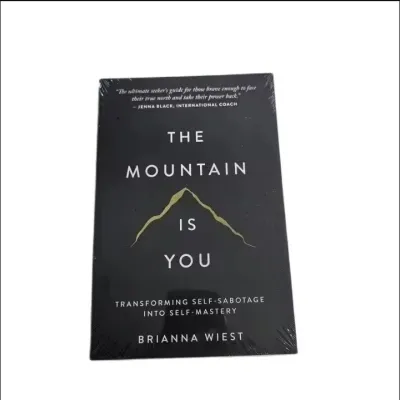
![[ebook]The mountain is you](https://img.lazcdn.com/g/p/4cb24f5bf4ab3257b4cccc88359511dd.jpg_400x400q80.jpg_.webp)
![[ebook] Brianna Wiest 5 IN 1 | 101 Essays That Will Change The Way You Think | The Mountain Is You | I Am The Hero | Salt Water](https://img.lazcdn.com/g/p/a5cb61e40e0bf66e28b46bad2fbe92bb.jpg_400x400q80.jpg_.webp)
Prices are valid at publication and may change. Please refer to the product page for the latest price.
The book is structured as a series of thematic essays rather than a linear, academic textbook. It guides the reader through a progressive journey, starting with identifying the subtle ways self-sabotage manifests in daily life, such as procrastination, perfectionism, and emotional avoidance. From there, it transitions into understanding emotional intelligence, releasing past trauma, and ultimately building a resilient, future-oriented self.
Rather than offering a rigid set of rules, the text focuses on shifting your perspective. It encourages you to view your internal resistance not as a personal failing, but as a signal that your current lifestyle no longer aligns with your deeper needs. This philosophical approach aims to help readers transition from self-judgment to self-curiosity.
Separating Social Media Buzz from Practical Value
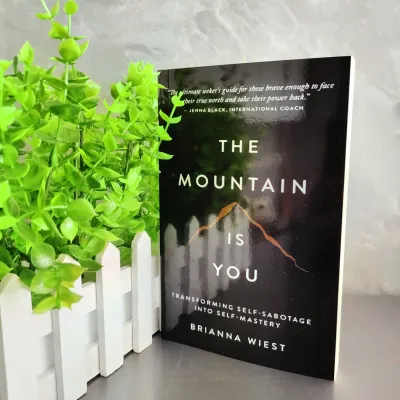
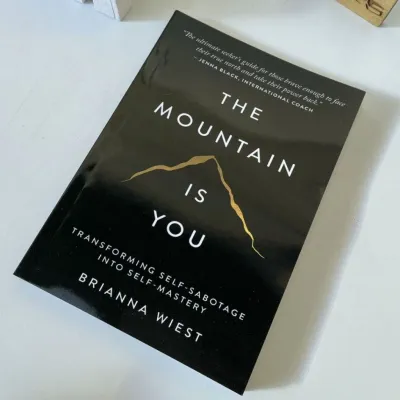
It is nearly impossible to browse online book communities or social media platforms without encountering aesthetic photos of this book’s minimalist cover or highlighted quotes about healing and growth. This viral marketing has undoubtedly fueled its bestseller status, but it also creates a gap between expectation and reality. Many of the book’s most popular quotes are highly shareable, but a single poetic sentence does not always translate into a comprehensive life strategy.

When you look past the curated online excerpts, you find a text that excels at emotional validation. Wiest has a unique ability to articulate complex, internal struggles in a way that makes readers feel deeply understood. The chapters on emotional intelligence and processing grief offer comforting, insightful perspectives that can help break down the isolation often felt during personal crises.
Reflecting on these insights can be powerful, but the book’s primary limitation lies in its lack of clinical depth and scientific backing. Readers seeking cognitive behavioral therapy (CBT) techniques, peer-reviewed psychological studies, or rigorous data will find the text lacking. The advice is largely observational and philosophical, which can sometimes feel repetitive across different chapters. Without a structured, step-by-step framework to guide the transition from insight to action, some readers may struggle to apply these concepts to their daily routines.
Who Will Benefit Most from Reading This Book?
This book is highly suited for chronic overthinkers, perfectionists, and individuals who feel stuck in repetitive life patterns but cannot quite pinpoint why. If you find yourself repeatedly abandoning projects, staying in unfulfilling relationships, or experiencing unexplained anxiety when things are going well, Wiest’s insights into the subconscious mind can provide a helpful starting point for self-reflection.
It is also an excellent choice for readers who appreciate a gentle, compassionate tone in self-improvement literature. The writing style is supportive rather than demanding, making it a comforting companion during periods of transition, career changes, or personal healing. If you enjoy journaling and are comfortable doing the heavy lifting of self-analysis without a pre-made template, you will likely find the essays highly stimulating.
Conversely, this book is less likely to benefit those who are currently dealing with severe clinical conditions that require professional mental health interventions. It is also not ideal for highly analytical readers who demand empirical evidence, case studies, or structured behavioral experiments. If you prefer action-oriented guides with clear daily checklists, the abstract nature of this book may leave you feeling frustrated.
How to Read and Apply the Book Effectively
To extract the maximum value from The Mountain Is You, avoid the temptation to rush through it in a single sitting. Because the book is written in an essay-style format, reading too many chapters at once can lead to emotional fatigue or make the concepts feel overly repetitive. Instead, treat each chapter as a standalone meditation, reading just a few pages a day to allow the ideas to settle.
Pairing your reading with a dedicated journal is highly recommended. As you encounter Wiest’s prompts about your fears, secondary gains, and past experiences, take the time to write down your honest answers. The book acts as a catalyst for self-discovery, but the actual transformation occurs when you apply its general observations to your specific life circumstances.
Finally, focus on translating the book’s poetic insights into small, observable actions. If a chapter inspires you to set better boundaries, do not just contemplate the concept of boundaries; identify one specific conversation you need to have or one minor adjustment you can make to your schedule. This bridge between philosophical understanding and daily behavior is crucial for turning the book’s concepts into lasting change.
Alternatives to Consider Before Buying
Before spending around S$20 to S$30 on a physical copy of The Mountain Is You, it is wise to consider whether other self-improvement styles might better suit your current needs. If you prefer a highly practical, science-based approach to changing your behavior, books focused on habit formation and behavioral psychology may offer more immediate utility. These alternatives often provide concrete templates and tracking systems that are easier to implement.
For those who require structured emotional work, a dedicated self-help workbook designed by clinical psychologists—such as those focusing on cognitive behavioral therapy or acceptance and commitment therapy—might be a more effective investment. These workbooks feature guided exercises, worksheets, and evidence-based strategies tailored to specific challenges like anxiety or low self-esteem.
If you are intrigued by Brianna Wiest’s writing style but remain unsure if a full book is necessary, you can easily sample her work for free. The author has published numerous essays online across various digital platforms and publishing networks. Reading a few of these articles will give you a clear sense of her tone, vocabulary, and thematic focus, helping you decide if committing to a full-length book is the right choice for you.
Final Verdict: Is the Book Worth Your Time and Money?
Ultimately, The Mountain Is You is a worthwhile investment if you approach it with realistic expectations. Its strength lies in its ability to foster deep self-reflection and offer comfort during times of personal struggle. It does not provide a scientific blueprint for behavioral change, but it excels at helping you identify the emotional blocks that prevent you from moving forward.
If you appreciate beautiful prose and are looking for a gentle guide to help you unpack your subconscious habits, purchasing a physical copy to highlight and revisit is a solid choice. However, if you are on a budget or prefer to test the waters first, borrowing the book from a local library or opting for an audiobook version during your daily commute is an excellent, low-risk alternative.
Frequently Asked Questions (FAQ)
Is 'The Mountain Is You' based on scientific research?
No, the book is not an academic or clinical text. It is built primarily on philosophical observations, personal insights, and general psychological concepts rather than peer-reviewed scientific studies or clinical trials. If you require evidence-based frameworks or data-driven methodologies, you should consult the book’s bibliography or look for self-help literature written by practicing clinical psychologists.
How long does it take to read 'The Mountain Is You'?
At approximately 250 pages, the book can easily be read in a few days if you read continuously. However, because of its reflective nature and essay-style structure, a slower pace is highly recommended. Spending one to two weeks reading a single chapter per day allows adequate time to process the emotional concepts and complete any personal journaling exercises.

Community discussion
Share your experience or ask a question. Comments are reviewed before publication.