
Choosing your first digital piano is a critical step that shapes your entire musical journey. The Roland FP-30, along with its updated counterpart the FP-30X, is frequently recommended for beginners, but whether it is the right match for you depends on your specific learning goals, living space, and budget. For most novices, this instrument offers an excellent balance of realistic key resistance and high-quality sound, making it a highly suitable entry-point instrument. However, before making a purchase, you must evaluate its physical footprint, interface design, and the specific accessories included in local retail packages.
Core Requirements for a Beginner's First Digital Piano
To evaluate any digital piano objectively, you must first understand what a beginner needs to build proper habits. The most critical component is a fully weighted, 88-key keyboard with touch-sensitive action. Acoustic pianos rely on physical hammers striking strings, which creates natural resistance; practicing on unweighted or semi-weighted keys can prevent you from developing the finger strength and control required for expressive playing.
An authentic sound engine is equally vital for early ear training. A beginner needs an instrument that responds dynamically to how hard or soft a key is pressed, producing a wide range of tonal colors rather than just changing the volume. This responsiveness teaches you how to control your touch and listen critically to your own performance.
Products mentioned in this guide
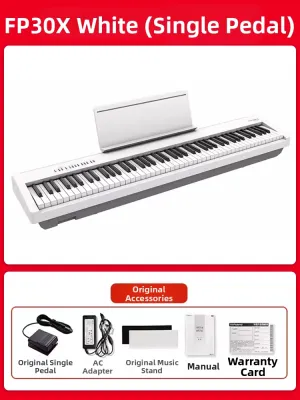
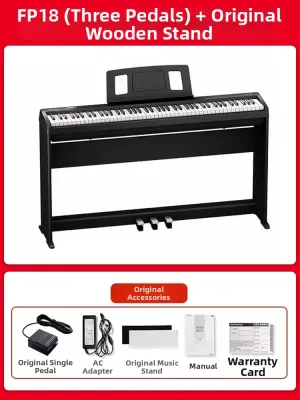
Prices are valid at publication and may change. Please refer to the product page for the latest price.
Essential connectivity options are necessary to support modern learning methods. Silent practice via headphones is a major advantage of digital instruments, especially in high-density housing environments where late-night practice might otherwise disturb neighbors. Additionally, ports for a sustain pedal and digital connections to computers or tablets allow you to use interactive learning software and sheet music apps.
Finally, you must consider the physical space and budget available in your home. A dedicated practice area with a stable stand and a proper bench encourages regular practice. Balancing these physical requirements with a realistic budget ensures you invest in an instrument that will support your progress for several years without unnecessary financial strain.
Evaluating the Roland FP-30 for Beginner Needs
When assessing the Roland FP-30 against these baseline requirements, its key action stands out as a primary strength. The instrument features Roland’s PHA-4 Standard keyboard, which utilizes a progressive hammer action with escapement. This design simulates the subtle “let-off” feel of an acoustic grand piano key when pressed gently, and the keys have a textured surface that mimics ivory, helping to absorb moisture from your fingers during long practice sessions.

The sound quality is driven by the SuperNATURAL sound engine, which uses modeling technology alongside traditional samples to create rich, organic piano tones. The built-in speakers are designed to project this sound clearly in small to medium-sized rooms, making it highly suitable for typical Singapore apartments where space is optimized. The dynamic response allows beginners to practice delicate pianissimo passages and powerful fortissimos with noticeable tonal variation.
Portability is another key factor for home setups. The slab-style design of the FP-30 makes it relatively easy to move compared to heavy, traditional console pianos. It can be placed on a portable stand and stored away if space is at a premium, though keeping it permanently set up is always recommended for consistent practice.
For modern learners, the inclusion of Bluetooth MIDI and USB connectivity is a significant benefit. These features allow you to connect the keyboard wirelessly or via cable to tablets and smartphones. This integration makes it simple to use interactive tutorial applications, digital sheet music readers, and music production software, keeping your practice sessions engaging and structured.
Potential Limitations to Consider Before Purchasing
While the Roland FP-30 offers robust features, there are several limitations you should consider before finalizing your purchase. One technical specification to verify is the polyphony limit, which determines how many individual notes or voices can sound simultaneously. While the original FP-30 features a 128-note polyphony, the newer FP-30X increases this to 256 notes; if you are buying a pre-owned or older stock model, a lower polyphony limit might eventually affect highly complex classical pieces with heavy sustain pedal usage.
Speaker projection is optimized for personal practice, but the downward-firing design of the speakers on certain stands can sometimes muffle the sound depending on your flooring. If you plan to play in a very large living area or perform for small gatherings, you may need to connect the instrument to an external keyboard amplifier or active speakers to achieve sufficient volume and clarity.
The control interface is highly minimalist, featuring only a few buttons and no built-in LCD screen. To change sounds, adjust the metronome tempo, or access advanced settings, you must press specific button combinations in conjunction with the piano keys. This can be confusing for beginners to navigate without keeping the user manual nearby, though using Roland’s companion mobile app can simplify these adjustments.
Additionally, you must verify the exact model version available at local music stores. The original FP-30 has been largely succeeded by the FP-30X, which features upgraded Bluetooth audio capabilities and dedicated line-out jacks. Ensure you check the product specifications carefully to know exactly which version you are purchasing, as older stock or specific regional bundles may lack these updated features.
Final Decision: Is It the Right Choice for You?
The Roland FP-30 (or FP-30X) is an excellent choice if your primary priority is a realistic, heavy key action that closely mimics an acoustic piano. If you have a moderate budget and want a compact, reliable instrument that fits comfortably into a shared bedroom or HDB flat, this model provides the essential tools needed to build proper classical or contemporary piano techniques.
However, you might want to look elsewhere if you prefer a wide variety of built-in rhythms, backing tracks, or advanced synthesizer controls, as this instrument focuses heavily on traditional piano performance. Those who prefer a traditional look may also want to consider a console-style digital piano with a fixed wooden cabinet and integrated three-pedal system, which offers greater physical stability but less portability.
Before checking out, always verify the warranty coverage provided by authorized local distributors in Singapore to protect your investment. Check the exact contents of the bundle you are purchasing, as some packages include only the keyboard slab, while others come complete with a matching wooden stand, a triple-pedal board, or a high-quality bench.
Frequently Asked Questions (FAQ)
Do I need to buy a separate stand and pedal unit?
Yes, you will generally need to purchase a stand and a stable pedal unit to ensure proper playing posture. While the basic package usually includes a plastic switch-style sustain pedal and a music rest, these entry-level pedals can slide around easily on tiled or wooden floors. Investing in a dedicated wooden stand or a sturdy double-braced X-stand, along with a more substantial, weighted sustain pedal, will prevent movement and help you maintain correct ergonomic alignment during practice.
Can I use headphones for silent practice?
Absolutely, using headphones is one of the best ways to practice without disturbing others in your household or neighborhood. The instrument features standard headphone jacks (typically both 3.5mm and 6.35mm sizes, though you should verify your specific model’s ports). For the best experience, choose comfortable over-ear headphones with a neutral sound profile, and always start with the master volume set low to protect your hearing during long practice sessions.
How do I connect the piano to learning apps?
You can connect the piano to learning apps either wirelessly via Bluetooth MIDI or using a physical USB cable. To connect via Bluetooth, enable the connection within your chosen app’s settings rather than your mobile device’s general Bluetooth menu. If you prefer a wired connection, use a standard USB Type-B to Type-A (or Type-C) cable to link the keyboard’s USB computer port directly to your tablet or computer, ensuring low-latency data transfer for interactive lessons.

Community discussion
Share your experience or ask a question. Comments are reviewed before publication.