
Choosing your first keyboard is a pivotal step in your musical journey, and the Roland GO:KEYS-5 presents a modern, feature-rich option for beginners. Whether this instrument is the right fit for your learning goals depends on your musical style, space constraints, and how you plan to practice. If you want to explore diverse sounds, play along with backing tracks, and enjoy a highly portable setup, this model offers a compelling entry point. However, if your primary goal is to master classical piano technique, you will need to weigh its features against other keyboard designs.
Assess Your Practice Space and Portability Needs
Before purchasing any keyboard, you must evaluate where it will sit in your home and how often you plan to move it. In compact living environments, such as typical apartments or HDB flats in Singapore, floor space is highly valuable. You should measure your available desk, table, or keyboard stand space and compare these measurements directly with the manufacturer’s official dimensions. This ensures the instrument fits comfortably without obstructing walkways or requiring constant rearrangement of your living area.
The type of stand you choose also impacts the overall footprint. An X-stand or Z-stand can be folded and stored away, which is ideal if you do not have a dedicated music room. If you plan to store the keyboard in a closet or under a bed when not in use, verify the instrument’s depth and height in the product specifications to ensure it fits into your designated storage space.
Products mentioned in this guide
![Roland GO:KEYS 5 Portable Music-Making Electronic Keyboard 61 Keys Zen-Core Engine Bluetooth Battery-Powered GO KEYS 5 [LIMITED STOCK/PREORDER]](https://img.lazcdn.com/g/p/d90271e7533f2be96df92acba29b1521.jpg_400x400q80.jpg_.webp)
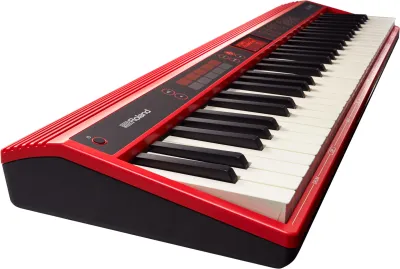
Prices are valid at publication and may change. Please refer to the product page for the latest price.
Portability is another critical factor to consider. If you plan to take your instrument to music lessons, jam sessions, or outdoor gatherings, you must check the weight specifications in the product manual to ensure you can carry it comfortably. Carrying an instrument on public transport like the MRT requires a lightweight design and a suitable gig bag.
The option for battery power is highly beneficial for those who want to play in spaces without easy access to a wall outlet, such as a balcony, a local park, or during travel. Conversely, if you plan to keep the keyboard in a dedicated spot near an electrical outlet, a standard power adapter will be your primary power source, making battery compartment features less critical for your daily routine.
Evaluate Your Musical Goals and Sound Expectations
Your musical aspirations should dictate the type of keyboard you choose. If your primary goal is to play traditional classical piano repertoire, you will require an instrument that closely mimics the feel and response of an acoustic piano. However, if you are drawn to modern genres like pop, electronic music, or jazz, a keyboard with a vast library of synth, organ, and brass sounds will keep your practice sessions engaging. The Roland GO:KEYS-5 is designed to cater to those who want to explore a wide sonic palette rather than focusing solely on a single acoustic piano sound.

For aspiring songwriters and solo performers, built-in auto-accompaniment and rhythm features are invaluable. These tools allow you to play along with a virtual band, helping you understand timing, chord progressions, and arrangement. This interactive style of practice can be much more motivating for beginners than practicing with a simple metronome.
When evaluating this model, check the manufacturer’s specifications for polyphony—the number of individual notes the keyboard can play simultaneously. Higher polyphony prevents notes from cutting off abruptly when you play complex chords while holding down a sustain pedal or using backing tracks.
Additionally, review the speaker output specifications to ensure the built-in sound system delivers adequate volume for your practice room without requiring external amplification. If you live in a shared household or close-quarters apartment, check the headphone jack specifications (such as whether it requires a 3.5mm or 6.35mm adapter) so you can practice quietly at any hour without disturbing others.
Check the Learning Features and Connectivity
Modern learning methods often rely heavily on digital integration, making connectivity a key consideration for beginners. You should verify the Bluetooth MIDI and audio capabilities of the keyboard to see how easily it pairs with your smartphone, tablet, or computer. Bluetooth audio allows you to stream backing tracks or video lessons directly through the keyboard’s speakers, while Bluetooth MIDI lets you interact with interactive learning software.
It is important to distinguish between these two types of wireless connections. Bluetooth audio is strictly for sound playback, whereas Bluetooth MIDI transmits note data, allowing apps to detect which keys you are pressing in real-time. Before committing, check which educational apps and software are compatible with the instrument’s ecosystem across iOS, Android, macOS, and Windows.
Many beginners find that gamified learning apps or step-by-step digital courses accelerate their progress. Additionally, look for essential built-in practice tools within the keyboard’s interface. A reliable metronome is crucial for developing a steady sense of rhythm, while transposition functions allow you to change the key of a song easily to match your vocal range or play along with difficult sheet music in a simpler key.
A built-in recording function is also highly beneficial. Listening back to your practice sessions is one of the most effective ways to self-evaluate, identify timing errors, and track your progress over time.
Compare Alternatives Based on Your Diagnosis
As you diagnose your needs, it is helpful to compare this style of keyboard with other options on the market. If you are serious about classical piano training or plan to take graded exams (such as ABRSM), a digital piano with fully weighted, hammer-action keys is generally necessary. These keys simulate the physical resistance of an acoustic piano’s hammers, which is essential for building the finger strength and expressive control required for advanced classical pieces.
A semi-weighted or synth-action keyboard, while easier to play initially, will not provide the same tactile feedback. Transitioning from unweighted keys to a real acoustic piano can be difficult for students who have not developed the necessary finger technique.
If your budget is a primary constraint and you only require a basic acoustic piano sound for simple practice, you might find that extensive synth libraries and accompaniment features are unnecessary extras. In such cases, a simpler, entry-level digital keyboard without advanced production tools may offer better value for your money, allowing you to allocate your budget toward a high-quality stand or sustain pedal.
Furthermore, if you have a dedicated music room and do not require portability, a permanent, furniture-style digital piano might be a more suitable aesthetic and functional choice for your home. These instruments often feature built-in pedals and a sliding key cover, providing a more traditional playing experience.
Final Verdict: Should You Buy the Roland GO:KEYS-5?
The decision to purchase the Roland GO:KEYS-5 ultimately comes down to aligning its specific feature set with your personal learning path. You should consider buying this model if you have limited practice space, value portability, and want to explore a diverse range of sounds and interactive backing styles. Its modern connectivity options make it a suitable match for learners who prefer using apps and digital tools to guide their practice.
On the other hand, you should look at alternative options if your primary focus is classical piano technique that demands weighted keys, or if you require a stationary instrument with a traditional look. By carefully comparing your physical space, musical preferences, and learning style against the specifications outlined in the manufacturer’s documentation, you can confidently decide if this keyboard is the right investment for your musical journey.
Frequently Asked Questions (FAQ)
Does the Roland GO:KEYS-5 have weighted keys?
No, this model does not feature fully weighted, hammer-action keys. It typically utilizes synth-action or semi-weighted keys, which are lighter and springier to the touch. This key action is well-suited for playing fast synth lines, organ parts, and pop arrangements, but it does not replicate the heavy feel of an acoustic piano. If you require a realistic piano touch for classical training, you should check the manufacturer’s specifications for models featuring hammer-action keys.
Can I connect the keyboard to a computer for music production?
Yes, you can connect this keyboard to a computer to use it as a MIDI controller for music production. This connection is typically established via a USB cable or through Bluetooth MIDI, depending on your computer’s hardware and operating system. You should consult the user manual to verify the specific system requirements, driver installations, and compatible Digital Audio Workstation (DAW) software to ensure a seamless setup with your production environment.

Community discussion
Share your experience or ask a question. Comments are reviewed before publication.