
Choosing your first keyboard is a pivotal step in your musical journey, and the Roland GO:PIANO is a popular candidate for adult beginners. For many, this instrument offers a practical entry point due to its compact footprint, lightweight design, and modern digital features. However, whether it is the right fit for you depends heavily on your long-term musical aspirations, your physical practice environment, and your expectations regarding key feel.
If your goal is to learn casual pop songs, understand chord progressions, or practice in a space-constrained home, this keyboard provides an accessible, feature-rich platform. Conversely, if you aspire to master classical repertoire or transition quickly to an acoustic piano, you may find its physical limitations restrictive. Evaluating how its specific design choices align with your learning path will help you make an informed investment.
Assess Your Learning Goals and Practice Environment
Before purchasing any instrument, it is essential to define what you want to achieve as a pianist. Adult beginners generally fall into two categories: those seeking a casual, creative hobby and those pursuing a structured, classical education. If you fall into the former category, focusing on pop chords, lead sheets, and basic songwriting, a portable keyboard like the Roland GO:PIANO is highly suitable. It allows you to quickly learn the layout of the keys and start playing simple arrangements without a massive financial or spatial commitment.
Products mentioned in this guide
![Roland GO:PIANO88X GO-88PX Digital Electronic Keyboard Keys Touch Sensitive LCD gopiano Bluetooth Support GO PIANO 88 GO-88P X GO88PX [LIMITED STOCK]](https://img.lazcdn.com/g/p/17e4492aa8106fa4a17025cb103cb8f9.jpg_400x400q80.jpg_.webp)
![Roland GO:KEYS 3 Portable Music-Making Electronic Keyboard 61 Keys Zen-Core Engine Bluetooth Battery-Powered GO KEYS 3 [LIMITED STOCK]](https://img.lazcdn.com/g/p/aff5a2a6d544d118d346871a4153a7e2.jpg_400x400q80.jpg_.webp)
![Roland GO:KEYS 5 Portable Music-Making Electronic Keyboard 61 Keys Zen-Core Engine Bluetooth Battery-Powered GO KEYS 5 [LIMITED STOCK/PREORDER]](https://img.lazcdn.com/g/p/d90271e7533f2be96df92acba29b1521.jpg_400x400q80.jpg_.webp)
Prices are valid at publication and may change. Please refer to the product page for the latest price.
For those aiming for rigorous classical training or preparing for formal graded exams, the requirements are different. Classical music frequently demands a full range of keys and a highly responsive, weighted action to develop proper finger strength and expressive control. Starting on a lighter, non-weighted keyboard can sometimes lead to habits that require adjustment when you eventually transition to a traditional piano.
Your physical living environment also plays a major role in this decision. In compact living arrangements, such as typical high-rise apartments or shared flats, finding space for a full-sized acoustic piano or a heavy furniture-style digital piano can be challenging. A compact keyboard fits easily on a small desk or a folding stand, making it ideal for tight spaces. Furthermore, the ability to plug in headphones allows you to practice at any hour of the day or night without disturbing family members or neighbors, a crucial feature for busy adults who may only find time to practice late in the evening.
Finally, align your budget expectations with what entry-level instruments can realistically offer. While you can find highly affordable options, extremely low-cost keyboards often compromise on sound quality and key response. Investing in a reputable entry-level model ensures you receive reliable build quality and a sound engine that remains pleasant to listen to as your ear develops. Check local music retailers to compare current S$ pricing and package deals that may include essential accessories.
Evaluate the Key Action and Sound for Your Goals
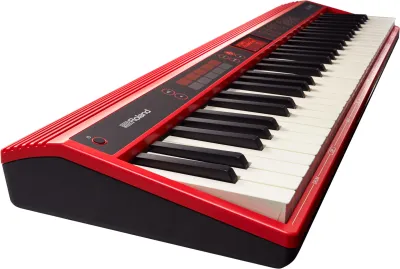
The physical feel of the keys—often referred to as the key action—is one of the most critical factors in your development as a player. The Roland GO:PIANO features a keyboard design that sits between a traditional synth-action keyboard and a fully weighted digital piano. Synth-action keys are spring-loaded and offer very little resistance, which is excellent for playing fast organ or synthesizer lines but less ideal for piano technique. The keys on this model are full-sized and designed to mimic the look of piano keys, but they lack the heavy, hammer-action mechanism found in acoustic pianos.

For an adult beginner, this lighter action means your fingers will not have to work as hard initially, which can reduce early fatigue. However, it also means you will not build the specific finger stamina and control needed to play on a traditional acoustic piano. If you plan to perform on acoustic pianos in the future, practicing on a non-weighted keyboard might make those instruments feel heavy and difficult to control.
Key count is another practical consideration. While a standard piano has 88 keys, this portable model features 61 keys. For the first year or two of learning, 61 keys are generally sufficient for most beginner methods, pop songs, and basic classical pieces. However, as you progress to intermediate classical repertoire or complex arrangements that span a wider octave range, you will eventually run out of keys on both the lower and upper ends of the keyboard.
Dynamic expression is achieved through touch sensitivity, which allows the instrument to play louder or softer depending on how hard you strike the keys. When evaluating this keyboard, verify the manufacturer’s specifications regarding its touch-sensitivity settings. A good beginner keyboard should offer adjustable touch curves, allowing you to customize how the sound engine responds to your physical touch. This feature is vital for learning how to play with emotion and variation, preventing your music from sounding flat and mechanical.
Check Built-in Learning Tools and App Connectivity
Modern digital keyboards offer a variety of built-in tools designed to make self-study more engaging and structured. A built-in metronome is perhaps the most critical tool for any beginner, helping you develop a steady sense of rhythm and timing from your very first lesson. Additionally, basic onboard recording functions allow you to record your practice sessions and play them back. Listening to your own playing objectively is an excellent way to identify uneven timing or missed notes that you might not notice while actively playing.
One of the standout features of the Roland GO:PIANO is its wireless connectivity. With built-in Bluetooth MIDI and Audio, you can connect the keyboard directly to your smartphone or tablet. This integration allows you to use interactive learning applications that guide you through lessons, offer real-time feedback on your accuracy, and provide digital sheet music. Instead of relying solely on traditional books, you can engage with gamified learning platforms that keep you motivated.
Before relying on these features, it is important to verify compatibility. Check the manufacturer’s documentation to ensure the keyboard’s Bluetooth protocols are fully compatible with your specific mobile device’s operating system, whether you use iOS or Android. Additionally, consider how you will mount your device. A sturdy music rest that can securely hold a tablet at eye level is essential for maintaining good posture while reading digital scores or following app-based tutorials.
Review Portability, Power Options, and Daily Use
Portability is a major selling point for compact keyboards, especially for adults who value flexibility. If you need an instrument that can be easily tucked away in a closet when not in use, or moved from the living room to the bedroom, physical dimensions and weight are key. A lightweight instrument allows you to set up your practice space wherever it is most convenient at any given moment, rather than dedicating a permanent corner of a room to a heavy piece of furniture.
Power options further enhance this flexibility. While most players will primarily use the included AC adapter to plug the keyboard into a wall outlet, the option to run the instrument on battery power is highly convenient. This allows you to practice in areas without easy access to power outlets, such as a balcony, a park, or during travel. Always check the user manual to confirm the specific type and number of batteries required, as well as the expected operating time under battery power.
The quality of the built-in speakers is another factor that directly impacts your daily practice experience. While headphones are excellent for quiet practice, you will also want to play unplugged to share your progress or simply enjoy the sound filling the room. Ensure the built-in speakers offer sufficient volume and clarity without distorting at higher levels. Clear, high-quality sound reproduction makes practice sessions much more enjoyable and helps you better appreciate the nuances of the instrument’s built-in piano tones.
Identify When to Consider Alternatives or Upgrades
While the Roland GO:PIANO is an excellent entry point for many, it is not the universal solution for every aspiring pianist. Recognizing when this instrument might limit your progress will save you time and money in the long run. If your primary goal is to pass classical piano examinations or to play advanced classical literature, you should bypass 61-key portable models entirely. Instead, look for an 88-key digital piano featuring a fully weighted, graded hammer-action keyboard that accurately simulates the physical resistance of an acoustic piano.
If you have the physical space and a larger budget, a furniture-style digital piano is often a superior long-term investment. These instruments offer more powerful speaker systems, integrated pedal boards, and a physical presence that encourages regular practice. Alternatively, if budget is a constraint but you still require weighted keys, exploring the used market for reputable digital piano brands can yield excellent value, provided you thoroughly test the instrument’s functionality before purchasing.
Ultimately, the best way to validate your expectations is to experience the instrument firsthand. If possible, visit a local music showroom to test the key action and listen to the sound quality in person. If visiting a store is not feasible, carefully consult the official user manual and watch high-quality demonstration videos to ensure the keyboard’s physical response and features align with your personal learning goals.
Frequently Asked Questions (FAQ)
Do I need a separate stand and bench for proper practice?
Yes, investing in a dedicated stand and an adjustable bench is highly recommended for adult beginners. Placing a keyboard on a standard dining table or desk often positions the keys too high, leading to wrist strain and poor posture. A proper setup allows you to adjust the height so your forearms are parallel to the floor, which helps prevent fatigue and long-term physical discomfort during extended practice sessions.
Can I connect the keyboard to a computer for basic music production?
Yes, you can connect this keyboard to a computer to use it as a MIDI controller for digital audio workstations (DAWs). This connection can typically be established via a standard USB cable or through Bluetooth MIDI, depending on your computer’s hardware and operating system. Always verify your computer’s OS compatibility and check the manufacturer’s guidelines to determine if specific drivers or cables are required for a stable connection.

Community discussion
Share your experience or ask a question. Comments are reviewed before publication.