
Quick Answer: Who Should Consider the Yamaha P-225?
The Yamaha P-225 is an excellent choice for beginners who need a space-saving, 88-key weighted digital piano that integrates well with modern learning apps. It is particularly well-suited for those living in compact apartments where space is limited and silent practice is essential.
However, there are key trade-offs to consider. The slim profile means the built-in speakers are smaller than those on larger console-style digital pianos, which may require external amplification or high-quality headphones for the best sound experience. If you are on a very tight budget or are unsure of your long-term commitment, you might want to pause and explore simpler, non-weighted keyboards as a lower-risk entry point.
Evaluating the Key Action for Beginner Development
For anyone learning to play, the physical feel of the keys is the most critical factor in developing proper finger strength and classical technique. The Yamaha P-225 features the Graded Hammer Compact action, designed to simulate the physical resistance of an acoustic piano. This mechanism replicates the natural weight distribution of a traditional keyboard, where the keys in the lower register feel heavier than those in the higher register.
Products mentioned in this guide
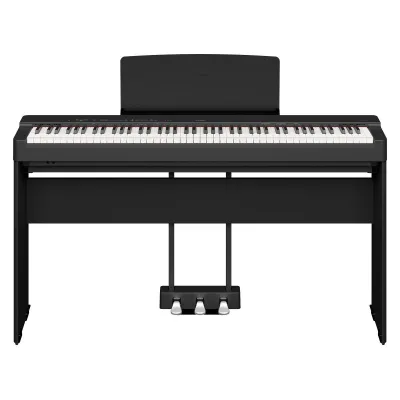
Prices are valid at publication and may change. Please refer to the product page for the latest price.

When evaluating this instrument, check the adjustable touch sensitivity settings. Beginners often start with a lighter touch setting to accommodate developing hand strength, gradually shifting to a medium or heavy setting as control improves. This adjustability ensures the keyboard adapts to your physical progress over time, preventing early fatigue while encouraging proper hand posture.
Another practical consideration, especially in shared living spaces or high-density housing in Singapore, is the mechanical noise of the key action. Even when playing with headphones, the physical thumping of weighted keys can transfer through tables or floors. You should test the keybed in a quiet environment to assess whether the mechanical noise level is acceptable for your household and neighbors, particularly during late-night practice.
Sound Quality and Polyphony: Will It Grow With You?
A digital piano’s sound engine must reproduce the expressive nuances of your playing as you transition from basic exercises to complex pieces. When researching the Yamaha P-225, verify the manufacturer’s stated polyphony limit. Polyphony refers to the maximum number of individual notes the instrument can produce simultaneously. A high polyphony limit, such as 192 notes, ensures that sustained chords and complex pedaled passages will not suffer from dropped notes as you progress to intermediate repertoire.
The built-in speaker system is designed to project sound both upward and downward to create an immersive listening experience. However, because of the compact chassis, you should evaluate whether the speaker output is sufficient for the acoustics of your practice room. For those who plan to practice quietly, verify that the instrument features dual headphone jacks, which allow both a student and a teacher to monitor the performance simultaneously.
Additionally, review the variety of built-in instrument voices. While the primary grand piano sample is the most critical for daily practice, having access to alternative voices like electric pianos, organs, and string ensembles can add variety to your practice routines and keep learners engaged.
Learning Tools and App Connectivity
Modern digital pianos offer a range of digital tools designed to accelerate the learning process. One of the primary advantages of the Yamaha P-225 is its compatibility with the manufacturer’s dedicated control application, Smart Pianist. You should verify that your smart device is compatible with this app, which allows you to select voices, configure splits, and view chord charts on a visual interface.
Beyond app integration, check for essential built-in practice functions. A reliable built-in metronome is indispensable for developing a steady sense of rhythm. You should also look for duo-mode functions; these split the keyboard into two identical halves with the same octave range, enabling a teacher and student to sit side-by-side and play the exact same notes during a lesson.
Finally, confirm the physical and wireless connectivity options. To integrate the piano with third-party online lesson platforms, interactive sheet music apps, or music production software, check for USB-to-Host ports or compatible Bluetooth MIDI adapters. Ensuring you have the correct cables or wireless accessories from the start will prevent frustration when setting up your digital learning environment.
Portability, Setup, and Space Requirements
Before finalizing your purchase, plan where the digital piano will sit in your home. In compact Singaporean apartments, maximizing floor space is a priority. Measure the physical dimensions and weight of the keyboard unit to ensure it fits comfortably in your designated practice area without obstructing walkways.
You will also need to decide on the stand and pedal configuration. While a basic, portable metal stand is convenient if you need to pack the keyboard away after practice, it can sometimes wobble during vigorous playing. For a more stable setup, look into matching wooden stands designed specifically for this model. These dedicated stands provide superior stability and allow you to attach a matching three-pedal unit, which becomes necessary as you begin learning classical pieces that require soft and sostenuto pedaling.
If you plan to transport the instrument frequently for lessons, check the weight of the keyboard alone. A lightweight, slim design makes it much easier to carry in a padded gig bag, though you should always ensure that any portable setup is placed on a flat, level surface to maintain proper playing posture.
Alternatives to Consider Before You Buy
While the Yamaha P-225 is a strong contender, compare it against other options to ensure it aligns with your specific budget and goals. If you are purchasing an instrument for a young child and are unsure of their long-term interest, a simpler, non-weighted 61-key keyboard might be a more practical, low-cost starting point. These entry-level keyboards are lighter and highly affordable, though they do not prepare a student for the physical feel of an acoustic piano.
If you are committed to learning on an 88-key weighted keyboard, compare the P-225’s features against competing models in the same price bracket. Pay close attention to differences in user interface design—some models rely heavily on smart device apps for adjustments, while others feature physical buttons on the keyboard itself. Also, compare the placement and wattage of the built-in speakers, as this greatly affects how the instrument sounds in a room.
Before making your final decision, verify the local warranty terms and authorized dealer support in Singapore. Purchasing from an authorized local retailer ensures you receive a genuine product with a valid local warranty, protecting your investment. Be sure to check the current retail pricing in S$ and look out for bundle deals that include essential accessories like a stand, bench, and headphones.
Frequently Asked Questions (FAQ)
Do I need to buy a separate stand and bench for the Yamaha P-225?
Yes, the standard retail package typically includes only the keyboard unit, a music rest, a power adapter, and a basic sustain pedal. To ensure a comfortable and ergonomically correct playing posture, you will need to purchase a sturdy stand and an adjustable bench separately. Investing in an adjustable bench is highly recommended for beginners, as it allows you to set the correct height to prevent wrist strain and fatigue during long practice sessions.
Can I use the Yamaha P-225 with online piano lesson apps?
Yes, you can connect the instrument to a variety of popular online piano lesson and sheet music applications. To do this, you will need to use a compatible USB cable or a wireless MIDI adapter to connect the keyboard’s USB-to-Host port to your tablet, smartphone, or computer. Always check the specific system requirements and supported device list of your chosen learning app before purchasing any connection cables.
Is the Yamaha P-225 better than an acoustic piano for a first-time buyer?
For most first-time buyers, a digital piano like the Yamaha P-225 offers significant practical advantages over a traditional acoustic piano. It does not require regular, costly professional tuning, and its performance is unaffected by Singapore’s high humidity, which can warp acoustic piano soundboards. Additionally, the ability to control the volume and practice silently with headphones makes it much easier to integrate into a shared household or apartment building. However, while high-quality digital pianos simulate the feel and sound of an acoustic instrument very well, they do not fully replicate the complex physical vibrations and acoustic resonance of a traditional wooden piano.

Community discussion
Share your experience or ask a question. Comments are reviewed before publication.