
Deciding whether to invest your time and money in Thinking, Fast and Slow depends entirely on your reading goals, your patience for academic prose, and your preferred learning style. While this seminal work by Nobel laureate Daniel Kahneman is widely celebrated as a masterpiece of behavioral economics, it is not a breezy self-help book filled with quick productivity hacks. For first-time readers, it represents a significant commitment of mental energy that can either transform how you view human behavior or leave you feeling bogged down by academic detail.
If you are looking for a deep, scientifically rigorous exploration of cognitive biases and decision-making, this book remains an essential read. However, if you prefer fast-paced narratives with immediate, step-by-step instructions, you may find its textbook-like density challenging. Understanding what the book actually delivers, how much time it requires, and who benefits most from its pages will help you make an informed decision before purchasing a copy or reserving one at your local library.
Deconstructing the "Must-Read" Reputation: What the Book Actually Delivers
At its core, the book introduces a simple yet profound framework for understanding the human mind: the division of cognitive processes into System 1 and System 2. System 1 operates automatically, quickly, and with little or no effort, handling everyday tasks like recognizing a familiar voice or reading a billboard. System 2, by contrast, allocates attention to the effortful mental operations that demand it, such as calculating a complex math problem or filling out a tax form. Most of the book explores the fascinating, often predictable ways these two systems interact, conflict, and lead us into cognitive traps.
Products mentioned in this guide
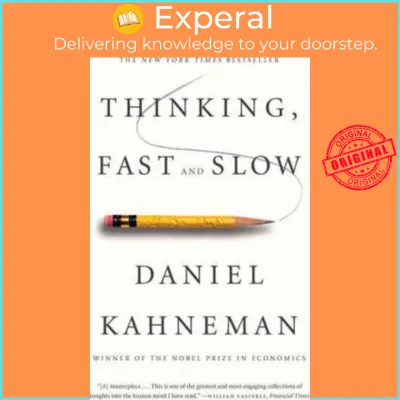
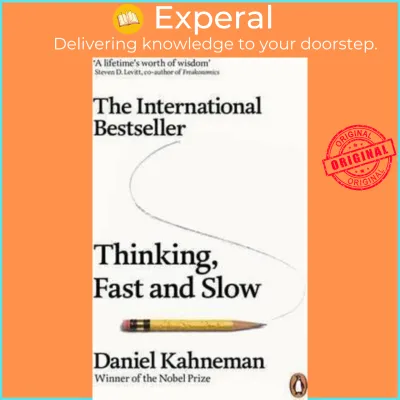
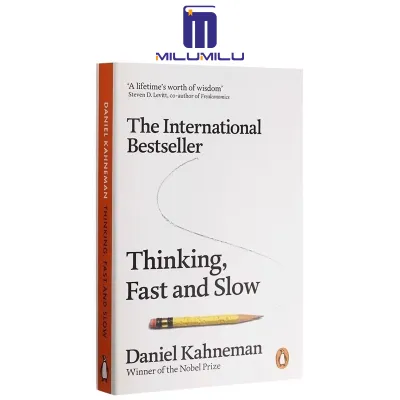
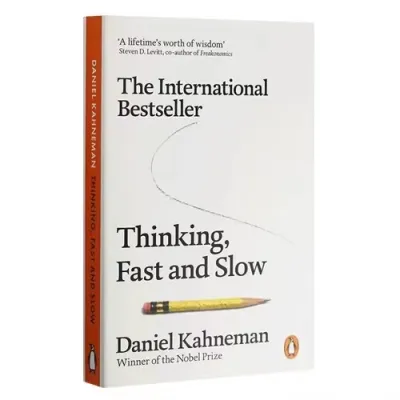
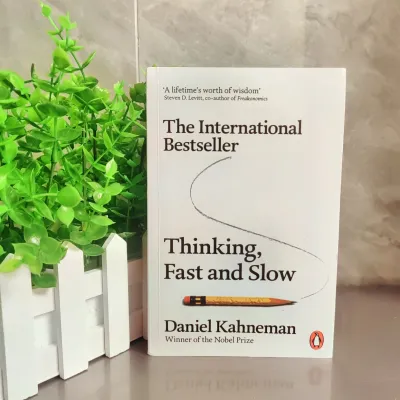
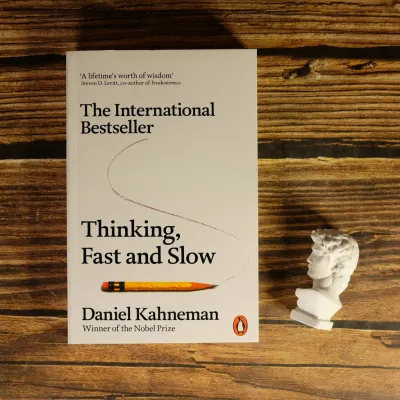
Prices are valid at publication and may change. Please refer to the product page for the latest price.
Beyond this basic premise, the book delivers an extraordinary level of academic depth. Rather than relying on sweeping generalizations or motivational anecdotes, it walks readers through the actual experiments, statistical anomalies, and psychological studies that built the field of behavioral economics. You will learn about concepts like anchoring, loss aversion, and the availability heuristic through the very puzzles presented to research subjects.
This scientific rigor means the book offers genuine, verifiable insights into human error rather than superficial advice. The primary takeaway is a heightened awareness of your own cognitive vulnerabilities. While reading, you will constantly catch yourself recognizing biases in your past decisions, providing a valuable mental toolkit for evaluating risks and choices more objectively in the future.
The Readability Check: Time Commitment and Academic Density
One of the most common complaints from first-time readers is the book’s dense, textbook-like tone. It is a substantial volume, often running over 500 pages depending on the edition, and it does not shy away from statistical explanations or probability puzzles. The writing style is precise and intellectual, reflecting the author’s background as a researcher. Consequently, this is not a book you can easily skim while commuting or read passively before sleep.

To digest the material effectively, you should plan for a structured reading approach. A realistic framework is to treat the book as a self-paced course, tackling one short chapter per day. Each chapter typically takes about 20 to 30 minutes to read, but you will often need extra time to pause, reflect on the mental exercises, and consider how the concepts apply to your own life. Rushing through the text usually results in information overload and poor retention.
It is also helpful to know that the book’s pacing varies. The opening sections on the two systems and the closing chapters on the “experiencing self” versus the “remembering self” are highly engaging and narrative-driven. However, the middle sections, which delve deeply into statistical regression, heuristics, and prospect theory, can feel repetitive and dry for readers who do not have a natural affinity for data and probability.
Matching Your Goals: Who Benefits Most from System 1 and System 2
This book is exceptionally valuable for professionals whose work relies on predicting, influencing, or analyzing human behavior. If you work in marketing, finance, user experience (UX) design, product management, or public policy, the insights into how people evaluate value and risk are directly applicable to your daily decisions. Understanding how consumers react to framing or how investors succumb to loss aversion can significantly improve your professional judgment.
Dedicated self-improvers who enjoy cognitive psychology will also find the book deeply rewarding. It appeals to analytical minds that prefer to understand the underlying mechanisms of human behavior rather than just receiving a list of rules. If you enjoy questioning your own assumptions and exploring the limits of human rationality, the intellectual challenge of this text will be highly satisfying.
However, it is crucial to manage your expectations regarding what the book will not do. It is not a quick-fix productivity guide, a time-management manual, or a motivational self-help book. It explains why our brains make systematic errors, but it does not provide a simple, step-by-step checklist to eliminate those errors entirely. Recognizing a bias does not automatically make you immune to it, a reality that the author openly acknowledges.
When to Skip It: Lighter Alternatives for Behavioral Economics
There are several scenarios where skipping this book is the most practical choice. If your current reading time is highly limited, or if you find yourself consistently struggling with academic jargon and statistical formulas, forcing your way through this text may lead to reading fatigue. There is no shame in admitting that a dense academic volume does not align with your current lifestyle or learning preferences.
Fortunately, you can grasp the foundational theories of behavioral economics through alternative formats. High-quality summary articles, educational podcasts, and video essays offer excellent overviews of System 1 and System 2 thinking in a fraction of the time. These resources can help you decide if you want to dive deeper into the full text later on.
If you still want to read a book on this topic but prefer a lighter, more narrative-driven style, there are excellent alternatives in the behavioral science space. Books that focus on practical applications, real-world storytelling, and choice architecture often cover similar concepts of cognitive bias without the heavy statistical burden. These alternatives can serve as a gentler introduction to the field before you attempt Kahneman’s more demanding work.
Final Verdict: How to Decide if It Earns a Spot on Your Shelf
To make your final decision, consider a simple three-way matrix based on your commitment level and learning style:
- Buy a physical copy if you are a serious student of human behavior, a professional in a decision-heavy field, or an avid annotator who wants a permanent reference volume to highlight, dog-ear, and revisit over many years.
- Borrow a copy from a public library if you are curious about the concepts but unsure if you will finish the entire book. This allows you to test your patience with the academic style without making a financial commitment.
- Skip the book entirely if you already know you prefer fast-paced, highly actionable self-help, and instead opt for high-quality summaries or lighter introductory titles in behavioral economics.
If you do decide to read it, format choice is highly important. Because the book relies on visual diagrams, statistical tables, and logic puzzles that require you to look back at previous paragraphs, a physical book or a high-resolution e-reader is generally superior to other formats. Having the text physically in front of you makes it much easier to navigate the complex sections and digest the material at your own pace.
Frequently Asked Questions (FAQ)
Is the audiobook version effective for complex concepts?
While the audiobook is convenient for multitasking, it can make digesting the book’s dense statistical puzzles and visual charts quite challenging. Listeners often find themselves needing to pause and rewind frequently to grasp the logical flow of the experiments. If you choose the audio format, it is highly recommended to keep a digital or physical copy nearby to reference the key diagrams and tables mentioned throughout the narration.
Do I need a background in psychology or statistics to understand it?
No formal background in psychology or statistics is required to understand the book. The author is highly skilled at explaining technical terms, probability concepts, and experimental methodologies from the ground up for a general audience. However, a basic comfort with logical reasoning and percentage-based probabilities will make your reading experience much smoother, particularly during the middle chapters that focus on risk assessment and statistical regression.

Community discussion
Share your experience or ask a question. Comments are reviewed before publication.