
When starting your piano journey, choosing the right keyboard action is one of the most critical decisions you will make. The term “weighted keys” refers to a mechanical design in digital pianos and keyboards that mimics the physical resistance and feel of a traditional acoustic piano. Understanding how this action differs from other keyboard types is essential for developing proper finger strength, control, and musical expression from day one.
Decoding Key Actions: Weighted, Semi-Weighted, and Synth-Action
To make an informed choice, you must first understand the three primary types of key actions available on the market today. Fully weighted keys are designed to replicate the mechanical hammer action of an acoustic piano. When you press a key on an acoustic piano, a physical hammer strikes a string; fully weighted digital keys use small weights and lever mechanisms to simulate this exact resistance and rebound, providing a realistic playing experience.
Semi-weighted keys offer a middle ground, combining spring-loaded mechanisms with light physical weights. This design provides more resistance than a basic keyboard but lacks the complex mechanical feel of a true hammer action. While semi-weighted keys are lighter and easier to press, they do not fully prepare your hands for the physical demands of an acoustic instrument.
Products mentioned in this guide
![Yamaha P-143BT Portable Digital Piano 88 Weighted Keys Bluetooth Beginners Instrument P143 P-143 [LIMITED STOCK]](https://img.lazcdn.com/g/p/b40c0a5d1400f3afb2c14a886464b0ef.jpg_400x400q80.jpg_.webp)
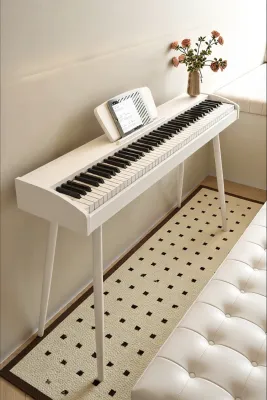
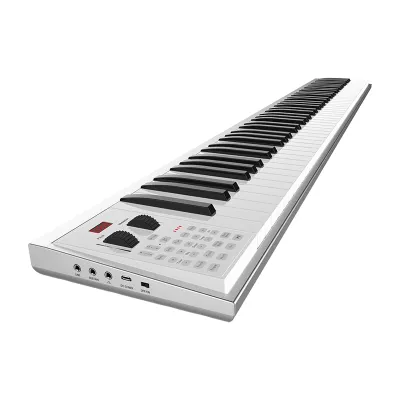
Prices are valid at publication and may change. Please refer to the product page for the latest price.
Synth-action keys are completely unweighted and rely entirely on simple spring mechanisms to return the keys to their resting position. These keys are exceptionally light, fast, and effortless to press, making them popular for playing rapid synthesizer leads or organ parts. However, they offer virtually no resistance, which makes them unsuitable for developing traditional piano technique.
Because the physical feel of a keyboard is highly subjective, written descriptions can only convey so much. It is highly recommended to visit a local musical instrument showroom to test these different key actions in person before making a purchase. Feeling how the keys respond to your touch will help you understand which action aligns best with your physical comfort and playing preferences.
Why Weighted Keys Matter for Developing Proper Technique
Traditional piano instruction heavily emphasizes the use of weighted keys for beginners because of how they shape your physical development. Playing an instrument with realistic mechanical resistance builds the necessary finger strength, hand endurance, and proper posture. Without this resistance, your fingers will not develop the muscle memory required to control a heavier acoustic action later on.

Weighted keys are also crucial for mastering dynamic control, which is the ability to play softly or loudly based on how hard you strike the key. Most weighted keyboards feature velocity-sensitive sensors that translate the force of your touch into volume and tone changes. This physical feedback teaches you how to control the subtle nuances of your performance, a skill that is incredibly difficult to learn on light, springy keys.
If you practice exclusively on unweighted or light keys, you risk developing habits that can be difficult to unlearn. Beginners who train on light keys often develop a heavy-handed playing style because they do not need to control their finger pressure to produce a sound. When transitioning to a traditional acoustic piano, these players often struggle with finger fatigue, poor articulation, and an inability to control the volume of their playing.
However, non-weighted keys are not inherently bad; they simply serve a different purpose. If your musical path is focused entirely on electronic music production, synthesizer sound design, or playing in a modern band where acoustic piano simulation is not required, lighter actions are perfectly acceptable. The key is matching the tool to your specific musical goals.
Matching Key Action to Your Learning Goals and Budget
Choosing the right keyboard action ultimately depends on your musical aspirations, available space, and budget. If you are committed to learning classical music, traditional jazz, or taking formal piano exams, a digital piano with fully weighted or graded hammer action is highly recommended. This investment ensures that your home practice environment closely mirrors the instruments you will use during lessons and performances.
For those focusing on electronic music production, beatmaking, or sound design, a synth-action or semi-weighted MIDI keyboard controller is often the more practical choice. These instruments prioritize fast triggers, portability, and integration with music software over realistic piano feel. They are also generally more affordable and take up significantly less space in a home studio.
Portability and living space are also major factors to consider, especially in compact urban homes. Fully weighted digital pianos require robust internal mechanisms, making them heavier, bulkier, and more difficult to move. If you need an instrument that you can easily pack away after practice or transport to rehearsals, a lighter semi-weighted keyboard might serve as a temporary compromise.
When shopping for an instrument, always verify the specific terms used in the manufacturer’s official specifications rather than relying on general marketing descriptions. Terms like “graded hammer action,” “progressive hammer action,” or “fully weighted” have specific mechanical meanings. Checking the official product documentation ensures you are getting the exact level of resistance and realism you expect for your budget.
Frequently Asked Questions (FAQ)
Can I learn piano on a synth-action keyboard?
You can use a synth-action keyboard to learn basic music theory, note recognition, and simple chord shapes. However, it is not suitable for developing proper piano technique, finger strength, or dynamic control. If you plan to transition to an acoustic piano eventually, practicing on synth-action keys can lead to poor physical habits that are difficult to correct.
What does graded hammer action mean?
Graded hammer action is a premium feature that mimics the physical design of an acoustic piano, where the keys in the lower bass register feel heavier to press than the keys in the higher treble register. This gradient occurs naturally in acoustic pianos due to the varying sizes of the hammers and strings. You should check the manufacturer’s detailed specifications to confirm whether a digital piano offers graded action or uniform weighting across all keys.

Community discussion
Share your experience or ask a question. Comments are reviewed before publication.