
The Roland FP-30X offers a suite of features tailored for beginner piano students, centering on a weighted hammer-action keyboard, a responsive sound engine, and modern digital connectivity. For a beginner, these specifications bridge the gap between a portable digital keyboard and a traditional acoustic piano, helping to build correct finger strength and expressive playing habits from day one.
Choosing a first instrument can feel overwhelming with technical jargon. Understanding how these specific features translate to daily practice helps you make an informed decision that supports long-term musical development.
Action and Feel: Understanding the Keyboard Mechanism
Acoustic pianos rely on a physical hammer mechanism to strike strings, which creates a natural resistance when you press a key. For a beginner, practicing on a keyboard with weighted hammer action is essential. This resistance builds the necessary finger strength, dexterity, and muscle memory required to transition to an acoustic piano in the future without feeling held back by a different key weight.
Products mentioned in this guide
![Roland FP10 FP30X Portable Digital Piano 88 Keys Weighted Keyboard FP-10 FP-30X FP 10 30 [LIMITED STOCK]](https://img.lazcdn.com/g/p/b40c0a5d1400f3afb2c14a886464b0ef.jpg_400x400q80.jpg_.webp)
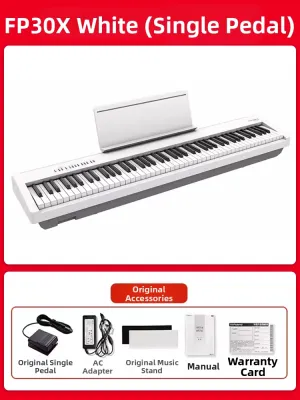
Prices are valid at publication and may change. Please refer to the product page for the latest price.
The keyboard mechanism on this model simulates this acoustic experience by using graded weighting, meaning the lower keys feel slightly heavier than the higher keys. It also features an escapement simulation, which replicates the subtle “click” felt when pressing a key down slowly on a grand piano. This level of detail helps students learn to control their dynamics and expressiveness at lower volume levels.
Additionally, the keys are finished with a textured surface that mimics the feel of natural ivory. This texture provides a reliable grip and absorbs moisture from fingertips during long practice sessions. Because physical key resistance and texture preferences are highly subjective, it is always recommended to test the action in person at a local showroom or verify the manufacturer’s specific action model name before making a final purchase.
Sound Engine and Polyphony: What the Audio Specs Mean for Practice
A digital piano’s sound engine determines how realistic the instrument sounds. Rather than simply playing back static, pre-recorded notes at different volumes, a sophisticated sound engine dynamically alters the tone color and decay based on how hard or soft you strike the keys. This responsiveness teaches beginners how to play with emotion and variation, rather than developing a flat, mechanical playing style.

Polyphony refers to the maximum number of individual notes or voices that the instrument can produce at the same time. This model features a high polyphony limit of 256 notes. While a beginner only plays a few notes at once, a high polyphony limit is crucial when using the sustain pedal. Without sufficient polyphony, older notes are cut off abruptly as new notes are played, which ruins the rich, lingering sound of classical pieces.
For daily practice, the balance between built-in speakers and headphone outputs is highly practical. The built-in speakers are designed to project clearly for casual room practice. However, the dual headphone outputs are invaluable for silent, focused sessions. In shared living spaces or high-density apartments common in Singapore, headphone jacks allow students to practice at any hour without disturbing family members or neighbors.
Connectivity and Learning Tools: App Integration and MIDI
Modern digital pianos leverage connectivity to make learning more interactive. This model includes both Bluetooth MIDI and physical USB connections. Bluetooth MIDI allows you to connect wirelessly to tablets or smartphones, enabling seamless interaction with educational apps, digital audio workstations, or interactive sheet music.
The manufacturer’s dedicated companion app serves as a central control hub. Through the app, students can easily adjust internal settings such as metronome speed, key touch sensitivity, and master tuning. It also provides access to built-in lessons, flashcards, and practice tracking tools that help keep young learners engaged. Before purchasing, always verify that your smart device’s operating system is compatible with the latest version of the companion app.
It is important to distinguish between Bluetooth MIDI and Bluetooth audio. Bluetooth audio allows you to stream music or backing tracks from your phone directly through the piano’s speakers so you can play along. However, Bluetooth audio introduces a slight delay and is not suitable for low-latency interactive app control. For real-time feedback apps, a wired USB connection remains the most reliable option.
Which Specifications Matter Less for a Beginner?
When evaluating a digital piano, it is easy to get distracted by flashy features that add little value to early learning. For instance, extensive built-in rhythm styles, advanced sound editing, or hundreds of secondary instrument sounds like synths and sound effects are secondary. A beginner’s primary focus should always remain on core piano tone quality and realistic key action.
Similarly, professional 1/4-inch audio line-out jacks are designed for connecting the instrument to external amplifiers or PA systems during live stage performances. For standard home bedroom practice, the standard headphone jacks and built-in speakers are more than sufficient, making these professional outputs a minor consideration for home-based students.
Because the physical dimensions and weight of this portable slab piano are fixed, buyers should focus their attention on setup stability instead. When planning your budget, remember to factor in an additional S$100 to S$200 for a sturdy stand if the retail bundle does not include one. Ensuring you have a stable stand and a proper pedal upgrade is far more important for developing correct posture than worrying about minor weight differences.
Frequently Asked Questions (FAQ)
Does the Roland FP-30X come with a stand and pedals?
The standard retail box typically includes the keyboard unit, a music rest, a power adapter, and a basic switch-style sustain pedal. It does not include a wooden stand or a full triple-pedal board. For a more stable and traditional acoustic piano experience, beginners can purchase optional dedicated furniture stands and matching triple-pedal units separately.
Can I use this digital piano with online piano lesson platforms?
Yes, you can connect this digital piano to computers, tablets, or smartphones to work with popular online piano lesson platforms. While wireless Bluetooth MIDI is convenient for reading sheet music, using a wired USB cable connection is highly recommended for interactive, real-time feedback apps to eliminate any potential audio or input latency during practice.

Community discussion
Share your experience or ask a question. Comments are reviewed before publication.