
Selecting the right O-Level preparation books for the 2025 examinations requires a systematic approach focused on syllabus alignment, question variety, and detailed answer keys. Rather than relying on generic bestseller lists, students and parents must verify that each resource matches the updated curriculum codes set by the Ministry of Education (MOE) and the Singapore Examinations and Assessment Board (SEAB). Preparing with outdated materials can lead to studying obsolete topics or missing newly introduced question formats, making careful selection a critical first step in exam preparation. This guide outlines the essential criteria for evaluating prep books, details subject-specific requirements for STEM and humanities, compares physical and digital formats, and provides a step-by-step verification process to ensure your study materials are fully compliant for the 2025 exam cycle.
Core Criteria for Evaluating O-Level Preparation Books
The first and most critical step in evaluating any O-Level preparation book is verifying its syllabus alignment. Every subject has a specific four-digit syllabus code issued by SEAB, which changes when major curriculum updates occur. When browsing books in local bookstores or online marketplaces, you must check the copyright page or the front cover for these exact codes. A book labeled “for 2025” must explicitly state it aligns with the active syllabus code for that year, ensuring you do not waste valuable study time on topics that have been phased out.
Beyond syllabus codes, the structural format of the book determines its utility at different stages of the academic year. Topical revision books organize questions by chapter, making them ideal for progressive learning as teachers cover individual units in school. In contrast, yearly compilations package full-length exam papers together, which are best reserved for timed, realistic exam practice in the final months leading up to the papers. A balanced preparation strategy utilizes topical guides first to build foundational strength, followed by yearly papers to develop pacing and exam stamina.
Products mentioned in this guide
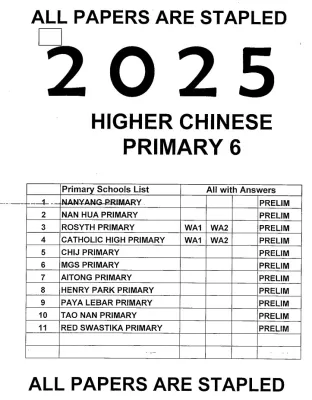
Prices are valid at publication and may change. Please refer to the product page for the latest price.
The quality of the answer key is another decisive factor that separates excellent prep books from mediocre ones. Avoid books that only provide final numerical answers or brief letter options for multiple-choice questions without explaining the underlying steps. Look for resources that offer comprehensive, step-by-step workings, detailed explanations for why certain options are incorrect, and clear marking schemes that show where marks are allocated. Some premium guides also include examiner reports or notes on common student mistakes, which are invaluable for self-directed study and correcting conceptual errors early.
Subject-Specific Strategies for Book Selection
Different academic subjects demand distinct cognitive skills and assessment methods, meaning a single study approach does not fit all. While mathematics and sciences require rigorous application of formulas and logical problem-solving, languages and humanities focus heavily on critical analysis, structured writing, and source evaluation. Consequently, a prep book that works well for one subject cluster may not follow the optimal pedagogical approach for another. Understanding these differences allows you to select targeted resources that address the unique challenges of each subject.

Mathematics and Science Requirements
For STEM subjects, look for prep books that feature comprehensive formula sheets and summary notes at the beginning of each chapter. These summaries serve as quick-reference guides during practice sessions, helping to reinforce key concepts before you attempt the questions. Additionally, high-quality math and science books should include “misconception alerts” or “common pitfalls” sections. These highlights warn you about frequent errors made by candidates, such as unit conversion mistakes or incorrect algebraic expansions, helping you avoid similar traps during the actual exam.
Science preparation books must also address the practical and structured components of the exam. Ensure the books you select contain dedicated sections for data response questions, which require you to analyze graphs, tables, and experimental setups. For the practical assessment, look for guides that explain experimental design, variable identification, and sources of error, as these theoretical aspects are frequently tested in the written papers. A good science book should bridge the gap between laboratory work and written theory.
Languages and Humanities Requirements
Language prep books, particularly for English, should focus on skill acquisition rather than rote memorization. Look for resources that provide diverse comprehension passages paired with detailed question-analysis guides. These guides should explain how to identify different question types, such as literal, inferential, and vocabulary-in-context questions, and teach you how to formulate precise answers. For the writing components, select books that offer model essays across various genres, complete with vocabulary banks and structural breakdowns that demonstrate how to build a coherent argument.
For humanities subjects like History, Geography, and Social Studies, the ability to analyze sources is paramount. Your prep books must include robust source-based case study practices. These exercises should teach you how to evaluate the reliability, utility, and perspective of historical documents or contemporary media reports. Look for books that provide clear writing frames or templates to help you structure your answers according to the specific assessment objectives of the humanities syllabus, ensuring you meet the criteria for higher-level marks.
Comparing Physical Editions and Digital Formats
The choice between traditional physical books and digital study resources depends on your learning style and study environment. Physical books, such as the classic paper-bound Ten-Year Series, offer a tactile experience that closely mimics the actual exam conditions. Writing directly on paper helps develop muscle memory and spatial awareness, which are beneficial during long writing sessions. Furthermore, physical books eliminate the digital distractions of notifications and screen fatigue, allowing for deeper focus during study sessions.
On the other hand, digital formats and interactive e-books offer unique advantages in terms of portability and searchability. Many modern digital prep resources are bundled with supplementary online materials. Before purchasing, check if the publisher provides access to online portals featuring video explanations for complex problems, audio tracks for language listening comprehension, or downloadable templates for essay planning. These multimedia elements can clarify difficult concepts much faster than static text alone, making them excellent companions to traditional study methods.
How to Verify Syllabus Alignment and Edition Accuracy
To avoid purchasing outdated or incorrect editions, you must establish a verification routine. Start by visiting the official SEAB website to download the syllabus documents for your exam year. Note down the subject codes and any specific syllabus changes highlighted by the board. When shopping, cross-reference these codes with the details printed on the book’s copyright page, paying close attention to the edition number and the publication or reprint year.
If you are uncertain about a book’s suitability, consult your school teachers or subject coordinators. They possess direct insight into the curriculum and can confirm whether a specific publisher’s edition aligns with their classroom teaching plans. Additionally, visiting authorized educational bookstores in Singapore can be highly beneficial. The staff in these specialized stores are often well-versed in the local curriculum requirements and can guide you to the correct, authorized editions for the 2025 academic year, saving you from costly purchasing mistakes.
Frequently Asked Questions (FAQ)
Is it safe to use older editions for the 2025 examinations?
Using older editions carries risks, particularly if the syllabus has undergone a major revision. If the subject code or core topics have changed, older books may contain obsolete content or lack practice questions for newly introduced topics. However, for subjects with stable syllabi, older editions can still serve as excellent sources for foundational practice and basic drills, provided you supplement them with updated materials to cover any minor adjustments.
Do ten-year series cover all necessary practice formats?
While the Ten-Year Series is an essential tool for understanding the overall format and difficulty of the national exams, it may not cover every nuance of a newly updated syllabus. When exam formats change, past papers naturally reflect the old style. To ensure comprehensive preparation, you should combine the Ten-Year Series with topical assessment books and school prelim papers, which are specifically designed to reflect the latest assessment trends and question styles.

Community discussion
Share your experience or ask a question. Comments are reviewed before publication.