
Choosing the right daily practice book series—often structured as a “daily dose” of revision—is a foundational step in preparing for the Singapore-Cambridge GCE O-Level examinations. The ideal series is not a one-size-fits-all solution; rather, it is one that aligns precisely with the current Singapore Examinations and Assessment Board (SEAB) syllabus, matches the student’s current academic standing, and provides clear, actionable feedback through its solutions. To build consistent study habits, students require resources that break down complex subjects into manageable, daily segments, allowing for steady skill accumulation without causing cognitive fatigue.
Selecting these books requires a careful look at how they are structured. A high-quality daily practice book does more than compile questions; it serves as an incremental learning tool that guides a student from basic recall to exam-level mastery. By understanding what makes a practice series effective, parents and students can make informed decisions that maximize study efficiency and support long-term retention.
Core Criteria for Evaluating Daily Practice Series
When evaluating any daily practice book series, the first and most critical factor is syllabus alignment. The O-Level syllabus undergoes periodic reviews by the Ministry of Education (MOE) and SEAB to ensure the curriculum remains relevant. A book published several years ago might contain topics that have since been phased out, or it may lack newer assessment components. Before purchasing, always cross-reference the publication or revision year with the current syllabus codes listed on the official SEAB website. This simple check prevents students from wasting valuable revision time on obsolete material.
Products mentioned in this guide
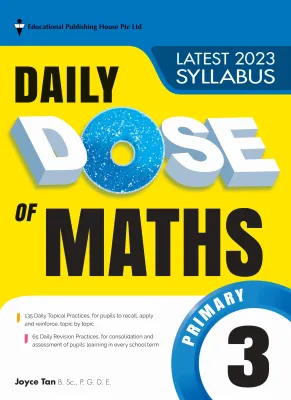
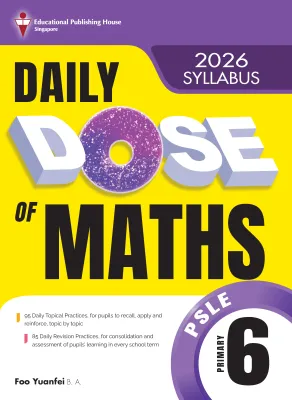
Prices are valid at publication and may change. Please refer to the product page for the latest price.
Another essential criterion is the quality and depth of the provided answer keys. A simple list of final numerical answers or brief one-sentence explanations is insufficient for independent daily study. Effective daily practice relies on immediate feedback; when a student makes an error, they must be able to trace their steps and identify exactly where their logic failed. Look for series that offer fully worked solutions, step-by-step algebraic derivations, and detailed explanations for why certain options in multiple-choice questions are incorrect while others are correct.
The structural progression of difficulty within the book also determines its utility. A well-designed daily dose series should feature a graduated difficulty scale. It should begin with foundational questions that reinforce basic concepts, transition into intermediate application questions, and conclude with challenging, non-routine problems that mimic the higher-weightage sections of the actual O-Level papers. This structured progression prevents students from feeling overwhelmed early in their daily sessions and helps build the cognitive stamina required for the final examinations.
Subject-Specific Selection Strategies
Different O-Level subjects test distinct cognitive skills, meaning a practice book series that works exceptionally well for mathematics may not be structured appropriately for sciences or humanities. To select the most effective resources, it is necessary to examine how well a series addresses the unique academic demands of each subject area.

Mathematics and Additional Mathematics
For Mathematics and Additional Mathematics, procedural fluency and conceptual clarity are paramount. Daily practice books in this domain must emphasize step-by-step working. Because method marks constitute a significant portion of the grading scheme in O-Level math papers, a student who arrives at the correct final answer through flawed or incomplete steps may still lose marks. The ideal practice series should display complete mathematical workings, including intermediate algebraic steps, geometric proofs, and clear labeling of variables.
Topical segregation is another vital feature for mathematics revision. Daily practice is most effective when it targets specific sub-topics, such as quadratic equations, coordinate geometry, or calculus, before moving on to mixed revision. This allows students to isolate and patch conceptual gaps immediately after they are taught in school. A book that mixes all topics from the outset can be discouraging for a student who has not yet covered the entire syllabus.
Finally, look for books that include dedicated sections for common pitfalls and error analysis. Many students repeatedly make the same careless mistakes, such as sign errors during algebraic expansion or incorrect application of logarithm laws. Practice books that explicitly highlight these common misconceptions in their answer keys or introductory notes help students develop a self-checking habit, which is crucial for minimizing errors under exam conditions.
Sciences (Physics, Chemistry, Biology)
In the sciences, success depends heavily on the precise use of scientific terminology and keywords. Examiners look for specific terms when grading open-ended questions. Therefore, the suggested answers in a daily science practice book must explicitly highlight these keywords—such as “limiting reactant” in chemistry, “thermal equilibrium” in physics, or “turgid” in biology. This teaches students how to structure their answers concisely to secure full marks without writing unnecessary filler.
Modern O-Level science papers also place a strong emphasis on data-response and practical-based questions. A suitable daily practice book should not rely solely on rote recall questions. It must integrate exercises that require students to interpret graphs, analyze experimental data tables, and describe laboratory setups. These questions prepare students for Paper 1 and Paper 2, while also reinforcing the conceptual knowledge tested in the Practical Exam (Paper 3).
Visual clarity is equally important when evaluating science resources. Complex biological processes, chemical apparatus setups, and physics vector diagrams must be accompanied by clear, accurately labeled illustrations. A book with poorly printed or confusing diagrams can lead to misunderstandings, making it difficult for students to grasp the physical or spatial relationships being tested.
English and Humanities
For English Language and humanities subjects like History, Geography, and Social Studies, daily practice must focus on building analytical habits and structured writing skills. For English, a daily dose book should offer a diverse range of text types, including narrative, non-narrative, and visual texts. This variety ensures that students become comfortable analyzing different tones, purposes, and target audiences, which are central to the comprehension paper.
High-quality model essays and vocabulary-building exercises are indispensable for language and humanities revision. Rather than just providing a sample essay, the best practice books annotate their models, pointing out the structural elements of a strong thesis statement, the use of cohesive devices, and the integration of sophisticated vocabulary. This level of detail helps students understand how to elevate their own writing style and construct logical, persuasive arguments.
For humanities subjects, the daily practice resource must provide structured frameworks for answering Source-Based Case Studies (SBCS). Students often struggle with evaluating source reliability, identifying bias, and cross-referencing multiple sources. A practice book that breaks down these skills into daily, bite-sized exercises—such as analyzing a single cartoon or evaluating a short textual extract—helps students master these complex historical and analytical skills incrementally over the course of the academic year.
Integrating Daily Practice Books into a Study Routine
To derive the maximum benefit from a daily practice book, it must be integrated into a sustainable, structured study routine. A common mistake is attempting to complete too many pages at once, which often leads to burnout and poor retention. Instead, students should allocate a specific, uninterrupted block of 15 to 30 minutes each day for their “daily dose” of practice. This session should be treated with the same importance as regular homework, but without the pressure of a formal test environment.
Tracking progress is a vital component of this routine. Students should maintain a dedicated error log—a simple notebook or digital document where they record the date, the question they got wrong, the underlying concept, and the correct step-by-step solution. Before starting a new daily practice session, the student should spend five minutes reviewing the previous week’s errors. This active recall process ensures that mistakes are treated as learning opportunities and are not repeated in future sessions.
As the O-Level examinations approach, the nature of the daily practice should adapt. In the earlier terms of the academic year, the focus should remain on topical revision to build a strong foundation. However, in the final months leading up to the exams, the daily dose should transition toward mixed-topic revision and timed exercises. This shift helps students build the mental agility required to switch between different topics quickly, simulating the actual experience of sitting for a full-length national examination paper.
Pre-Purchase Checks and Version Verification
Before committing to a purchase at a local bookstore or through an online marketplace, there are several practical checks you should perform to ensure the book is suitable. First, locate the syllabus code on the cover or copyright page. For example, ensure that a mathematics book explicitly states it conforms to the latest syllabus code issued by SEAB for that examination year. This is particularly important if you are buying secondhand books or using past editions passed down from older siblings.
| Subject Area | Key Verification Check | Ideal Practice Format |
|---|---|---|
| Mathematics | Verify syllabus code (e.g., 4048); check for fully worked step-by-step solutions. | Physical workbook with ample writing space for calculations. |
| Sciences | Check for keyword highlighting in answers; look for data-response questions. | Physical book for diagram drawing; digital companion for quick quizzes. |
| English & Humanities | Ensure diverse text types and structured source-analysis frameworks. | Physical book for active annotation and essay planning. |
| All Subjects | Check publisher website for errata sheets and curriculum updates. | Hybrid; physical core with digital updates where available. |
Consider the format of the book and how it fits into the student’s daily lifestyle. Physical workbooks are generally preferred for daily practice because they allow students to write directly on the pages, draw diagrams, and annotate texts by hand. This physical interaction closely mirrors exam conditions and helps reduce screen fatigue. However, some modern series offer digital companions, such as online video explanations or quick-fire quiz apps, which can be highly beneficial for clarifying difficult concepts on the go.
Finally, check the publisher’s official website for any supplementary errata sheets. Even the most carefully edited assessment books can contain typographical errors in the questions or solutions. Downloading and printing the errata sheet before starting the book prevents confusion and ensures that the student is not left struggling with an unsolvable problem due to a printing oversight.
Frequently Asked Questions (FAQ)
How many pages should a daily dose of practice be?
The volume of a daily practice session should be determined by the complexity of the subject matter and the student’s current level of familiarity with the topic, rather than a fixed page count. For highly procedural subjects like Mathematics, a daily dose might consist of two to three structured, multi-part questions. For English or humanities, it could involve reading a single comprehension passage and answering the associated vocabulary and literal questions, or planning the outline of an essay.
It is crucial to monitor for signs of cognitive overload, which include a sudden increase in careless mistakes on simple questions, growing frustration, or a lack of retention during review sessions. If these signs appear, it is advisable to reduce the daily volume. The primary goal of a daily practice routine is consistency and high-quality engagement with the material, not simply rushing through pages to finish the book.
Are ten-year series (TYS) considered daily practice books?
Ten-year series (TYS) compilations and topical daily practice books serve different pedagogical purposes and should be used at different stages of the revision cycle. A topical daily practice book is designed for incremental learning throughout the school year. It breaks down the syllabus into small, digestible portions, making it ideal for reinforcing concepts immediately after they are taught in class and for building foundational skills.
In contrast, the TYS consists of actual past examination papers. These are best utilized in the final months leading up to the O-Levels to practice time management, build exam stamina, and understand the overall structure of the paper. A comprehensive study plan should integrate both resources: use topical daily practice books during the first three terms of the academic year to master individual topics, and transition to timed TYS papers in the final term to prepare for the actual exam environment.

Community discussion
Share your experience or ask a question. Comments are reviewed before publication.