
Selecting the right Secondary 3 (Sec 3) exam papers and assessment books in Singapore is a foundational step toward achieving distinction in the GCE O-Level examinations. Sec 3 represents a significant academic leap from lower secondary, introducing complex, specialized subjects such as Additional Mathematics, Pure Sciences, and elective Humanities. To navigate this transition successfully, students must move away from passive reading and engage in active, structured practice using high-quality physical resources.
Rather than purchasing every book available on the shelves, the most effective strategy is to build a curated library of practice materials tailored to the student’s current level of understanding. By combining topical assessment books for immediate reinforcement with full-length exam papers for cumulative review, students can systematically address their weaknesses. This guide outlines how to evaluate local study materials, match them to specific learning needs, and integrate them into a highly productive study routine.
Understanding the Role of Sec 3 Practice Materials
Topical assessment books are designed to be used in tandem with daily school lessons. These books break down the vast O-Level syllabus into individual chapters, allowing students to isolate specific concepts immediately after they are taught in class. For example, after learning quadratic equations or chemical bonding, a student can complete targeted exercises to solidify their understanding. This immediate application prevents learning gaps from compounding over the academic year.
Products mentioned in this guide
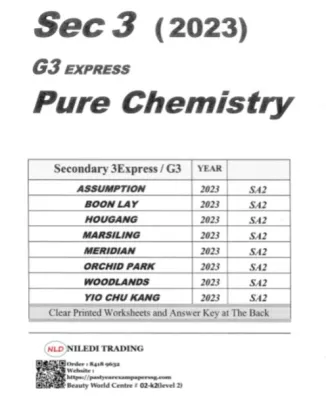
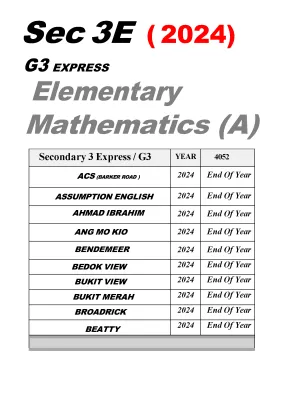
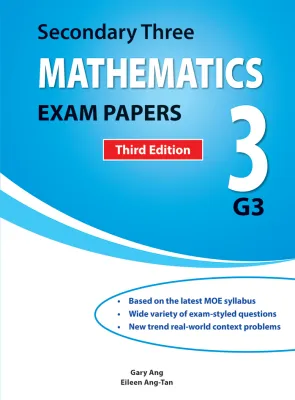
Prices are valid at publication and may change. Please refer to the product page for the latest price.
In contrast, full-length exam papers serve a completely different cognitive purpose. These papers compile questions from across the entire syllabus, requiring students to dynamically retrieve information and switch between different topics under timed conditions. Working through full papers helps students build the physical and mental stamina required for long examination sessions, while also teaching them how to allocate their time effectively across different sections.
An effective study plan relies on a strategic transition between these two types of materials. During the first half of Sec 3, the focus should remain heavily on topical assessment books to build a robust conceptual foundation. As the end-of-year examinations approach, students should gradually transition to full-length Sec 3 exam papers. This progression ensures that by the time they enter Sec 4, they have mastered the core content and can focus entirely on intensive O-Level mock papers.
Key Criteria for Evaluating Assessment Books and Exam Papers
Syllabus alignment is the most critical factor when selecting any practice material. The Singapore Examinations and Assessment Board (SEAB) periodically updates subject syllabi to reflect modern educational standards. Before purchasing any book, always check the publication year and cross-reference the syllabus code printed on the cover with the official SEAB website. Using outdated materials can lead to wasting valuable time on topics that have been removed, or worse, missing out on newly introduced components.

The quality of the answer key is another essential criterion that separates mediocre assessment books from excellent ones. A high-quality book does not simply list the final numerical answer or a brief essay outline. It should provide comprehensive, step-by-step workings, alternative problem-solving methods, and detailed marking rubrics. Look for books that include examiner notes or common mistake highlights, as these insights help students understand exactly where marks are lost and how to structure their answers to meet examiner expectations.
A well-structured practice book must also feature a clear progression of difficulty. The questions should be organized systematically, starting with basic recall and direct application questions to build initial confidence. From there, the material should progress to intermediate application problems and finally to higher-order thinking or non-routine questions. This scaffolding allows students to stretch their capabilities gradually without becoming discouraged by an abrupt jump in difficulty.
Matching Book Types to Student Needs and Learning Stages
Foundation builders are essential for students who find themselves struggling to keep up with the pace of school lectures. These books typically feature concise summary notes, highly detailed worked examples with annotations, and guided practice questions that prompt the student through each step of the solution. The primary goal of these resources is to demystify complex topics, eliminate academic anxiety, and establish a reliable baseline of competency.
Standard practice books are ideal for consistent performers who understand classroom concepts but need to sharpen their execution. These comprehensive workbooks offer a balanced mix of standard exam-format questions covering the entire syllabus. They provide the necessary volume of practice to build muscle memory, improve calculation speed, and ensure that standard question formats become second nature before the examinations.
Advanced challengers are designed specifically for students who are already scoring well and want to secure top distinctions. These materials bypass basic recall and focus almost entirely on non-routine problems, cross-topical integration, and questions that require deep critical thinking. These challenging exercises teach students how to apply familiar academic concepts to highly unfamiliar real-world scenarios, which is a common feature of distinction-level O-Level questions.
Subject-specific demands should also dictate the types of books you purchase. For Mathematics and Sciences, prioritize books that offer extensive drilling opportunities and a wide variety of numerical problem types to build computational fluency. For English and the Humanities, look for books that focus on essay-structuring frameworks, source-based question analysis, and vocabulary expansion, as these subjects require qualitative expression rather than repetitive calculation.
What to Check Before Buying O-Level Prep Materials
Always verify the edition year of the book before heading to the checkout counter. Publishers frequently release revised editions to align with syllabus tweaks or to correct errors from previous printings. This is particularly important for science subjects with practical components and humanities subjects where case studies or source-based question formats may have been updated to reflect recent examination trends.
It is highly beneficial to compare prices in S$ across different local physical bookstores, school bookshops, and authorized online marketplaces. While the price difference for a single assessment book may seem minor, the cumulative cost of purchasing materials for six to eight subjects can be substantial. Keep an eye out for bundle promotions, educational fairs, or school-term discounts that offer complete subject series at a reduced rate.
Many modern assessment books now include digital integration, such as QR codes linking to video explanations, online portals with interactive quizzes, or downloadable supplementary papers. Before purchasing, check if these digital resources are fully accessible with the book purchase or if they require an additional subscription fee. These multimedia tools can be incredibly helpful for visual learners who need step-by-step video guidance.
Finally, assess the physical layout and usability of the book. Ensure there is sufficient blank space provided on the pages for students to write out their workings and corrections directly. Books with cramped layouts, tiny fonts, or low-quality paper that bleeds when using ink pens can make daily practice frustrating. A clean, well-spaced layout encourages neat working habits, which is a crucial skill for actual exam scripts.
Building a Sec 3 Practice Routine with Selected Materials
To maximize the value of your purchased materials, establish a consistent weekly practice routine. Schedule short, targeted topical practice sessions within forty-eight hours of a school lecture. Completing just five to ten focused questions while the concept is still fresh in the mind helps transfer the information from short-term to long-term memory, making future revision significantly easier.
During school holidays or the weeks leading up to major examinations, allocate dedicated, uninterrupted blocks of time for full-length exam papers. Treat these sessions as actual mock exams by removing all textbooks, setting a strict timer, and working in a quiet, distraction-free environment. This practice trains the brain to manage exam-induced stress and helps students develop a realistic sense of pacing.
Simply completing the papers is not enough; the most critical step in any study routine is maintaining a dedicated mistake journal. Whenever a question is answered incorrectly, copy the question into a separate notebook along with the fully corrected step-by-step solution. Write a brief note explaining the exact nature of the error, whether it was a conceptual misunderstanding or a careless calculation. Reviewing this journal before exams ensures that the same mistakes are not repeated on the actual paper.
Frequently Asked Questions (FAQ)
Can I use Sec 4 past year papers for Sec 3 practice?
Yes, but you must filter the questions carefully. While there is significant thematic overlap between the two academic years, Sec 4 papers will inevitably contain advanced topics that a Sec 3 student has not yet been taught. Attempting these questions prematurely can lead to unnecessary frustration. Parents or students should cross-reference the school’s scheme of work and selectively attempt only the questions that correspond to completed Sec 3 topics.
Are digital assessment books as effective as physical copies for exam prep?
While digital books offer excellent portability and quick search functions, physical paper remains superior for actual exam preparation. The national O-Level examinations are written, paper-based assessments. Practicing on physical paper helps students develop handwriting speed, spatial awareness for structuring mathematical workings, and the tactile habit of annotating questions, all of which are critical skills for exam day.

Community discussion
Share your experience or ask a question. Comments are reviewed before publication.