
The choice between Vic Firth 5A drumsticks and alternative 5A models on the market ultimately depends on your physical playing style, ergonomic preferences, and the specific acoustic response you want to draw from your drums and cymbals. While the 5A designation is widely recognized as the industry standard for general-purpose drumming, subtle differences in manufacturing tolerances, taper profiles, and wood selection mean that not all 5A sticks feel or perform the same in your hands. Finding the right match requires looking beyond the label to understand how these physical characteristics interact with your technique.
Understanding the 5A Drumstick Standard
Historically, drumstick naming conventions combined numbers and letters to indicate the stick’s size and intended application. The letter “A” originally designated sticks designed for orchestra or dance band settings, where a lighter touch and greater control were required. Over time, these historical classifications evolved into a generalized sizing system, with the 5A emerging as the middle-ground option that balances weight, length, and diameter for a wide range of musical genres.
Today, a standard 5A drumstick typically measures approximately 16 inches (40.6 cm) in length and around 0.565 inches (1.44 cm) in diameter. However, these dimensions are not governed by a strict universal standard, meaning that different manufacturers introduce slight variations to suit their design philosophies. A fraction of an inch in diameter or a millimeter of length can significantly alter how a stick sits in your hand and how much leverage you can generate.
Products mentioned in this guide
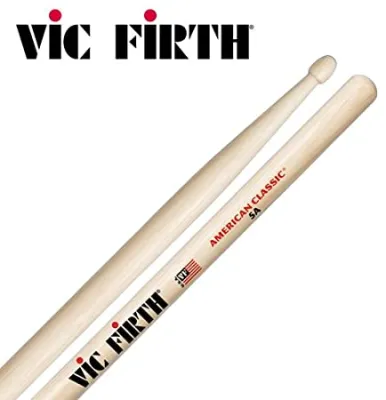
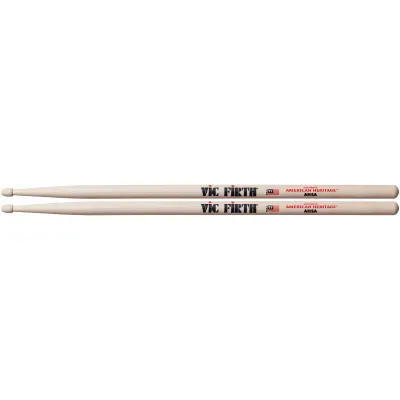
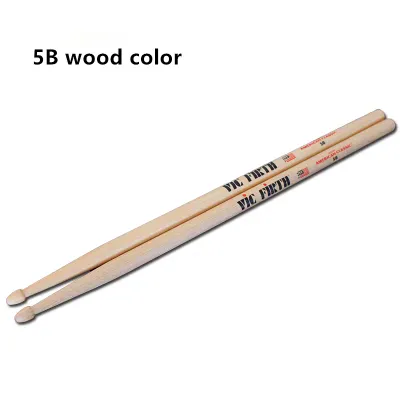
Prices are valid at publication and may change. Please refer to the product page for the latest price.
The choice of wood also plays a fundamental role in the stick’s performance and durability. Hickory is the most common material used for 5A sticks due to its excellent density, strength, and natural shock absorption, which helps reduce hand fatigue during long playing sessions. Maple offers a lighter alternative that allows for faster play at lower volumes, though it is more prone to denting and breakage. Oak, on the other hand, is highly dense and rigid, providing a heavier feel and increased durability at the expense of some shock absorption.
Key Comparison Dimensions for 5A Drumsticks
When evaluating different 5A models, several key physical dimensions dictate how the stick behaves in motion. The weight and balance point of the stick are critical factors that influence your speed, control, and physical fatigue. A stick with a forward-weighted balance point concentrates more mass toward the tip, making it easier to produce powerful, consistent hits with less physical effort. Conversely, a center-balanced stick distributes weight more evenly toward the butt end, offering a faster rebound and greater precision for intricate patterns.

The taper—the section of the stick that narrows from the shaft to the neck—directly affects the stick’s flexibility and response. A long taper creates a more flexible shoulder, resulting in a lighter feel at the tip and a faster rebound off the drumhead. A short taper makes the stick stiffer and more forward-weighted, which enhances durability during heavy rimshots but can feel sluggish during fast, delicate passages. Medium tapers attempt to strike a balance between these two extremes, offering a versatile response for diverse playing styles.
The shape and material of the tip are primary drivers of your acoustic tone, particularly on cymbals. Acorn tips produce a rich, dark sound with a broad contact area, while barrel tips offer a punchier, more focused attack. Teardrop tips provide a versatile range of tones depending on the angle at which the stick strikes the surface. Additionally, you must choose between wood and nylon tips; wood tips deliver a warm, traditional tone but can chip over time, whereas nylon tips produce a bright, cutting sound and resist chipping, though they cannot be repaired if they fly off.
Finally, the finish or coating applied to the wood affects your grip and control, especially as your hands sweat. Standard lacquer finishes provide a smooth, polished feel that many drummers find comfortable, but they can become slippery during intense performances. Natural or unlacquered sticks offer a textured, raw wood feel that absorbs moisture and provides a more secure grip when wet. Some manufacturers also offer specialized rubberized or textured grip coatings on the lower half of the stick to prevent slippage, though these can sometimes cause friction blisters if your grip is too tight.
Vic Firth 5A vs. Popular Alternatives
The Vic Firth American Classic 5A is widely regarded as a benchmark in the drumming world, characterized by its specific design choices. It typically features a medium taper, a teardrop-shaped wood tip, and a thin lacquer finish that preserves the natural feel of the hickory. This combination produces a highly versatile stick with a centered balance point, making it a reliable option for players who transition frequently between jazz, rock, and pop settings.
In contrast, alternative major manufacturers often adjust these parameters to appeal to different playing preferences. Some brands design their 5A models with a slightly thicker grip diameter, such as 0.570 inches, which can feel more comfortable for drummers with larger hands or those who prefer a more substantial hold. Other alternatives utilize a shorter taper to shift the balance point forward, providing extra power for heavy rock and metal players who need maximum projection without moving up to a thicker 5B size.
Furthermore, wood sorting and matching processes vary across the industry. While some manufacturers focus on matching pairs by weight and pitch to ensure consistency, natural variations in wood density mean that no two pieces of hickory are identical. A pair of sticks from one production batch may feel slightly heavier or stiffer than a pair from another, regardless of the brand. This organic variability makes it essential to inspect and handle sticks personally whenever possible, rather than assuming every pair of a specific model will feel identical.
How to Choose the Right 5A Drumstick for Your Needs
Selecting the right 5A drumstick requires matching these design variations to your physical needs and musical environment. You should choose the Vic Firth 5A if you prefer a traditional, balanced feel that does not lean too heavily toward the tip or the butt. This model is highly suited for general-purpose playing, student practice, and situations where you need a predictable, widely available stick that you can easily replace at almost any music store.
You should look into alternative 5A brands if you find that standard sticks feel too light in your hands or if you struggle to project over loud amplifiers. If you frequently play heavy rimshots, a model with a shorter taper or a reinforced shoulder will likely serve you better. Additionally, if you suffer from dry hands or excessive sweating, exploring brands that offer specialized grip coatings or raw, unlacquered finishes can help you maintain control without over-tightening your grip.
Before making a bulk purchase, always verify how a stick feels in your own hands by testing a few options. If you have specific ergonomic concerns, such as wrist fatigue or joint pain, testing different tapers and wood types can help you identify a setup that minimizes physical strain. Drummers playing in highly dynamic genres, where whisper-quiet ghost notes must immediately follow loud accents, should pay close attention to how the stick’s rebound behaves at different volume levels.
Evaluating Value and Longevity
Assessing the true value of a drumstick goes beyond comparing the initial price tag; you must also consider its lifespan and how it wears over time. The longevity of your sticks is heavily influenced by your playing technique, including your striking angle on cymbals and the frequency of your rimshots. Wood grain alignment is another critical factor you can observe before buying; sticks with straight, parallel grain running from the butt to the tip are generally much stronger than those with grain that runs diagonally across the shaft.
In Singapore, a single pair of premium hickory drumsticks typically ranges from S$15 to S$25 at local music retailers and online marketplaces. If you practice frequently or perform regularly, purchasing your preferred model in bulk—such as a brick of 12 pairs—often provides a better cost-per-pair ratio. It is highly recommended to check local stock and compare prices across different authorized distributors to find the best value.
To protect your gear and maintain your playing technique, you must learn to recognize the warning signs that indicate a stick needs replacement. Deep grooves or severe splintering along the shoulder are clear indicators that the stick’s structural integrity is compromised and it could snap mid-song. For wood-tipped sticks, any chipping or flattening of the tip will negatively affect your cymbal definition and can easily puncture or dent your drumheads, making immediate replacement necessary.
Frequently Asked Questions (FAQ)
Are all 5A drumsticks exactly the same size?
No, 5A is a general industry category rather than a strict universal measurement. While most 5A sticks are roughly 16 inches long and 0.565 inches in diameter, individual manufacturers introduce slight variations in length, diameter, and taper to create unique playing profiles.
How often should I replace my 5A drumsticks?
There is no set timeframe for replacing drumsticks, as wear depends entirely on your playing style, technique, and practice frequency. You should replace your sticks as soon as you observe deep splintering, structural cracks, or chipped tips that could damage your drumheads or alter your sound.
Does the finish of the drumstick affect my grip?
Yes, the surface finish significantly impacts how the stick feels in your hand. Standard lacquer finishes offer a smooth feel but can become slippery when your hands sweat, whereas unlacquered or natural finishes absorb moisture to provide a more secure grip during long playing sessions.

Community discussion
Share your experience or ask a question. Comments are reviewed before publication.