
Choosing the right drumstick is one of the most personal decisions a drummer can make, directly influencing your speed, dynamics, and physical comfort behind the kit. While Vic Firth, Promark, and Zildjian dominate the percussion world, each brand approaches stick design, wood treatment, and weight distribution with a distinct philosophy. Finding your ideal match requires looking past brand loyalty and focusing on physical specifications, wood density, and how a stick responds to your unique grip and striking force.
To make an informed choice, you must evaluate how each manufacturer handles standard sizing, taper profiles, and specialized coatings. A stick that feels balanced in a quiet jazz setting might lack the forward momentum needed for high-volume rock, while a heavy, durable stick could choke the delicate response of your cymbals. By understanding the structural differences between these three industry giants, you can select a pair that enhances your technique and withstands the demands of your practice routine.
Matching Brand Strengths to Your Playing Style
Each of these three manufacturers caters to specific performance environments and player priorities through their design choices. Vic Firth has long been associated with a traditional, highly standardized approach to stick making, making them a common starting point for orchestral percussionists, jazz players, and studio session musicians. Their catalog emphasizes precise acoustic matching, where pairs are pitched-paired and weight-sorted to ensure consistent articulation across delicate passages. If your playing style relies on subtle ghost notes, intricate cymbal patterns, and highly predictable rebound, verifying the classic profiles in this lineup is a logical first step.
Products mentioned in this guide
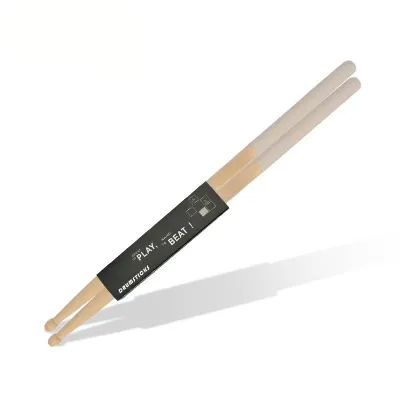
Prices are valid at publication and may change. Please refer to the product page for the latest price.
Promark, on the other hand, often appeals to players who require enhanced durability, alternative wood species, and specialized surface treatments. Drummers performing in high-volume genres like rock, metal, or marching percussion frequently turn to this brand for its robust material selections and forward-weighted designs. Promark is notable for utilizing Japanese Shira Kashi oak alongside traditional hickory, offering a denser, heavier alternative that resists chipping during aggressive rimshots. If you find yourself breaking sticks quickly or needing extra projection without changing your grip, checking their heat-tempered or dense-wood models can provide the necessary structural resilience.
Zildjian approaches stick manufacturing with a strong focus on modern player comfort, vibration reduction, and hybrid designs that complement their historic cymbal lines. Their models often feature unique grip coatings, specialized neck profiles, and anti-vibration technologies designed to reduce hand fatigue during long practice sessions. This makes them highly suitable for versatile players who transition between acoustic and electronic drum kits, or those who experience joint discomfort from high-impact playing. By matching these brand-specific design philosophies to your primary musical genre, you can narrow down your options before examining physical dimensions.
Comparing Feel, Taper, and Balance Point
The physical geometry of a drumstick determines how it moves in your hand and how much effort is required to execute a stroke. The taper—the section of the stick that narrows from the shaft to the tip—plays a critical role in determining the stick’s overall feel and rebound characteristics. A long taper shifts the center of gravity toward the butt end, creating a light, fast-rebounding stick that excels in low-to-medium volume settings where fast articulation is key. Conversely, a short taper keeps more weight near the tip, providing a forward-weighted feel that delivers a powerful, solid impact with less physical effort from the wrist.

When comparing brands, you cannot assume that a standard model designation, such as a 5A or 5B, will feel identical across different manufacturers. For instance, a 5A stick from one brand may feature a medium taper and an oval tip, while another brand’s 5A might utilize a shorter taper and a round tip, completely altering the balance point. You should check the manufacturer’s detailed specifications for the exact length, diameter, and taper profile rather than relying solely on the printed model number. A forward-weighted stick helps generate volume and solid rimshots, whereas a back-weighted stick offers greater control for intricate, low-volume patterns.
The shape of the tip also influences the acoustic response of your cymbals and drums. Round tips produce a bright, highly focused cymbal sound with consistent tone regardless of the angle of impact, making them excellent for studio recording. Oval and teardrop tips offer a broader, warmer tone but require a more consistent striking angle to maintain a uniform sound. Barrel and nylon tips provide maximum brightness and durability, which is highly beneficial when playing on dark-sounding cymbals or electronic drum pads. Evaluating these subtle geometric variations ensures that the stick you choose supports your physical technique and acoustic goals.
Wood Types and Durability: What to Verify Before Buying
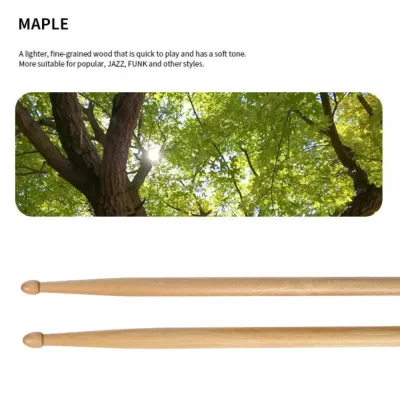
The choice of wood species directly impacts a drumstick’s weight, flexibility, shock absorption, and overall lifespan. Hickory is the industry standard for good reason, offering an excellent balance of density, strength, and natural shock absorption that suits almost any playing style. Maple is significantly lighter and more flexible than hickory, allowing drummers to use larger-diameter sticks for a comfortable grip without the added weight, making it ideal for low-volume acoustic jazz or orchestral work. Oak is the densest and heaviest of the three common woods, providing maximum durability and a powerful attack, though it transmits more vibration to the hands upon impact.
Before purchasing any pair of sticks, it is essential to perform a physical inspection to verify quality control and structural integrity. High relative humidity, common in tropical climates like Singapore, can cause wood to absorb moisture and warp if not stored correctly in the shop or warehouse. To check for straightness, roll each stick slowly across a flat, level surface, such as a glass counter or a smooth table; any wobbling or uneven gaps indicate warping, which will negatively affect the stick’s balance and trajectory. Additionally, inspect the wood grain along the shaft of the stick, ensuring the grain lines run straight and parallel from the butt to the tip, as diagonal grain lines create weak points prone to splitting.
Manufacturers use different proprietary methods to treat and finish their wood, which can affect how the stick feels in sweaty hands. Some brands apply a thin lacquer that provides a smooth, traditional feel but can become slippery during intense performances, while others offer raw, unlacquered finishes or heat-activated grip coatings that become tackier as your body temperature rises. When examining packaging, look for labels indicating weight-matching and pitch-pairing processes, which ensure that both sticks in a sleeve are structurally identical. Verifying these material properties and manufacturing details helps prevent premature breakage and ensures a consistent playing experience.
Evaluating Price, Packs, and Long-Term Value
While a single pair of premium drumsticks typically ranges from S$15 to S$30 at local music retailers, evaluating long-term value requires looking beyond the initial price tag. To determine the true cost-effectiveness of a brand, you should calculate your personal cost-per-hour of playing by tracking how long a pair lasts before losing its structural integrity or breaking. A slightly more expensive stick made from dense oak or treated with a hardening process may last twice as long as a cheaper, untreated hickory stick, making it the more economical choice over several months of regular practice.
Purchasing drumsticks in bulk packs or multi-pair bricks is a highly effective way to reduce your overall expenditure, often saving you a significant percentage per pair compared to individual purchases. However, bulk buying is only advantageous if the quality control remains consistent across the entire batch. When buying multi-packs, verify that the retailer allows you to inspect the sticks or has a clear return policy for any pairs that show signs of warping or grain defects. It is also wise to purchase from authorized music distributors who store their inventory in climate-controlled environments, protecting the wood from extreme humidity fluctuations that compromise durability.
For student drummers or those on a tight budget, balancing performance needs with financial limits is crucial. If you find yourself breaking sticks frequently due to aggressive rimshots or improper technique, investing in heavier models or adjusting your snare drum angle may be more cost-effective than constantly buying premium replacements. Always compare the specifications of standard models against specialized signature lines, as signature sticks often carry a price premium for custom dimensions or aesthetic designs that may not offer any functional advantage for your specific playing style.
Your Final Decision Checklist
To finalize your choice and ensure you select the most suitable drumsticks for your setup, use this structured decision framework before heading to the checkout:
- Choose Vic Firth if: You prioritize a traditional feel, require precise pitch-paired and weight-matched pairs for studio recording, or need a wide variety of classic taper profiles for orchestral and jazz articulation.
- Choose Promark if: You need high-durability options like dense Japanese oak, prefer forward-weighted balance points for heavy rock and metal, or want heat-activated grip coatings to prevent slipping.
- Choose Zildjian if: You seek specialized ergonomic features, built-in anti-vibration technology to reduce hand fatigue, or hybrid stick profiles designed to complement modern cymbal setups.
- Verify physical condition: Always roll the sticks on a flat surface to check for warping, inspect the grain alignment along the shaft, and confirm that the wood type matches your volume and durability requirements.
- Check retailer policies: Ensure you purchase from authorized local distributors who offer genuine stock and clear return policies for manufacturing defects or warped pairs.
Frequently Asked Questions (FAQ)
Do I need to buy the exact same model number across different brands?
No, you should not rely solely on the model number when switching between brands, as there is no universal industry standard for sizing. A 5A or 5B stick from Vic Firth may have a different diameter, length, tip shape, and taper length compared to a 5A or 5B from Promark or Zildjian. Always check the exact millimeter or inch specifications provided on the packaging or the manufacturer’s website to ensure the physical dimensions match your preferences.
How can I test drumsticks for straightness and weight matching in-store?
To test for straightness, roll each stick across a flat, smooth surface like a glass display case; a straight stick will roll smoothly, while a warped one will wobble or hop. To check for weight and pitch matching, gently tap each stick against a hard surface or against each other near your ear; a matched pair will produce a nearly identical pitch, indicating similar wood density and moisture content, which translates to a balanced feel when playing.

Community discussion
Share your experience or ask a question. Comments are reviewed before publication.