
Selecting the right 28-inch ukulele bag is a crucial decision for any beginner, as it directly impacts how often you play and how well your instrument is preserved. A 28-inch ukulele, which typically corresponds to a tenor or a smaller baritone model, is larger and more delicate than standard soprano or concert sizes. The ideal choice depends on your daily routine, how you travel, and where you store the instrument. For casual home storage or quick car trips, a lightweight gig bag offers basic scratch protection. If you regularly commute on public transport like buses or the MRT, a padded soft case provides the necessary shock absorption without adding excessive weight. For air travel or crowded environments where the instrument might be crushed, a rigid hard case is the safest option.
By matching the bag’s structural design to your lifestyle, you can prevent costly damage to the wooden body, neck, and tuning pegs. Each type of bag offers a distinct balance of physical protection, weight, storage capacity, and carrying comfort. Understanding these trade-offs ensures you do not overspend on unnecessary weight or underspend on inadequate protection.
Understanding the Three Main Bag Types for 28-Inch Ukuleles
To make an informed decision, you must first understand the structural differences and baseline protection levels of the three primary bag categories available for 28-inch ukuleles.
Products mentioned in this guide
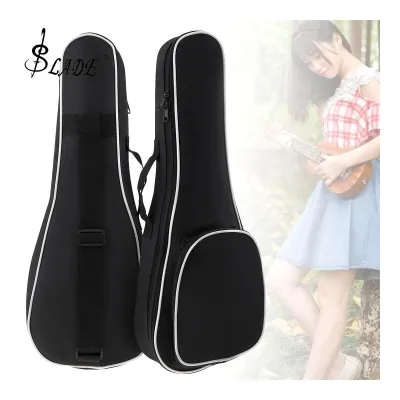

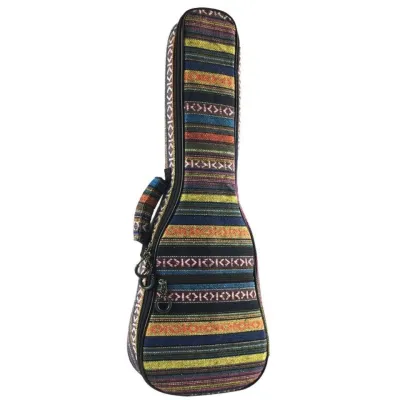
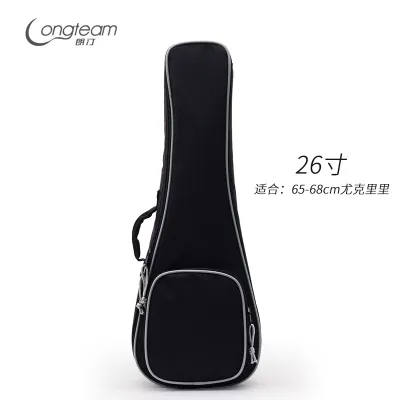
Prices are valid at publication and may change. Please refer to the product page for the latest price.
Gig bags represent the most basic form of instrument transport. These bags are typically constructed from lightweight, flexible fabrics such as nylon or polyester, with very thin internal padding measuring five millimetres or less. Some entry-level gig bags feature no padding at all, serving primarily as a dust cover. Because they lack structural rigidity, gig bags can be easily folded or rolled up when empty. They are designed to protect your ukulele from dust, light moisture, minor surface scratches, and direct sunlight, but they offer virtually no protection against drops, heavy impacts, or structural compression.
Soft cases, often referred to as padded cases or gig bags with high-density foam, offer a significant step up in protection. These cases feature a semi-rigid frame or reinforced side panels combined with thick internal foam padding, usually ranging from 10 to 25 millimetres. The exterior is typically made of heavy-duty, weather-resistant polyester, while the interior is lined with soft fabric to prevent scratches. Unlike basic gig bags, soft cases hold their shape even when empty, providing a protective buffer that absorbs moderate shocks from accidental bumps against doorways, walls, or transit handrails.
Hard cases provide the highest level of physical protection by utilizing a completely rigid outer shell. This shell is commonly constructed from plywood covered in vinyl or tweed, molded ABS plastic, or lightweight fiberglass. The interior features a custom-molded foam core lined with plush fabric, designed to cradle the ukulele’s body and neck securely. Hard cases do not compress under pressure, making them highly resistant to crushing forces. However, this maximum level of protection comes with a trade-off, as hard cases are significantly heavier and bulkier than both gig bags and soft cases.
Comparing Protection, Weight, and Daily Portability
Evaluating how these three options perform in daily use requires looking at the practical trade-offs between physical protection, carrying weight, and accessory storage.

When it comes to impact protection, a hard case is the only option that can reliably withstand heavy crushing forces, such as another heavy object falling on top of it in a car trunk. Soft cases offer excellent shock absorption for daily drops and bumps, as the thick foam compresses to dissipate the energy of an impact. Gig bags offer almost no impact resistance, meaning a drop from waist height could easily crack the wooden body of your 28-inch ukulele. Weather resistance also varies; while many soft cases and hard cases feature water-resistant exterior materials or sealed gaskets, gig bags can quickly saturate during a heavy downpour.
Weight and carrying comfort are critical factors if you walk long distances or commute regularly. A standard gig bag is incredibly light, often weighing less than half a kilogram, making it effortless to carry. Soft cases are slightly heavier but usually feature dual, adjustable backpack straps with thick shoulder padding, allowing you to distribute the weight evenly across both shoulders. Hard cases are the heaviest option, often weighing two to three kilograms on their own. They typically rely on a single molded side handle, which can cause hand and shoulder fatigue during long walks, though some models include a single shoulder strap.
Storage capacity is another area where soft cases often outperform hard cases. Soft cases and gig bags frequently feature large, zippered exterior pockets that can easily accommodate music books, chord charts, clip-on tuners, spare strings, and capos. Hard cases, due to their rigid construction, have very limited storage space, usually restricted to a small internal compartment beneath the neck cradle. If you need to carry sheet music or a tablet to your lessons, choosing a hard case means you will likely need to carry an additional backpack.
| Bag Type | Protection Level | Relative Weight | Storage Capacity | Ideal Use Case |
|---|---|---|---|---|
| Gig Bag | Low (Scratch/Dust) | Very Light | Moderate to High | Home storage, quick car trips |
| Soft Case | Medium (Bumps/Drops) | Moderate | High (Large Pockets) | Daily commuting, music lessons |
| Hard Case | High (Crush/Impact) | Heavy | Low (Small Internal) | Air travel, long-term storage |
Matching the Bag to Your Commute and Lifestyle
Selecting the right bag is ultimately a matter of matching these structural characteristics to your specific daily transport scenarios and lifestyle.
A lightweight gig bag is highly suitable if your ukulele rarely leaves your home. In a household environment, the primary threats to your instrument are dust, pet hair, and minor scratches from being moved around. A gig bag keeps the instrument clean and takes up minimal storage space in a closet or under a bed. It is also a practical choice if you only transport your ukulele in the back seat of a personal car for short, controlled trips where you handle the instrument with complete care at all times.
A padded soft case is the most practical choice for the vast majority of beginners who commute. If you walk to weekly music lessons, board crowded buses, or navigate busy train stations, your instrument is constantly exposed to accidental bumps from other commuters. The thick foam padding of a soft case provides reliable protection against these daily hazards. Furthermore, the backpack straps keep your hands completely free, which is incredibly useful when holding handrails on public transit, carrying an umbrella during a sudden tropical shower, or navigating busy streets. For instance, spending S$30 to S$60 on a padded soft case is often the most cost-effective way to protect your instrument without adding unnecessary bulk to your daily commute.
A rigid hard case is necessary if you travel extensively or navigate highly unpredictable environments. If you travel by air and are forced to check your instrument as luggage, a hard case is the only option that can withstand the rough handling of airport baggage systems. It is also essential if you regularly load your ukulele into a vehicle trunk alongside heavy amplifiers, microphone stands, or luggage, where shifting gear could easily crush a soft-sided bag. Additionally, if you live in a household with active pets or young children, a hard case provides a secure, crush-proof vault that prevents accidental damage when the instrument is not in use.
Before purchasing any bag, it is vital to verify the specific dimensions of your 28-inch ukulele. While “28-inch” generally refers to tenor or baritone models, body shapes can vary significantly between different brands. For example, a ukulele with an unusual cutaway, an extra-deep body, or a non-standard headstock design may not fit into a standard, off-the-shelf bag. Always measure your instrument first to ensure a proper fit.
Essential Fit and Feature Checks Before Purchase
To ensure your chosen bag provides adequate protection and does not cause unintended damage, you should perform several key checks before making a purchase.
First, measure your ukulele’s physical dimensions rather than relying solely on the nominal size label. Use a tape measure to find the total length from the top of the headstock to the bottom of the body, the width of the upper bout, the width of the lower bout, and the maximum depth of the body. Compare these measurements against the internal dimensions listed by the bag manufacturer. The fit should be snug enough to prevent the instrument from sliding around inside, but not so tight that you have to force the zippers shut, which can put dangerous pressure on the bridge and neck.
Second, examine the neck support and headstock clearance. High-quality soft cases and hard cases feature a dedicated neck cradle, often with a hook-and-loop strap to secure the neck in place. This prevents the ukulele from shifting laterally during transport. Ensure there is sufficient clearance around the headstock so that the tuning pegs do not press directly against the sides or top of the case, as constant pressure can detune the strings or bend the tuning gears.
Third, inspect the quality of the hardware and interior materials. Zippers are often the first component to fail on a soft bag; look for heavy-duty, oversized nylon or metal zippers with reinforced stitching. The interior lining should be made of a soft, non-abrasive material like microfiber, flannel, or plush polyester to protect the wood’s finish. Additionally, check for reinforced wear patches near the headstock and bridge areas, as sharp string ends and metal tuning posts can easily tear through soft interior fabrics over time.
If you find that a bag’s internal dimensions are not clearly specified on an online marketplace, or if you are unsure whether your specific ukulele model will fit, stop and consult the manufacturer or seller before buying. Purchasing a bag that is too loose allows the instrument to slide around and sustain impact damage, while a bag that is too tight can warp the wood or snap the neck under tension.
Frequently Asked Questions (FAQ)
Can I use a standard guitar bag for my 28-inch ukulele?
Using a standard guitar bag for a 28-inch ukulele is not recommended because the bag will be significantly oversized. When an instrument is placed in a bag that is too large, it can slide around freely during transport. This lack of a snug fit means the ukulele will not benefit from the bag’s padding during a fall, as it will crash against the inside of the bag itself. Additionally, the neck of the ukulele will lack proper support, increasing the risk of structural damage or broken tuning pegs if the bag is bumped.
How should I clean and maintain my ukulele bag?
To maintain a fabric gig bag or soft case, regularly wipe the exterior with a damp cloth to remove dust and dirt, and use a soft brush for stubborn spots. Avoid submerging padded bags in water, as this can damage the internal foam structure. For hard cases with vinyl or plastic shells, a simple wipe-down with a damp microfiber cloth is usually sufficient. Periodically check the zippers or latches, and apply a small amount of zipper lubricant or paraffin wax to metal zippers to keep them operating smoothly. Always refer to the manufacturer’s care label for specific cleaning instructions.
Do I need to use a humidifier inside my ukulele case?
Whether you need humidity control depends on your local climate and the construction of your ukulele. Instruments made of solid wood are highly sensitive to changes in humidity, which can cause the wood to warp, crack, or shrink. In highly humid tropical environments, such as Singapore, the challenge is often excess moisture rather than dryness, meaning you may need silica gel packs or a dehumidifying packet inside your case to keep the relative humidity stable. Always check your ukulele manufacturer’s care guidelines to determine the ideal humidity range for your specific instrument.

Community discussion
Share your experience or ask a question. Comments are reviewed before publication.