
Choosing the right keyboard stand as a beginner depends on your instrument’s weight, your practice space, and whether you plan to play seated or standing. While an X-stand is often the default choice for budget-conscious beginners who need portability, Z-stands offer superior stability and legroom for heavier digital pianos, and table stands provide a highly stable, desk-like platform for dedicated home setups. Understanding how these three structural designs interact with your body and your instrument is the first step toward building a comfortable, safe, and encouraging practice environment.
The classic X-stand features a cross-braced frame that folds flat, making it highly convenient for tight spaces but sometimes restrictive for your knees. In contrast, the Z-stand uses a rigid, open-frame design shaped like the letter Z, providing excellent legroom and a solid foundation for heavier instruments. Table stands, or platform stands, feature four independent legs or a flat tabletop frame, offering a highly stable surface that mimics a traditional desk. Selecting the ideal option requires balancing your keyboard’s physical dimensions with your daily playing habits.
Key Comparison Dimensions for Beginner Setups
Before choosing a stand, you must evaluate several practical factors that directly impact your daily practice sessions. The first and most critical dimension is stability and weight capacity. Rather than assuming a stand is sturdy based on its appearance, you must check the manufacturer’s official weight rating against the actual weight of your keyboard. A heavy 88-key digital piano with weighted keys requires a much higher load capacity than a lightweight 61-key synthesizer, and exceeding these limits can lead to catastrophic equipment damage.
Products mentioned in this guide
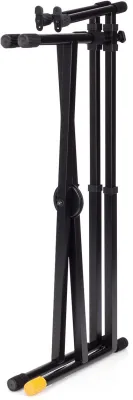
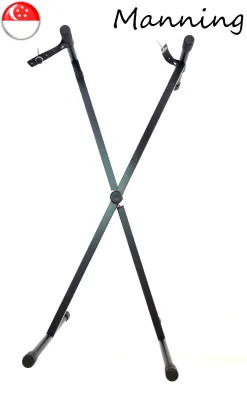
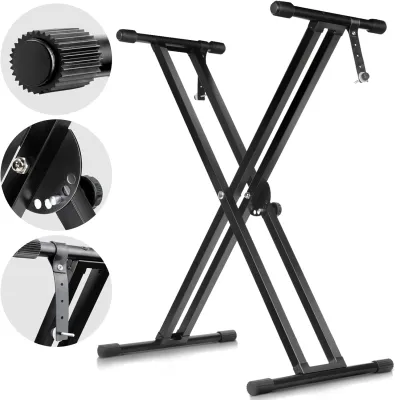
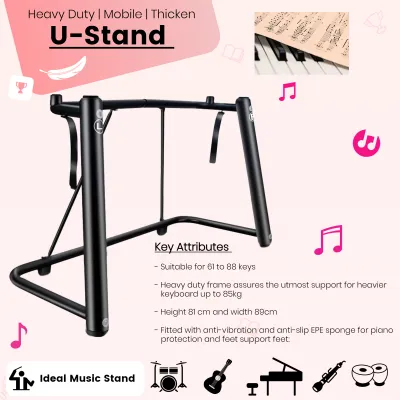
![[SG Seller] Double X Adjustable Portable Self-installation piano Keyboard Stand](https://img.lazcdn.com/g/p/b80c0e4f73cccbdb23d62602c484413c.jpg_400x400q80.jpg_.webp)

Prices are valid at publication and may change. Please refer to the product page for the latest price.
Legroom and playing posture represent another vital consideration, especially if you plan to practice while seated. Some stand geometries, particularly basic X-stands, place metal support bars directly where your knees and shins need to go. This can force you into an awkward, asymmetrical posture that leads to back and neck strain over long practice sessions. Ensuring your stand allows your feet to rest flat on the floor with your knees bent at a comfortable 90-degree angle is essential for developing proper playing technique.
Portability and storage requirements vary significantly depending on your living arrangements. If you live in a compact apartment or need to pack up your gear after every practice session, a stand that folds completely flat is indispensable. You should look at the collapsed footprint of the stand and consider how easily it can slide under a bed or fit into a closet. Conversely, if you have a dedicated music corner, a heavier, semi-permanent stand might be more appropriate.
Finally, adjustability and ergonomics dictate how easily you can customize the playing height. Beginners of different heights, or those who share an instrument with family members, need a stand that can be adjusted quickly and securely. Some stands use simple pull-pin mechanisms, while others require manual knob adjustments or even screw assembly. Checking the height range ensures the keys sit at a natural elbow height, preventing wrist fatigue and repetitive strain injuries.
Detailed Breakdown: X-Stand vs Z-Stand vs Table Stand
Each keyboard stand design serves a distinct purpose and comes with its own set of physical trade-offs. Examining these three popular styles in detail will help you identify which configuration aligns with your specific instrument and practice environment.

X-Stands (Single and Double Braced)
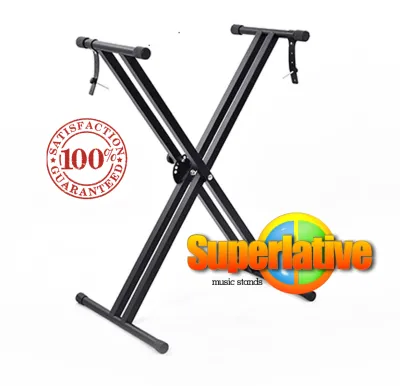
X-stands are the most common entry-level option due to their simplicity, affordability, and ease of transport. These stands are ideal for lightweight keyboards, such as 61-key or 76-key arranger keyboards, and for players who frequently move their gear between rooms or performance spaces. Because they fold flat in a single motion, they are incredibly easy to store in tight spaces when not in use.
However, the cross-braced design of an X-stand introduces specific physical limitations. When adjusted to taller heights, the base of the stand narrows, which can make the setup feel top-heavy and prone to side-to-side wobble during energetic playing. Additionally, the central crossing bars block the space directly beneath the keyboard, leaving very little room for your legs and making it difficult to use sustain pedals comfortably while seated.
When shopping for an X-stand, it is crucial to distinguish between single-braced and double-braced models. Single-braced stands feature a single metal bar on each side of the “X,” making them lighter but less stable. Double-braced stands utilize two parallel bars on each side, which significantly increases lateral stability and weight capacity. You should also inspect the locking mechanism, opting for heavy-duty pull-pins or clutch disks rather than simple friction grips.
Z-Stands
Z-stands are highly regarded for their exceptional stability and ergonomic design, making them an excellent match for full-sized, 88-key weighted digital pianos. The Z-shaped side pillars distribute weight directly down to the floor along a wide base, virtually eliminating the side-to-side wobble common in cheaper stands. This makes them a preferred choice for players who practice dynamic classical pieces or use heavy, hammer-action keyboards.
The primary ergonomic benefit of a Z-stand is the completely open space beneath the keyboard. Without any diagonal crossbars blocking your knees, you can sit comfortably with your legs positioned naturally, just as you would at an acoustic piano. This open design also provides plenty of room for foot pedals, power supplies, and cables to sit neatly on the floor.
On the downside, Z-stands have a larger physical footprint and are generally heavier than X-stands. They do not fold down as compactly, often requiring you to loosen several hand screws or partially disassemble the frame to transport it. Before purchasing, you should verify the base plate dimensions to ensure the stand fits your designated floor space, and check for high-quality anti-slip rubber pads to protect both your floor and your instrument.
Table Stands and Platform Options
Table stands, also known as platform stands, feature a flat, four-legged frame that resembles a utility table. This design is highly versatile and works exceptionally well for fixed home studios, compact MIDI controllers, synthesizers, and multi-keyboard setups. Because the weight is distributed evenly across four vertical legs, table stands offer a rock-solid foundation that can easily support heavy equipment without flexing.
These stands are particularly useful if you want to integrate your keyboard into an existing desk setup or a dedicated workstation. The flat top surface allows you to place smaller accessories, such as audio interfaces or laptop stands, alongside your keyboard if the width permits. Like Z-stands, table stands offer completely unobstructed legroom, allowing for comfortable seated practice and easy pedal placement.
However, table stands typically offer less height adjustability than X-stands, and adjusting the height often requires adjusting each of the four legs individually, which can be tedious. They are also less suited for standing performances unless specifically rated for extended heights. When evaluating a table stand, verify that the top surface includes adjustable rubber bumpers or edge guards to keep your keyboard from sliding off the smooth metal frame.
Decision Framework: Which Stand Fits Your Beginner Needs?
To finalize your choice, you should match your specific equipment, space constraints, and budget against the strengths of each stand type. This structured framework will guide you to the most practical option for your home setup.
You should choose an X-stand if you are using a lightweight keyboard under 10 kilograms, need to pack away your equipment after every practice session, and want a budget-friendly solution. If you go this route, investing slightly more in a double-braced model is highly recommended to ensure long-term stability and safety.
You should choose a Z-stand if you own a heavy, 88-key digital piano, plan to practice primarily while seated, and have a dedicated corner where the stand can remain permanently assembled. The Z-stand offers the best balance of professional-grade stability and ergonomic comfort for serious piano students.
You should choose a table stand if you are setting up a home recording station, need to place multiple pieces of gear on a single platform, or want a highly stable, desk-like feel. This option is perfect for static setups where height adjustments are rarely needed once the initial assembly is complete.
Before making any purchase, always verify the physical compatibility of your gear. If your keyboard’s weight is close to the stand’s maximum rated capacity, or if you plan to place the stand on an uneven floor or thick carpeting, prioritize a heavier Z-stand or table stand with adjustable leveling feet to prevent accidental tipping.
Essential Pre-Purchase Checks and Safety Boundaries
Ensuring the safety of your instrument and your physical well-being requires a few quick checks before you finalize your purchase. First, always cross-reference the exact weight of your keyboard—including any attached music rests or accessories—with the stand’s official maximum load capacity. Never assume a stand can support your keyboard simply because it looks sturdy; always verify the specifications on the product label.
Next, inspect the quality of the rubber end caps and anti-slip pads on both the top arms and the bottom feet of the stand. These components are vital for preventing your keyboard from sliding off the stand and keeping the stand itself from shifting on slick tile or wooden floors. If these rubber parts are missing, hardened, or damaged, they should be replaced immediately.
You must also ensure that the stand’s height adjustment range allows you to align the keyboard keys with your natural elbow height when seated on your bench. Proper wrist alignment is crucial for preventing fatigue and long-term strain. If you cannot achieve a comfortable, neutral wrist position, you may need to adjust your seating height or look for a stand with a different adjustment range.
Finally, establish a clear safety boundary for your equipment. If you notice any persistent wobbling, bending of the metal frame, or if the locking pins and clutches fail to engage fully, stop using the stand immediately. Do not attempt to modify the frame yourself; instead, consult the manufacturer or a qualified technician to address the structural issue before placing your instrument back on the stand.
Frequently Asked Questions (FAQ)
Can I use a regular desk instead of a dedicated table stand?
While you can physically place a keyboard on a standard office or study desk, it is rarely ideal for proper practice. Standard desks are typically designed for computer use and sit around 70 to 75 centimeters high, which is often too tall for comfortable keyboard playing when seated on a standard chair. This height mismatch can force you to raise your shoulders and bend your wrists awkwardly, leading to rapid fatigue and potential strain. Additionally, you must carefully measure the depth of your desk to ensure the keyboard fits securely without overhanging the front edge, which could cause it to tip forward.
Do I need a double-braced X-stand for a 61-key keyboard?
For a very lightweight 61-key keyboard, a single-braced X-stand is often sufficient and highly portable. However, choosing a double-braced version is usually a smart long-term investment. Double-braced stands offer significantly better resistance to side-to-side swaying, which can be distracting even on lighter instruments during enthusiastic playing. Furthermore, if you decide to upgrade to a heavier 76-key or 88-key digital piano in the future, a double-braced stand will already have the weight capacity to support your new instrument, saving you the cost of buying a second stand.

Community discussion
Share your experience or ask a question. Comments are reviewed before publication.