
Choosing the right piano rack is just as important as selecting your first keyboard, as a shaky or uncomfortable stand can quickly discourage a beginner. Many new players make the mistake of placing their instrument on a dining table, desk, or spare counter, only to find that the height is incorrect and the setup lacks stability. A dedicated stand not only keeps your instrument safe but also ensures you can practice with the correct posture and hand technique from day one. The ideal choice depends on whether you prioritize portability, stability, or legroom. While X-stands offer unmatched portability and affordability, Z-stands provide superior legroom and stability, and table stands deliver a highly adjustable, furniture-like experience for dedicated home setups. By evaluating your keyboard’s weight, your available floor space, and your preferred playing posture, you can select a stand that keeps your instrument secure and your practice sessions comfortable.
Comparing the Core Designs: X-Stand, Z-Stand, and Table Stand
To make an informed decision, it is essential to understand the structural differences and primary use cases for each stand type. The X-stand is the most common entry-level option, easily recognized by its scissor-like design that crosses in the middle to form an “X” shape. These stands are typically constructed from square or round steel tubing and are highly affordable, making them a popular choice for beginners on a budget. Most X-stands require minimal assembly, often arriving fully put together or requiring only a few bolts to secure the top and bottom support bars. They are designed for quick setup and teardown, making them highly convenient for players who need to clear space after practice.
Z-stands, named for their Z-shaped side profiles, offer a more robust and open structure. They consist of two vertical side frames connected by a horizontal crossbar, creating a rigid frame that distributes weight evenly. While they generally cost more than basic X-stands, they provide a much sturdier foundation and are typically constructed from heavy-duty steel. Assembly is slightly more involved, requiring you to bolt the side frames to the center support bar, but the process remains straightforward for most users. The Z-shape provides an open space beneath the keyboard, allowing for a more natural seating position.
Products mentioned in this guide
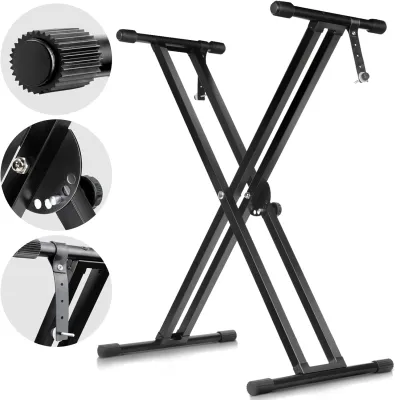
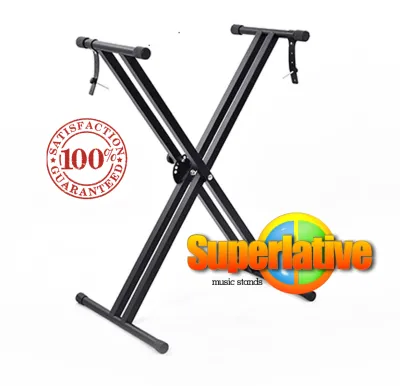
![[SG Seller] Double X Adjustable Portable Self-installation piano Keyboard Stand](https://img.lazcdn.com/g/p/b80c0e4f73cccbdb23d62602c484413c.jpg_400x400q80.jpg_.webp)

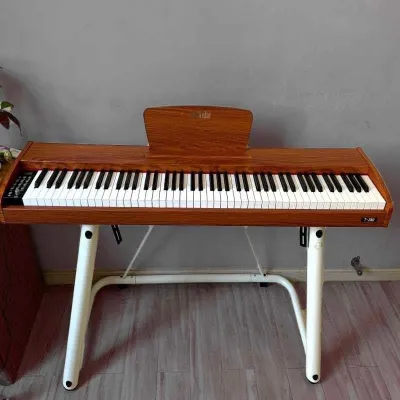
Prices are valid at publication and may change. Please refer to the product page for the latest price.
Table stands resemble a small, adjustable utility table with four independent legs or a rectangular frame. This design offers a flat, wide platform that can accommodate various keyboard sizes. Table stands are highly stable and are often favored by players who want a clean, professional look that blends into a living space. They usually require some initial assembly to attach the legs and adjust the width, but they offer excellent long-term durability. The four-legged structure ensures that weight is distributed evenly across the floor, making it an excellent choice for heavier digital pianos.
Stability and Weight Limits: Keeping Your Keyboard Secure
A keyboard stand must provide a stable foundation to prevent your instrument from tipping, sliding, or shaking while you play. The stability of a stand is largely determined by its center of gravity and the size of its base footprint. X-stands have a narrower footprint when adjusted to higher positions, which can make them more prone to side-to-side wobbling, especially during energetic playing or when holding heavier 88-key digital pianos. Because the legs draw closer together as the stand is raised, the overall stability decreases at taller heights, which is a crucial consideration for taller players who prefer to stand or sit high.

To ensure your setup is safe, always check the manufacturer’s specified weight limit and compare it to the weight of your keyboard. Keep in mind that a keyboard’s weight includes not just the instrument itself, but also any accessories like music rests, tablets, or heavy cables. If your keyboard is close to the stand’s maximum capacity, upgrading to a sturdier stand style is highly recommended to prevent structural failure. In space-constrained homes, such as typical Singapore apartments, finding a stand that balances a compact footprint with reliable stability is essential to prevent accidental bumps from tipping the instrument.
Z-stands and table stands offer a much wider base footprint and a lower center of gravity, making them inherently more stable than X-stands. The rigid crossbars of a Z-stand prevent lateral movement, while the four independent legs of a table stand distribute weight evenly across the floor. If you plan to play with a dynamic touch or use a heavier weighted-action keyboard, investing in a Z-stand or table stand will significantly reduce distracting wobbles and keep your instrument secure. This stability is particularly important for beginners who are still developing their finger strength and may apply uneven pressure to the keys.
Portability and Storage: Managing Space and Transport
For beginners who need to pack away their equipment after practice or transport it to lessons, portability is a key factor. X-stands excel in this category, as their scissor mechanism allows them to fold completely flat in seconds. Once collapsed, an X-stand takes up very little space, making it easy to slide under a bed, tuck into a closet, or load into the boot of a car. This makes them the go-to choice for students who live in shared spaces or need to bring their stand to rehearsals and performances.
Z-stands are also portable, but they require more effort to transport. Some Z-stands feature folding joints that allow the side frames to collapse inward, while others must be partially disassembled by loosening hand screws to break the frame down into flat pieces. While they can still fit into a vehicle, they have a larger collapsed footprint and are generally heavier to carry than a standard X-stand. If you plan to move your setup frequently, a Z-stand may feel cumbersome compared to the quick-folding convenience of an X-stand.
Table stands lie somewhere in the middle, depending on their specific design. Some models feature legs that fold flat against the underside of the platform, making them relatively easy to store and transport. However, they still maintain a wider rectangular shape when collapsed, which may require more storage space than a folded X-stand. The physical weight of the stand itself is also a consideration; heavier steel table stands offer great stability but can be challenging to carry over long distances without assistance.
Ergonomics and Legroom: Ensuring a Comfortable Playing Posture
Proper playing posture is essential for beginners to avoid fatigue and prevent strain in the wrists, shoulders, and back. A major drawback of the X-stand design is the lack of legroom. Because the support bars cross directly in the center, they block the space beneath the keyboard, preventing you from sitting comfortably with your knees tucked under the instrument. This can force you to sit further back or angle your legs awkwardly, which compromises your posture and can lead to discomfort during long practice sessions.
In contrast, Z-stands and table stands offer completely open space beneath the keyboard. This allows you to sit close to the instrument with your knees and feet positioned naturally, mimicking the ergonomics of a traditional acoustic piano. This open design is also highly beneficial if you plan to use a sustain pedal, as it gives you plenty of room to position the pedal comfortably without hitting your shins on a metal bar. Proper leg clearance ensures that you can maintain a relaxed, upright posture, which is critical for developing good playing habits.
Height adjustment is another crucial factor for ergonomics. Most stands feature adjustment mechanisms like spring-loaded pins, pull knobs, or telescoping tubes to help you find the perfect playing height. When choosing a stand, verify that its height range matches your seating setup, whether you are using a standard piano bench, an adjustable stool, or even standing while playing. Ensure the locking mechanisms are robust and easy to operate to prevent accidental slipping. A secure locking system is vital for maintaining a consistent height and protecting your instrument from sudden drops.
Making the Final Decision: Which Stand Fits Your Needs?
Selecting the right piano rack comes down to balancing your budget, your available space, and your specific keyboard model. If you are a beginner on a tight budget, have limited space, or need to transport your keyboard frequently, an X-stand is a practical and cost-effective choice. Just be sure to choose a model with a reliable locking mechanism and avoid overloading it with an exceptionally heavy keyboard. For those starting out, a double-braced X-stand can offer a reasonable compromise between affordability and stability.
If you have a dedicated practice space and prioritize stability and proper playing posture, a Z-stand is often the best all-around option. It provides excellent legroom, handles heavier keyboards with ease, and offers a highly secure foundation that won’t wobble during intense practice sessions. This makes it a great long-term investment that can grow with you as your playing skills advance. While it may cost slightly more upfront, the ergonomic benefits and peace of mind are well worth the investment.
For those who want their keyboard setup to look like a permanent piece of home furniture, a table stand is an excellent choice. Its clean lines and wide platform blend seamlessly into living spaces, while its four-legged design offers outstanding stability and maximum legroom. Before making your final purchase, always measure your keyboard’s depth and width to ensure a proper fit, and check that the stand’s feet have rubber caps to protect your floors and prevent sliding. Taking these verification steps will ensure you choose a stand that perfectly complements your instrument and your home.
Frequently Asked Questions (FAQ)
Can I use a double-braced X-stand for a heavy 88-key keyboard?
Yes, a double-braced X-stand is significantly sturdier than a single-braced model because it features two intersecting metal bars on each side instead of one. This extra reinforcement increases the weight capacity and reduces lateral wobble, making it a viable option for heavier 88-key digital pianos. However, if your keyboard is exceptionally heavy or if you play with a very dynamic, heavy touch, you may still experience some shaking. In such cases, transitioning to a Z-stand or a table stand is highly recommended to ensure maximum stability and protect your instrument from tipping.
Do I need a special stand if I use a sustain pedal?
You do not need a special stand specifically for a sustain pedal, but the type of stand you use will greatly affect your comfort and stability. When you press a sustain pedal, you apply forward and downward force, which can cause lighter, less stable stands to slide or wobble. To mitigate this risk, look for stands with non-slip rubber end caps on the feet and top support bars to keep both the stand and the keyboard firmly in place. Additionally, Z-stands and table stands are highly recommended for pedal users because they offer completely open legroom, allowing you to position the pedal naturally without any structural bars blocking your feet.

Community discussion
Share your experience or ask a question. Comments are reviewed before publication.