
Choosing your first keyboard stand is just as important as selecting the instrument itself. The right support keeps your keyboard secure, protects your investment, and ensures you can practice in a comfortable, ergonomic position. There is no single “best” keyboard stand for every beginner; instead, the ideal choice depends on your keyboard’s weight, your available space, and how often you plan to move your setup.
By evaluating the three primary designs—X-stands, Z-stands, and fixed wooden stands—you can find a balance between stability, portability, and budget. Pairing your stand with a suitable piano bench completes the setup, setting you up for comfortable practice sessions from day one. Let’s look at how these three common designs compare to help you make an informed decision.
Understanding the Three Main Keyboard Stand Types
Before comparing their performance, it is helpful to understand how each stand is constructed and how they differ in daily use.
Products mentioned in this guide
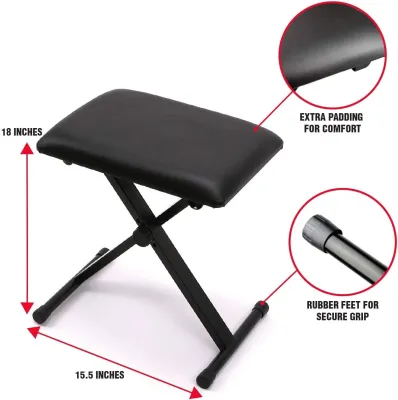
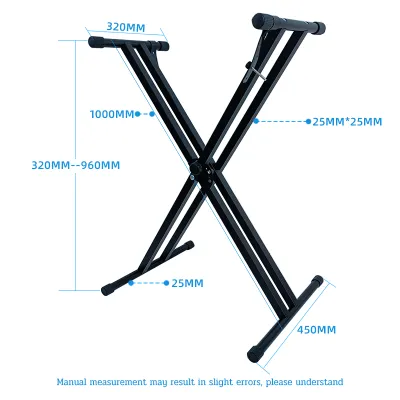
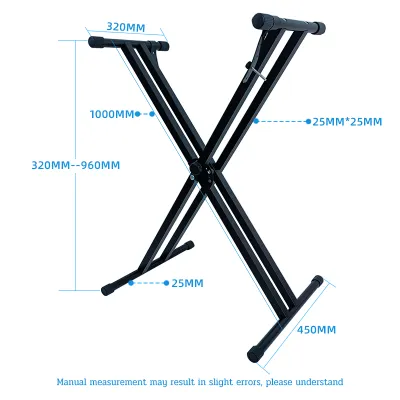
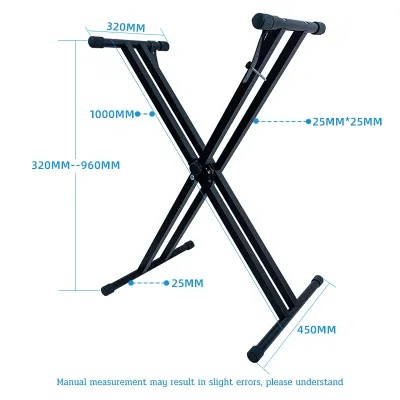

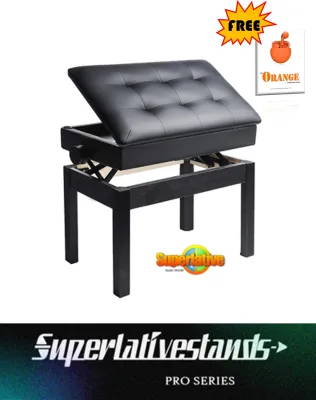
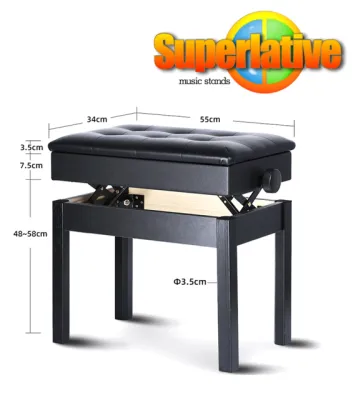
Prices are valid at publication and may change. Please refer to the product page for the latest price.
Single and double X-stands are the most common entry-level options. Named for their cross-shaped frame, these stands use a central scissor mechanism that allows them to fold completely flat for storage. A single X-stand features one bar on each side, making it highly lightweight and affordable, though best suited for lighter keyboards. Double X-stands add a second set of reinforcing bars, which significantly increases weight capacity and reduces side-to-side wobble without sacrificing the folding design.
Z-stands feature a rectangular base with two upright columns shaped like the letter Z. This design provides a wide, open space underneath the keyboard, mimicking the legroom of a traditional piano. Because the weight is distributed across a broader, more rigid frame, Z-stands offer excellent stability and are highly adjustable in both height and width. They are popular among players who want a permanent or semi-permanent home setup that can still be disassembled if needed.
Fixed wooden stands, often referred to as furniture-style stands, are designed to match specific digital piano models. These stands consist of solid wooden side panels and a backboard, creating a cohesive, traditional look that resembles an acoustic upright piano. They are built to be stationary, providing a highly stable platform that integrates seamlessly into a living room or bedroom. Many of these stands also allow you to bolt a matching three-pedal unit directly to the frame.
Comparing Stability, Portability, and Value
Every beginner must balance different priorities when setting up their practice space. To find the right fit, you need to weigh the trade-offs between structural stability, ease of transport, and overall cost.

Evaluating these factors side-by-side helps clarify which design aligns with your home environment and musical goals.
Stability and Weight Capacity
The primary job of any stand is to hold your keyboard securely without shaking while you play. An unstable stand can cause the keys to bounce, which disrupts your playing technique and can even lead to the instrument tipping over. To prevent this, always check the manufacturer’s stated weight capacity against the actual weight of your keyboard, which can be found in your instrument’s user manual.
Z-stands and fixed wooden stands offer the highest level of structural stability. Because their support legs sit directly under the outer edges of the keyboard, they distribute weight evenly and resist side-to-side movement, even during energetic playing. Wooden stands, being bolted directly to the piano chassis, offer a completely wobble-free experience that feels solid and reliable.
In contrast, X-stands can suffer from stability issues, particularly when extended to their maximum height. As an X-stand is adjusted higher, its footprint narrows, making it more prone to tipping. Single X-stands are generally only suitable for lightweight 61-key or 76-key keyboards. If you have a heavier 88-key digital piano, a double X-stand is the minimum requirement, though a Z-stand or wooden stand remains a safer choice. Regardless of the type, ensure the stand has thick rubber feet to grip hard floors and prevent sliding.
Portability and Storage
If you need to pack up your keyboard after every practice session or transport it to lessons, portability is a major deciding factor. The ease of folding and the weight of the stand itself will determine how practical it is to move.
X-stands are the undisputed leaders in portability. They fold completely flat in seconds, allowing you to slide them under a bed, behind a wardrobe, or into the boot of a car. Their lightweight construction makes them easy to carry with one hand, which is ideal for students or players who frequently change their practice locations.
Z-stands also offer some portability, as many models can be disassembled or folded down, but they remain bulkier and heavier than X-stands. They require more effort to pack away and take up more storage space when not in use. Fixed wooden stands are entirely stationary; they are heavy, held together by screws, and designed to stay in one place. Moving a wooden stand usually requires two people and partial disassembly, making them unsuitable for anyone who needs a mobile setup.
Value and Long-Term Use
When starting out, it is natural to consider your initial budget, but you should also think about how your equipment will serve you as your skills progress. Investing in a durable stand now can save you money on upgrades later.
Basic single X-stands offer the lowest entry barrier, often costing significantly less than other styles. They are an excellent, low-risk choice if you are testing the waters and using a lightweight starter keyboard. However, if you eventually upgrade to a heavier, fully-weighted 88-key digital piano, a basic X-stand will likely need to be replaced, meaning you will end up buying a second stand anyway.
Z-stands represent a highly versatile mid-range investment. While they cost more than basic X-stands, their high weight capacity and adjustable dimensions mean they can accommodate almost any keyboard you might buy in the future. Fixed wooden stands are typically the most expensive option, as they are often sold as proprietary accessories for specific piano models. However, they offer the best long-term durability and aesthetic appeal for a dedicated home practice space, retaining their value well if you plan to keep your digital piano for many years.
How to Match the Stand to Your Keyboard and Space
To ensure a safe and comfortable playing experience, you must verify that your chosen stand physically fits both your instrument and your room.
First, measure the depth and width of your keyboard. The support arms of an X-stand or Z-stand should cover at least two-thirds of the keyboard’s depth to prevent it from tilting forward or backward. If the stand is too narrow, the keyboard may feel unstable; if it is too wide, the keyboard might not sit flat on the rubber pads. For wooden stands, you must purchase the exact model designed for your specific digital piano, as generic wooden stands do not exist.
Proper posture is essential for preventing strain during long practice sessions, which makes pairing your stand with the right bench crucial. Your bench should allow your elbows to sit at a slightly downward angle to the keys, with your feet resting flat on the floor. While a standard household chair might seem like an easy substitute, they are often too low or lack the flat, firm support needed for proper piano posture. An adjustable keyboard bench is highly recommended, as it allows you to fine-tune your seating height relative to your stand.
Space planning is especially important in smaller apartments where every square centimetre counts. If you choose a Z-stand, measure the floor space to ensure you have enough clearance for the wide base, keeping in mind that Z-stands offer excellent legroom underneath for your knees and pedals. If you opt for an X-stand, remember that adjusting the height changes the width of the base; a higher setting means a narrower footprint, which might fit into a tight corner but will reduce stability. For a wooden stand, treat it as a piece of furniture and ensure you have a dedicated wall space where it can sit permanently without blocking walkways.
Decision Framework: Which Stand Should You Choose?
To finalize your decision, consider which of the following scenarios best describes your current living situation, budget, and instrument.
Choose an X-stand if:
- You are working with a limited budget and want a cost-effective entry point.
- You have a lightweight 61-key or 76-key keyboard.
- You need to pack away your equipment after every practice session or transport it to different locations.
- Your practice space is highly limited, requiring a stand that can fold completely flat.
Choose a Z-stand if:
- You want a highly stable, wobble-free platform that can support heavier keyboards.
- You require plenty of legroom underneath the keyboard for comfortable seating and pedal placement.
- You want a versatile stand that can adjust to fit different keyboard sizes as you upgrade in the future.
- You plan to keep your setup mostly stationary but still want the option to disassemble it for transport.
Choose a wooden stand if:
- You own a heavy, 88-key digital piano and want the most stable, secure support possible.
- You have a dedicated music corner or room where the piano can remain permanently set up.
- You prefer a classic, furniture-style aesthetic that blends in with your home decor.
- You want to attach a matching three-pedal unit for a more authentic acoustic piano experience.
Verify first if:
- The stand's maximum weight capacity comfortably exceeds your keyboard's weight.
- The rubber feet on the stand are compatible with your flooring to prevent slipping or scratching.
- Your keyboard has mounting holes on the bottom that align with the safety straps or screws on your chosen stand.
Frequently Asked Questions (FAQ)
Do I need a matching bench for my keyboard stand?
While you do not need a brand-matching bench, using a dedicated piano bench is highly recommended for proper ergonomics. Standard household chairs or dining stools are rarely the correct height, which can lead to wrist strain, shoulder tension, and poor playing posture. An adjustable keyboard bench allows you to set the perfect height so your forearms run parallel to the floor. Additionally, dedicated benches feature firm padding designed to support your weight evenly during extended practice sessions, helping you maintain focus and comfort.
Can I use an X-stand for a heavy 88-key digital piano?
You should avoid using a standard single X-stand for a heavy 88-key digital piano. Heavy instruments, which often weigh over 15 kilograms, place significant stress on the central bolt of a single X-stand, increasing the risk of structural failure or tipping. Furthermore, the narrow footprint of an X-stand at playing height makes it highly susceptible to side-to-side wobble. If you must use an X-style stand for a heavy piano, choose a heavy-duty double X-stand with a reinforced frame, or ideally, opt for a Z-stand or a dedicated wooden stand to ensure maximum safety.

Community discussion
Share your experience or ask a question. Comments are reviewed before publication.