
Selecting a first digital piano can feel overwhelming with the sheer number of entry-level options available. The Yamaha P-225 is a popular contender in this space, but finding the right instrument is not about chasing a universal ‘best’ model. Instead, your choice should depend on how well a piano’s specific design, key action, and sound profile align with your physical space, learning goals, and budget. By evaluating these practical factors, you can select an instrument that supports your musical journey without cluttering your home.
What to Look for in a Beginner Digital Piano
Before comparing specific models, it is essential to understand the core specifications that define a digital piano’s performance. The most critical element for any beginner is the key action mechanism. Fully weighted keys simulate the physical resistance and hammer weight of an acoustic piano, which is vital for building finger strength and proper technique. Graded hammer actions, where the lower keys feel heavier than the higher keys, offer an even closer approximation of an acoustic instrument. In contrast, semi-weighted or unweighted keys offer less resistance, making them less suitable for classical training but highly portable and easier for casual play.
Another key specification is polyphony, which refers to the maximum number of notes a digital piano can produce simultaneously. When you play complex chords while holding down the sustain pedal, notes can drop out if the polyphony limit is too low. For beginners, a minimum of 64-note polyphony is recommended, though 128-note or 192-note polyphony is standard for higher-quality entry-level models. Keep in mind that stereo-sampled voices often use two notes of polyphony for every single key pressed, making higher polyphony limits highly beneficial for layered sounds.
Products mentioned in this guide
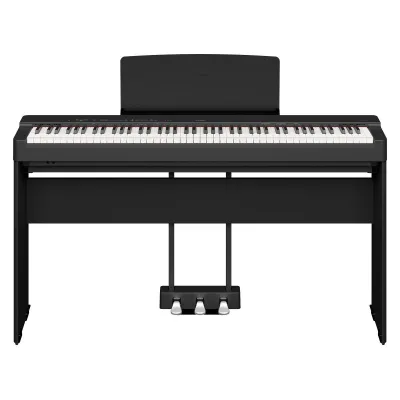
Prices are valid at publication and may change. Please refer to the product page for the latest price.
Finally, consider the physical footprint and weight of the instrument. In compact living environments, such as typical high-rise apartments or shared rooms, space is at a premium. A digital piano with a shallow depth and a lightweight chassis is much easier to position on a desk, place on a temporary stand, or store away when not in use. Portability is also a major factor if you plan to transport the keyboard to lessons, rehearsals, or social gatherings.
Assessing the Yamaha P-225 for Beginners
The Yamaha P-225 is designed with a focus on space efficiency and modern connectivity, making it a strong candidate for modern homes. Its compact chassis features a significantly reduced depth compared to older models in the same lineup, utilizing a compact graded hammer action mechanism. This slim profile allows the instrument to fit comfortably on narrow desks, compact keyboard stands, or within tight living spaces where a traditional bulky piano cabinet would be impractical.

In terms of sound, the P-225 utilizes an entry-level sound engine that aims to replicate the tonal characteristics of a grand piano. It provides a selection of acoustic piano voices alongside basic electric pianos, organs, and string sounds. These voices can be selected directly through the physical button layout on the top panel, which remains relatively clean and minimalist. The instrument also features dual headphone jacks on the front panel, allowing a student and a teacher to practice together quietly without disturbing others.
To access deeper settings, adjust advanced parameters, or select additional voices, the instrument relies heavily on companion applications. While the physical interface is straightforward for basic playing, connecting a tablet or smartphone running the manufacturer’s dedicated app is often necessary to unlock the full suite of customization options. Through the app, users can adjust touch sensitivity, configure split and layer modes, and access interactive learning tools.
Comparing the P-225 to Other Entry-Level Alternatives
When comparing the P-225 to other entry-level digital pianos in the S$700 to S$1,200 price range, several design philosophies emerge. The key action is often the most subjective point of comparison. The P-225 features a compact weighted action designed to save space, which some players find lighter or shallower than the actions found on bulkier competing models. Other brands in this tier may offer a heavier, more traditional key dip or textured key surfaces, such as synthetic ebony and ivory, which can improve grip during longer practice sessions.
Speaker placement and sound projection also vary significantly across brands. The P-225 is designed with speakers positioned to project sound both upward and downward or backward, depending on the stand configuration. Some competing models feature front-facing speakers or larger speaker cabinets that can deliver a fuller, more direct sound without requiring external amplification. If you plan to play without headphones in a larger room, comparing the wattage and orientation of the built-in speakers is crucial.
Connectivity and bundled accessories represent another area of divergence. While some entry-level packages include a basic plastic foot switch that acts as a simple on-off sustain pedal, other models in this price bracket might bundle a more substantial, realistic pedal or offer dedicated triple-pedal board compatibility. Additionally, you should compare the physical inputs and outputs, as some alternatives provide dedicated auxiliary outputs for external speakers, whereas others rely solely on headphone jacks for audio routing.
Decision Framework: Choosing the Right Model for Your Setup
To finalize your choice, evaluate how your specific environment and goals align with these different design approaches.
Choose the Yamaha P-225 if you prioritize a highly compact footprint and need an instrument that is easy to move around a small apartment. It is an excellent fit if you prefer the bright, clear tonal profile characteristic of Yamaha’s acoustic grand pianos and appreciate a streamlined interface that integrates smoothly with mobile companion apps for learning. The dual headphone jacks and slim depth make it highly suitable for quiet practice in shared living spaces.
Look at other 88-key weighted alternatives if you prefer a heavier key action with a deeper physical key dip, or if you require a more robust built-in speaker system to fill a larger room. These alternatives are also worth considering if you prefer a traditional wooden stand and a fixed triple-pedal unit right out of the box, rather than purchasing them as separate add-ons.
Consider semi-weighted or smaller options if your primary focus is synthesizer playing, music production where weighted keys are not required, or if you have strict budget limits under S$500. These lighter keyboards are also highly suitable if you travel frequently and need an instrument that can easily be carried on public transport or stored in a car boot.
Pre-Purchase Verification and Setup Checks
Before completing your purchase, it is vital to verify the exact contents of the box and your planned setup. Retailers often offer different bundles, so you must confirm whether the package includes essential accessories like the power adapter, a music rest, and a sustain pedal. In some regions, these items may be sold separately or substituted with basic third-party alternatives. Additionally, if you are importing the instrument, verify that the power adapter is compatible with local voltage standards.
If you are not purchasing a dedicated wooden furniture stand, check the compatibility of third-party stands. Ensure that any X-stand or Z-stand you choose can support the weight of an 88-key weighted keyboard and matches its depth. A stand that is too deep may protrude awkwardly, while a flimsy stand can wobble during energetic playing, affecting your technique.
Finally, verify your device connectivity requirements. If you plan to use interactive learning apps or music production software, check whether the piano requires a specific USB host cable, a USB-to-MIDI interface, or if it supports wireless Bluetooth MIDI. Confirming these specifications beforehand prevents unexpected trips to the electronics store during your initial setup.
Frequently Asked Questions (FAQ)
Can I use the Yamaha P-225 as a MIDI controller for music production?
Yes, the Yamaha P-225 can function as a MIDI controller. It features a USB-to-Host port on the rear panel, allowing you to connect it directly to a computer, tablet, or smartphone. Before connecting, check the manufacturer’s specifications to confirm if the device uses class-compliant drivers or if you need to download proprietary drivers for your specific operating system. Once connected, the weighted keys can send MIDI data to your digital audio workstation (DAW) to control virtual instruments.
Do I need to buy a separate sustain pedal for beginner digital pianos?
While most beginner digital pianos, including the P-225, include a basic sustain pedal in the box, it is often a simple plastic foot switch. These basic switches only register whether the pedal is fully pressed or fully released. If you want to practice advanced techniques like half-pedaling, you will need to verify if the keyboard’s rear panel supports a continuous or half-damper pedal input, and then purchase a compatible upgraded pedal separately.

Community discussion
Share your experience or ask a question. Comments are reviewed before publication.