
Choosing your first electronic keyboard is a pivotal decision that shapes your entire musical journey. While Yamaha, Casio, and Roland all produce exceptional instruments, the best brand for you depends entirely on your budget, space constraints, and long-term learning goals. Yamaha is highly regarded for its traditional acoustic piano samples and structured educational features, Casio excels in offering portable, feature-rich instruments at highly competitive price points, and Roland is favored for its advanced sound modeling technology and expressive key action. By understanding how these brands approach entry-level design, you can select an instrument that keeps you motivated and matches your daily practice environment.
Before making a purchase, it is essential to look past brand reputation alone and verify the specific technical features of individual models. Every manufacturer offers multiple product lines designed for different types of players, ranging from ultra-portable synth-action keyboards to heavy, fully weighted digital pianos. Evaluating your dedicated practice space, your musical interests, and your willingness to invest in accessories will help you narrow down the options. This guide breaks down the core differences between these three industry giants, outlines the key specifications to verify, and provides a practical framework to help you choose the right keyboard for your home.
Core Differences Between Yamaha, Casio, and Roland Keyboards
Yamaha has built a legacy on manufacturing world-class acoustic grand pianos, and this heritage heavily influences their electronic keyboard lineup. For beginners, Yamaha typically focuses on delivering highly accurate acoustic piano samples, often recorded directly from their flagship concert grands. Their entry-level instruments, such as the PSR and EZ series, frequently include built-in lesson suites that guide players through built-in songs step-by-step. The overall design philosophy of a Yamaha keyboard leans toward a traditional, educational experience, making it a reliable choice for students who want a straightforward transition to acoustic instruments later on.
Products mentioned in this guide
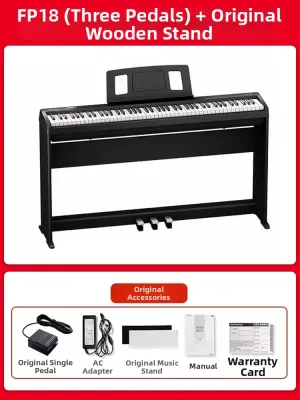
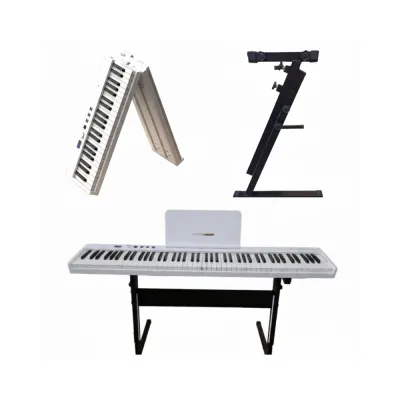
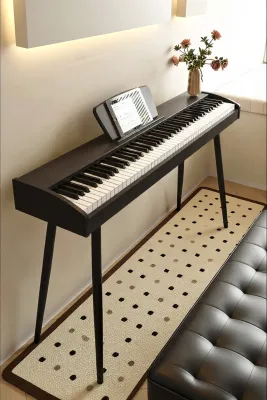

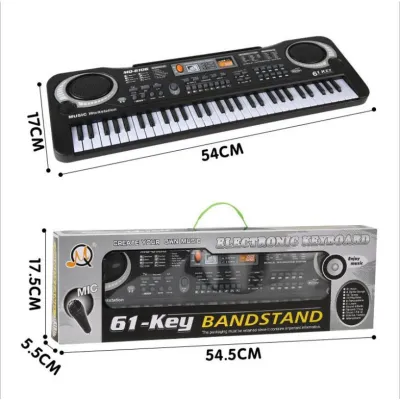
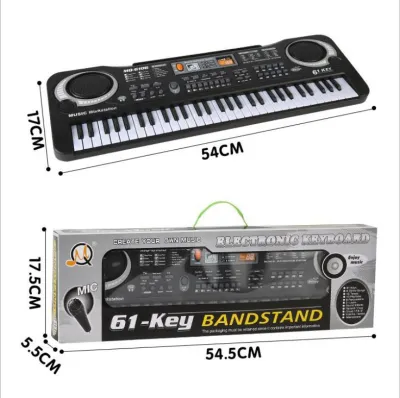
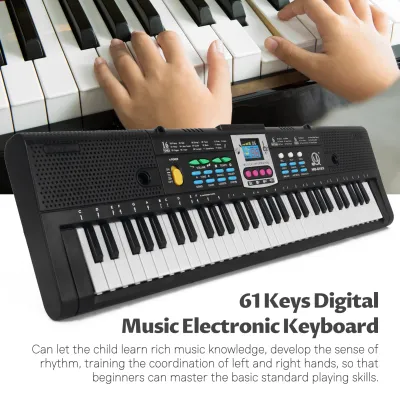
![[✅SG Ready Stock] 61 Key High Quality Music Keyboard Piano kids toys new player beginner Electric Piano](https://img.lazcdn.com/g/p/1f34b80fc1c4ffa462a06ed0ad2ca2fd.jpg_400x400q80.jpg_.webp)
Prices are valid at publication and may change. Please refer to the product page for the latest price.
Casio has spent decades refining the balance between affordability, portability, and modern functionality. Once known primarily for casual home keyboards, Casio has transformed its reputation with slim, space-saving designs like the Casiotone series and advanced digital pianos. Their beginner models often emphasize lightweight construction, versatile sound libraries with hundreds of tones, and intuitive digital interfaces. If you have limited space or need an instrument that can easily be packed away into a closet or carried to lessons, Casio typically offers the most flexible and budget-friendly solutions without sacrificing essential learning tools.
Roland approaches the beginner market from a high-performance perspective, often trickling down professional-grade technology into their entry-level models. Instead of relying solely on standard audio recordings of pianos, Roland frequently utilizes advanced sound modeling engines designed to recreate the complex physical interactions of an acoustic piano’s strings, soundboard, and cabinet. This results in a highly expressive playing experience where the tone changes dynamically based on the strength and speed of your keystrokes. Roland keyboards, such as those in the GO series, are built for players who prioritize sound depth, modern connectivity, and a highly responsive keybed from day one.
While these general brand philosophies hold true across most of their product lines, you should always verify the exact specifications of the specific model you are considering. A brand’s reputation for excellent sound modeling or ultra-portable design does not guarantee that every single model in their catalog possesses those exact traits. Always check the manufacturer’s official product specifications to confirm key details such as the action type, polyphony limit, and physical dimensions before finalizing your decision.
Key Specifications to Compare for Beginners
The physical construction of the keys is the most critical factor in how a keyboard feels and how it helps you develop proper playing technique. Beginner keyboards generally fall into three categories: synth-action, semi-weighted, and fully weighted (often called hammer action). Synth-action keys are light, springy, and offer virtually no resistance, which is fine for casual playing but does not build finger strength. Semi-weighted keys add a small amount of resistance using springs or tension, offering a comfortable middle ground. Fully weighted keys mimic the physical hammer mechanism of an acoustic piano, which is highly recommended if your primary goal is to learn classical piano technique.

Polyphony is another crucial specification that determines how many individual notes can sound at the exact same time. When you play a chord while holding down a sustain pedal, the keyboard must play and sustain every single note simultaneously. If you exceed the instrument’s polyphony limit, the oldest active notes will abruptly cut off to make room for new ones. For absolute beginners playing simple melodies, a 32-note or 64-note polyphony limit is usually sufficient. However, as you progress to more complex classical pieces or begin layering multiple instrument sounds, a 128-note polyphony limit becomes highly desirable to prevent audio clipping.
Modern electronic keyboards offer a variety of built-in learning tools and connectivity options that can significantly enhance your practice sessions. Look for instruments that feature a built-in metronome to help you develop a steady sense of rhythm, as well as onboard recording functions that let you listen back to your performances and identify areas for improvement. In terms of connectivity, a dedicated headphone jack is essential for quiet practice in shared living spaces. You should also verify the presence of a USB-to-Host port, which allows you to connect the keyboard to a computer, tablet, or smartphone to interact with interactive learning software and digital audio workstations.
To help you evaluate these features when shopping, use the following checklist to compare models side-by-side against your personal requirements:
| Specification Checklist | What to Verify on the Product Label | Why It Matters for Beginners |
|---|---|---|
| Key Action Type | Synth-action, Semi-weighted, or Fully Weighted | Affects finger strength development and transition to acoustic pianos. |
| Touch Sensitivity | On/Off or Adjustable Levels (Soft, Medium, Hard) | Allows you to play dynamically (louder or softer based on finger pressure). |
| Polyphony Limit | 32, 64, 128, or 256 notes | Prevents sustained notes from cutting off abruptly during complex passages. |
| Onboard Sounds | Number of built-in tones, rhythms, and songs | Keeps practice engaging and supports different musical genres. |
| Connectivity | USB-to-Host (MIDI), Headphone Jack, Sustain Pedal Input | Enables connection to learning apps, quiet practice, and expressive play. |
| Power Source | AC Adapter included, or Battery Power capability | Determines portability and where you can set up the instrument. |
Matching the Keyboard to Your Learning Goals
If your primary goal is to study classical piano, your equipment needs will differ significantly from someone looking to play casual pop songs. Classical piano students must prioritize realistic key action and high-quality acoustic piano samples above all else. Without fully weighted keys, you cannot develop the finger strength, hand posture, and delicate touch control required to play traditional acoustic pianos. For this pathway, look for models that emphasize hammer-action keybeds and realistic pedal response, even if it means sacrificing a wide variety of synthetic sounds or automatic accompaniment features.
For those interested in playing pop, electronic music, or performing as a solo entertainer, a keyboard with a diverse sound library and arranger features is often more beneficial. These instruments allow you to experiment with hundreds of different instrument voices, including electric pianos, organs, synthesizers, and brass. Built-in rhythm accompaniment patterns can act as a virtual backing band, helping you learn how to play in time with drums and bass. This interactive style of playing keeps practice sessions highly engaging and teaches you how to arrange music dynamically.
Your physical living environment also plays a major role in determining which keyboard is the most practical choice. In space-constrained environments, such as typical high-density apartments, a massive digital piano with a permanent wooden stand may not be feasible. Instead, look for compact, lightweight keyboards that can be easily mounted on a folding metal stand and stored away when not in use. If you plan to travel with your instrument, practice outdoors, or perform in areas without easy access to wall outlets, prioritize models that offer battery operation alongside a standard AC power adapter.
Price and Value Considerations
When planning your budget, it helps to understand what features are typically available at different price points. Entry-level keyboards under S$300 are generally lightweight, highly portable, and feature 61 synth-action keys. While excellent for young children or casual hobbyists, they often lack touch-sensitive keys and weighted actions. Moving into the S$300 to S$800 price range introduces touch sensitivity, semi-weighted or entry-level weighted keys, higher polyphony limits, and improved sound engines. Instruments priced above S$800 typically offer full 88-key weighted hammer actions, professional-grade sound modeling, and robust wooden cabinetry designed to mimic the look and feel of an upright piano.
It is important to budget for essential accessories that are frequently sold separately from the keyboard itself. Many entry-level models do not include a keyboard stand, an adjustable bench, or a high-quality sustain pedal in the box. A sturdy double-X or Z-style metal stand is crucial to prevent the keyboard from wobbling while you play, and an adjustable bench ensures you can maintain the correct ergonomic posture to avoid wrist strain. Additionally, investing in a comfortable pair of closed-back headphones will allow you to practice at any hour of the day or night without disturbing family members or neighbors.
To ensure long-term peace of mind, always purchase your keyboard from an authorized local retailer. Buying through official local channels guarantees that your instrument is covered by a valid local warranty, which is particularly important for electronic instruments with complex keybeds and internal circuitry. Local distributors can also provide reliable after-sales support, replacement parts, and repair services if any technical issues arise. Be sure to verify the warranty terms and registration process with the retailer at the time of purchase.
Final Decision Framework: Which Brand Should You Choose?
To make your final decision, evaluate your personal priorities against the unique strengths of each brand’s ecosystem. If your primary goal is traditional piano education, developing proper classical finger technique, and enjoying rich, acoustic grand piano tones, Yamaha is often the most natural fit. Their focus on educational integration and authentic acoustic sampling provides a solid foundation for formal piano lessons.
If you are working with a strict budget, have limited physical space, or require an ultra-portable instrument that you can easily transport, Casio is highly recommended. Their slim profiles, lightweight builds, and extensive sound libraries offer exceptional value for money, making them ideal for casual learners and modern apartment living.
If you prioritize advanced sound modeling, expressive touch dynamics, and a highly durable build quality that can grow with you as your skills advance, Roland is an excellent choice. Their focus on professional-grade technology in compact form factors appeals to beginners who want a highly responsive and modern playing experience.
Keep in mind that none of these brands may be suitable if you strictly require a specialized MIDI controller. Dedicated MIDI controllers do not have built-in speakers or onboard sound engines; they are designed solely to send data to a computer or external synthesizer. If you want an instrument that you can simply turn on and play instantly without connecting it to external hardware, stick to a traditional electronic keyboard or digital piano.
Before finalizing your purchase, always verify that your chosen model matches your specific software compatibility needs, fits comfortably within your designated practice space, and offers the exact key count you require for your lessons.
Frequently Asked Questions (FAQ)
Do I need an 88-key keyboard as a beginner?
You do not strictly need an 88-key keyboard to begin learning basic music theory, scales, and simple melodies. A 61-key or 76-key keyboard is often perfectly adequate for the first year or two of casual learning, and these smaller sizes are much easier to fit into compact living spaces. However, if your goal is to study classical piano or take formal graded examinations, you will eventually run out of keys on a smaller keyboard. Classical pieces frequently utilize the extreme upper and lower registers of the instrument, making a full 88-key weighted keyboard necessary for long-term progress.
Can I connect these keyboards to learning apps?
Yes, most modern electronic keyboards from Yamaha, Casio, and Roland can connect to popular interactive learning apps on tablets, smartphones, or computers. To do this, you must verify that the keyboard has a USB-to-Host port or built-in Bluetooth MIDI capabilities. You will also need the correct interface cable or adapter to connect the keyboard’s USB port to your specific device. Before purchasing, always check the compatibility requirements of both the learning software and the keyboard model to ensure they can communicate seamlessly.
Is a sustain pedal necessary for a beginner?
A sustain pedal is not immediately necessary for your very first lessons, as you will focus primarily on basic finger placement, hand posture, and reading simple sheet music. However, as you progress past the absolute beginner stage, a sustain pedal becomes essential for connecting notes smoothly and adding emotional depth to your playing. Many entry-level keyboards include a basic plastic footswitch in the box, but these can slide around easily on the floor. Upgrading to a sturdy, metal, piano-style sustain pedal with a non-slip rubber base will provide a much more realistic and comfortable playing experience.

Community discussion
Share your experience or ask a question. Comments are reviewed before publication.