
Choosing your first digital piano is a pivotal decision that shapes how you practice, how quickly you build finger strength, and how much you enjoy the learning process. While Yamaha, Casio, and Roland dominate the beginner market, each manufacturer approaches instrument design with a fundamentally different philosophy. Yamaha focuses heavily on replicating the traditional acoustic experience, Casio prioritizes compact efficiency and budget-friendly accessibility, and Roland emphasizes advanced digital sound modeling and expressive key action. Identifying the right instrument requires matching these distinct brand strengths to your personal space, budget, and musical goals.
For beginners in Singapore, digital pianos offer a highly practical alternative to acoustic pianos. The tropical humidity can cause acoustic soundboards to swell and strings to detune rapidly, requiring frequent professional maintenance. Digital instruments bypass these environmental challenges entirely while allowing for silent practice via headphones. By understanding the core differences in keyboard action, sound generation, and physical design, you can select an instrument that supports your musical development for years to come.
Core Decision Factors for Beginner Digital Pianos
When evaluating digital pianos, it is easy to get distracted by secondary features like hundreds of built-in instrument sounds, rhythm accompaniments, or complex recording suites. For a beginner, the primary focus must always be on the physical interface and the core piano sound. The quality of these two elements directly influences your ability to transition to an acoustic piano in the future and keeps you engaged during long practice sessions.
Products mentioned in this guide
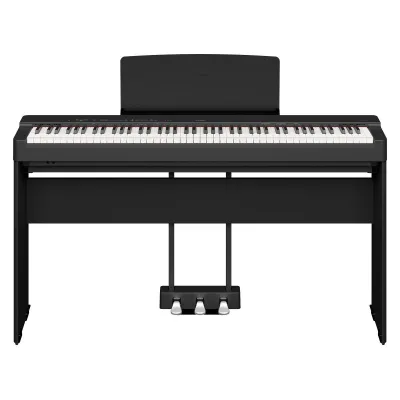
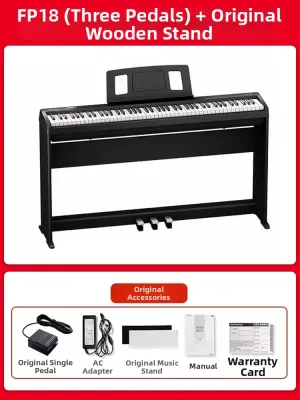
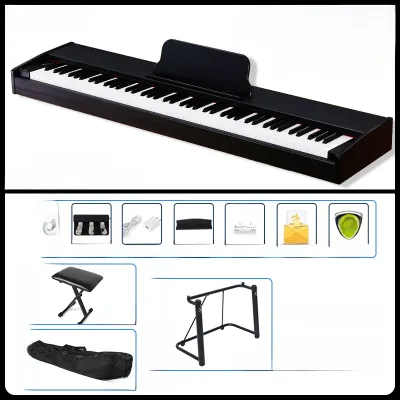
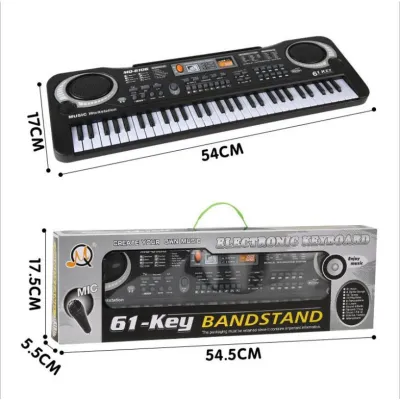
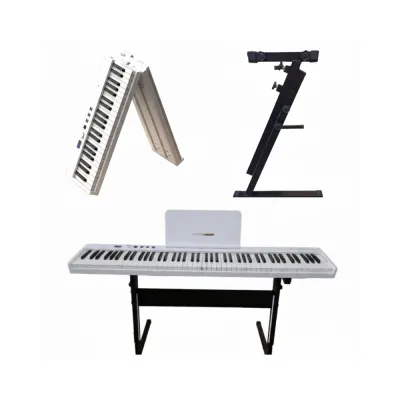
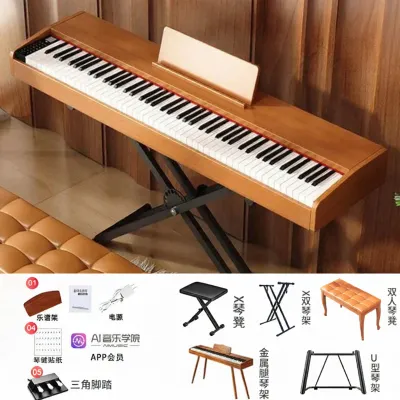
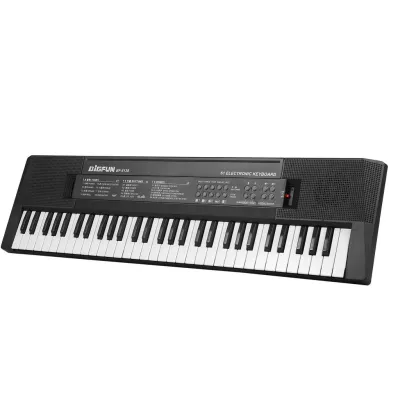
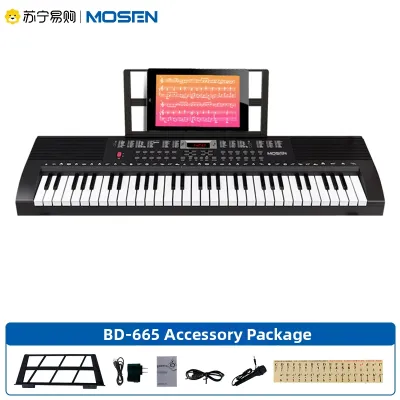
Prices are valid at publication and may change. Please refer to the product page for the latest price.
Keyboard action is the most critical factor to consider. A beginner instrument should feature fully weighted keys, which use physical hammers or counterweights rather than springs to simulate the resistance of an acoustic piano. This resistance is essential for developing finger strength, dexterity, and dynamic control. Touch sensitivity is equally important; the instrument must respond accurately to how hard or soft you strike the keys, producing a corresponding change in volume and tonal character.
Polyphony is another technical specification that directly impacts playability. Polyphony refers to the maximum number of individual notes or voices the piano can produce simultaneously. When you play a chord with the sustain pedal depressed, the notes continue to ring out; if the polyphony limit is too low, older notes will be abruptly cut off to make room for new ones. For beginners, a baseline of 64-note polyphony is acceptable, but 128-note polyphony is highly recommended to accommodate more complex classical pieces as you progress.
Connectivity options and physical design also dictate how well an instrument fits into your lifestyle. Modern digital pianos often include USB-to-Host ports or Bluetooth connectivity, allowing you to link the keyboard to learning applications on tablets or computers. Additionally, you must choose between a portable slab-style piano, which can be stored away or placed on a folding stand, and a console-style piano, which features a fixed wooden cabinet and integrated pedals. Slab-style models offer maximum flexibility for smaller living spaces, while console designs provide a more stable playing platform and a traditional aesthetic.
Brand Profiles: What Yamaha, Casio, and Roland Do Best
Every major manufacturer has developed a distinct reputation based on where they focus their engineering resources. Understanding these brand profiles helps narrow down your choices based on what you value most in an instrument.

Yamaha: Traditional Piano Feel and Comprehensive Education
Yamaha draws on over a century of acoustic piano manufacturing experience, and this heritage is clearly reflected in their digital instruments. Their primary design goal is to replicate the acoustic experience as closely as possible. Many of Yamaha’s entry-level digital pianos feature samples recorded directly from their world-renowned concert grand pianos, delivering a bright, clear, and classical tone that is instantly recognizable.
In terms of keyboard action, Yamaha’s entry-level models typically utilize their Graded Hammer Standard (GHS) or the newer Graded Hammer Compact (GHC) mechanisms. These actions are designed to feel heavier in the lower register and lighter in the higher keys, mimicking the natural graduation of an acoustic piano’s hammers. This consistent, predictable key resistance makes Yamaha instruments highly favored by traditional piano teachers who want their students to build standard classical technique.
Yamaha also excels in educational integration. Their proprietary Smart Pianist application allows users to control piano settings, select voices, and even analyze audio tracks from a smart device to display chord charts. The physical design of Yamaha’s beginner instruments tends to be robust and straightforward, prioritizing clean lines and intuitive control panels that do not distract from the act of playing.
Casio: Budget-Friendly Options and Compact Designs
Casio has successfully redefined its reputation from a maker of simple electronic toys to a serious producer of high-quality digital pianos. Their modern Privia and CDP lines are engineered specifically to address the constraints of modern urban living, making them highly popular in Singapore where space in HDB flats and apartments is often at a premium.
Casio’s standout achievement is the development of ultra-slim keyboard actions. By redesigning the internal hammer mechanism, they have managed to fit fully weighted, touch-sensitive keys into chassis that are significantly shallower and lighter than those of their competitors. This makes Casio instruments exceptionally portable and easy to position on narrow desks or temporary stands.
From a financial perspective, Casio consistently offers excellent value for money. Their entry-level models frequently provide weighted keys, decent polyphony, and essential connectivity at a lower S$ price point than comparable models from other brands. Furthermore, several of their portable models can run on battery power, offering a level of flexibility that is rare among fully weighted digital pianos.
Roland: Expressive Sound Engines and Durability
Roland takes a highly technological approach to digital piano design, focusing on expressive sound generation and premium key action even in their entry-level series. Unlike brands that rely solely on playing back static audio recordings of acoustic pianos, Roland frequently employs physical modeling technology, such as their SuperNATURAL sound engine. This technology mathematically reconstructs the complex physical interactions of an acoustic piano in real time, resulting in a highly dynamic sound that responds organically to subtle changes in your playing style.
Roland’s entry-level keyboard action, often the PHA-4 Standard, is widely praised for its realistic feel. It features an escapement mechanism that simulates the subtle “click” felt when pressing an acoustic piano key slowly, as well as synthetic ivory keytops that absorb moisture to prevent fingers from slipping during long practice sessions. This level of tactile detail is uncommon in beginner-tier instruments.
Additionally, Roland prioritizes structural durability and modern wireless connectivity. Many of their beginner models come equipped with onboard Bluetooth MIDI and Bluetooth Audio. This allows you to stream backing tracks directly through the piano’s speakers or connect wirelessly to educational apps without dealing with cluttered cables. The build quality of Roland instruments is exceptionally robust, making them a reliable long-term investment.
Feature Comparison Matrix for Beginners
To help visualize how these brands compare across key technical specifications, the following matrix outlines the typical configurations found in their entry-level, weighted-key product lines. Because specific features can vary by model, always verify the exact specifications of your chosen model before purchasing.
| Feature Category | Yamaha (Entry-Level) | Casio (Entry-Level) | Roland (Entry-Level) |
|---|---|---|---|
| Keyboard Action | Graded Hammer Standard (GHS) / Graded Hammer Compact (GHC) | Smart Scaled Hammer Action / Scaled Hammer Action II | PHA-4 Standard with Escapement and Ivory Feel |
| Sound Generation | Stereo Sampling (often CFX Grand Piano) | Multi-dimensional Morphing AiR / AHL Sound Source | SuperNATURAL Piano Modeling / Sampling |
| Polyphony Baseline | Typically 64 to 192 notes | Typically 64 to 192 notes | Typically 96 to 256 notes |
| Physical Profile | Standard depth, sturdy build | Ultra-slim, space-saving chassis | Standard depth, highly robust cabinet |
| Wireless Connectivity | Model-dependent (often requires optional adapters) | Model-dependent (often via included or optional USB dongles) | Built-in Bluetooth MIDI and Audio on most models |
| Standard Accessories | Music rest, basic footswitch, power adapter | Music rest, basic pedal, power adapter | Music rest, DP-2 pedal or sustain switch, power adapter |
How to Choose Based on Your Learning Goals
Selecting the right brand ultimately depends on matching these design philosophies to your specific learning environment, budget, and musical aspirations. There is no single correct choice, but rather a most suitable choice for your circumstances.
Consider a Yamaha digital piano if your primary goal is to follow a traditional, classical curriculum, such as the ABRM examination syllabus. The predictable, graded key resistance of Yamaha’s action closely mirrors the feel of the acoustic upright pianos commonly used in examination centers. This consistency ensures that the finger techniques you develop at home will transfer smoothly to exam rooms and recital halls. Yamaha’s straightforward interface also minimizes digital distractions, keeping your focus entirely on sheet music and proper form.
Opt for a Casio digital piano if you are working with limited physical space or are strictly managing your initial S$ investment. If you need an instrument that can be easily slid under a bed, placed in a closet when not in use, or moved between rooms, Casio’s ultra-slim designs are unmatched. They offer the most accessible entry point into the world of fully weighted keys, allowing you to begin learning without a massive upfront financial commitment or a permanent rearrangement of your living room.
Choose a Roland digital piano if you value dynamic expression, modern technology, and want an instrument that will remain relevant well into your intermediate years of playing. The PHA-4 keyboard action and SuperNATURAL sound engine provide a level of nuance that rewards expressive playing, making it ideal for students who want to explore jazz, pop, or contemporary classical music. The robust build quality and built-in Bluetooth features also make Roland a highly future-proof option for tech-savvy learners.
Before finalizing your purchase, always perform a few essential compatibility and hardware checks. If you plan to use a companion app, verify that your tablet or smartphone operating system is fully compatible with the manufacturer’s software. Check the physical connections on the keyboard to ensure they match your headphones; some models use a standard 3.5mm jack, while others require a larger 6.35mm adapter. Finally, confirm whether the retail package includes a sturdy stand and a progressive sustain pedal, or if these are accessories you will need to purchase separately to complete your practice setup.
Frequently Asked Questions (FAQ)
Do I need 88 keys to start learning?
Yes, starting with a full-size 88-key keyboard is highly recommended for anyone serious about learning the piano. While you can learn basic note layouts on a 61-key or 76-key instrument, you will quickly run out of range as you progress to elementary classical pieces or contemporary arrangements. More importantly, smaller keyboards rarely feature fully weighted key actions, which are essential for building correct finger strength and muscle memory from day one.
Should I buy a digital piano or a portable keyboard?
If your goal is to learn how to play the piano, you should choose a digital piano. Digital pianos are designed specifically to replicate the touch, weight, and sound of an acoustic piano, featuring 88 weighted keys. Portable keyboards, often called arranger keyboards, usually have unweighted, spring-loaded keys and focus on providing hundreds of different instrument sounds, backing rhythms, and synthesis features. While fun, portable keyboards do not allow you to develop the finger strength and control required for proper piano technique.
Is a built-in speaker system sufficient for home practice?
For standard home practice in a typical living room or bedroom, the built-in speaker systems on entry-level digital pianos from Yamaha, Casio, and Roland are entirely sufficient. They are designed to project sound clearly at moderate volumes. However, if you plan to perform in larger spaces, play alongside louder instruments, or if you prefer to practice late at night without disturbing others, investing in a high-quality pair of studio headphones or a small external keyboard amplifier is a highly practical upgrade.

Community discussion
Share your experience or ask a question. Comments are reviewed before publication.