
Selecting your first 88-key digital keyboard is a pivotal step in your musical journey. For beginners in Singapore, where space constraints in high-density housing and high tropical humidity make maintaining an acoustic piano challenging, a digital instrument offers a practical, reliable, and versatile alternative. However, navigating the entry-level offerings from industry giants like Yamaha, Casio, and Roland can feel overwhelming. Each manufacturer approaches instrument design with a distinct philosophy, prioritizing different aspects of touch, tone, portability, and digital connectivity.
Rather than searching for a single, universally superior brand, the key to making the right investment lies in matching a keyboard’s specific strengths to your personal learning goals, budget, and living environment. Yamaha typically appeals to those seeking a traditional, acoustic-like experience with straightforward controls. Casio focuses heavily on maximizing portability and value, offering slim profiles and accessible price points. Roland targets players who want highly expressive key action and advanced digital integration, such as Bluetooth connectivity and interactive learning apps. By understanding these core differences, you can confidently select an instrument that will support your practice for years to come.
Core Features to Evaluate in an 88-Key Keyboard
Before comparing brands, it is essential to understand the technical specifications that directly impact how a keyboard plays and sounds. The most critical element for any beginner is the key action. Acoustic pianos use a complex system of wooden keys and felt hammers to strike strings, creating a natural resistance that varies across the keyboard. To replicate this, digital keyboards offer different action types. Synth-action keys are light and springy, while semi-weighted keys offer moderate resistance. For anyone serious about learning piano technique, a fully weighted hammer action is indispensable. This mechanism simulates the physical weight of acoustic hammers, allowing you to build the necessary finger strength, control, and muscle memory required to transition to an acoustic piano.
Products mentioned in this guide
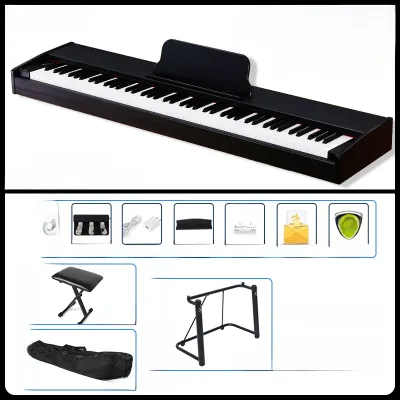
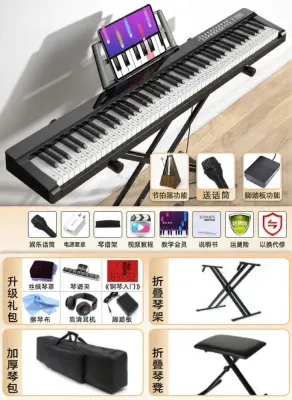
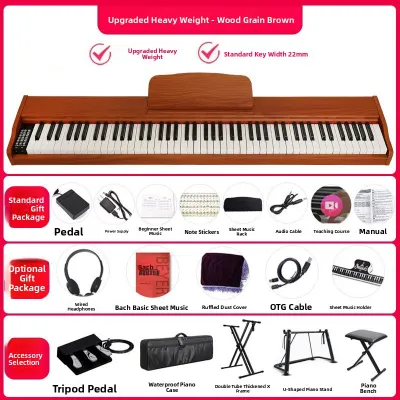
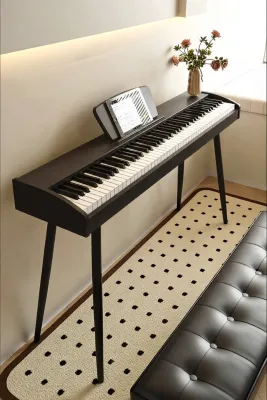
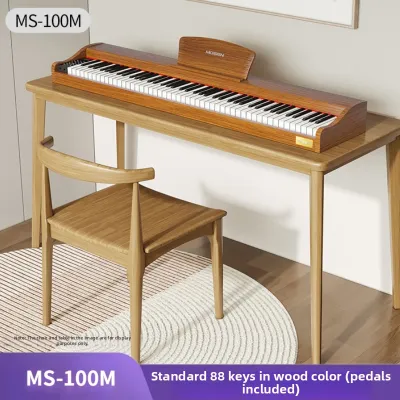
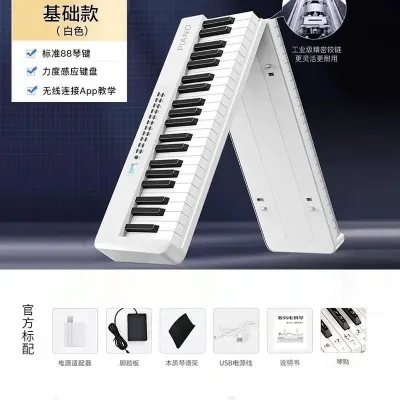
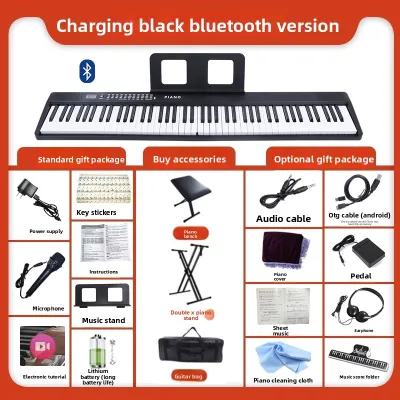
Prices are valid at publication and may change. Please refer to the product page for the latest price.
Another vital specification is polyphony, which refers to the maximum number of individual notes or voices a keyboard can produce at the exact same time. When you play complex chords or hold down the sustain pedal, notes continue to ring out. If your keyboard has low polyphony, older notes will be cut off abruptly to make room for new ones. For beginners, a minimum polyphony of 64 notes is recommended, though 128 notes or higher is ideal for ensuring smooth, uninterrupted performances as your repertoire advances.
The quality of the sound engine also determines how engaging your practice sessions will be. Manufacturers use advanced sampling techniques, recording high-end concert grand pianos at multiple volume levels to capture the subtle tonal shifts of an acoustic instrument. Some modern keyboards also incorporate physical modeling, which mathematically calculates the acoustic resonance of the piano body and strings in real time. When evaluating sound, listen for a wide dynamic range—the instrument should respond naturally whether you play softly or loudly.
Finally, consider connectivity and expansion options. Essential physical ports include a USB-to-Host or MIDI port for connecting to computers or tablets, and dedicated headphone jacks for silent practice. In shared living spaces or apartment blocks, the ability to plug in headphones allows you to practice at any hour without disturbing family members or neighbors. Some models also feature Bluetooth connectivity, allowing you to stream audio through the keyboard’s speakers or connect wirelessly to interactive learning applications.
Brand Design Philosophies: Yamaha, Casio, and Roland
Each of the three major manufacturers has spent decades refining its digital instrument technology. While they all produce excellent entry-level 88-key keyboards, their engineering priorities differ significantly. Understanding these overarching brand philosophies will help you narrow down your choices, though you should always verify the exact specifications of individual models against their official product sheets before making a final purchase.

Yamaha: Traditional Piano Feel and Sound
Yamaha has a rich heritage as a premier manufacturer of acoustic grand pianos, and this legacy heavily influences their digital keyboard design. Their entry-level 88-key instruments are engineered to replicate the traditional acoustic experience as closely as possible. Yamaha’s proprietary Graded Hammer Standard (GHS) and newer Graded Hammer Compact (GHC) actions are designed to mimic the natural weight distribution of an acoustic piano, where the keys in the lower register feel heavier to the touch than those in the higher treble register.
In terms of sound, Yamaha utilizes high-resolution stereo sampling derived directly from their world-renowned concert grand pianos. This results in a bright, clear, and highly recognizable piano tone that cuts through mixes and sounds exceptionally natural during solo classical practice. The user interfaces on Yamaha’s beginner models tend to be clean, intuitive, and uncluttered, prioritizing ease of use so that students can focus on playing rather than navigating complex digital menus. The physical build quality is robust, making them highly durable options for home practice.
Casio: Portability and Value-Focused Features
Casio has revolutionized the entry-level digital piano market by focusing on accessibility, compact design, and exceptional value for money. For beginners operating within a strict budget or dealing with limited floor space, Casio’s design philosophy is highly advantageous. Their scaled hammer action keybeds are engineered to fit into incredibly slim and lightweight chassis, making many of their 88-key models some of the most portable options available.
Despite their compact dimensions, Casio instruments do not compromise on essential learning features. They often include diverse built-in sound libraries, metronomes, recording functions, and interactive educational tools. Many of their entry-level models can also run on battery power, offering unprecedented flexibility for students who need to transport their keyboard to lessons, rehearsals, or outdoor performances. Casio’s focus on maximizing features per dollar makes them an attractive entry point for families seeking a fully weighted 88-key instrument without a heavy financial commitment.
Roland: Expressive Action and Modern Connectivity
Roland approaches digital keyboard design with a strong emphasis on technological innovation, expressive playability, and modern digital integration. Their entry-level instruments are highly regarded for their keybed quality. Roland frequently utilizes their progressive hammer action mechanisms, such as the PHA-4 Standard keyboard, which features an escapement mechanism. This design replicates the subtle “let-off” feel felt when gently pressing an acoustic piano key, providing a level of tactile feedback and dynamic control that is highly praised by intermediate and advanced players alike.
Roland’s sound generation often relies on their SuperNATURAL technology, which combines high-quality sampling with sophisticated physical modeling. This approach allows for organic, seamless tonal transitions and a highly responsive decay when notes are held. Furthermore, Roland leads the way in modern connectivity, frequently integrating Bluetooth audio and MIDI capabilities directly into their entry-level models. This allows beginners to easily connect their smartphones or tablets to use interactive learning apps, play along with backing tracks, or interface with digital audio workstations for music production.
Specification Checklist for Entry-Level Models
To help you systematically compare specific models, use the following checklist when reviewing manufacturer manuals or product pages. This structured framework highlights the key technical differences you should verify before making a purchase. Keep in mind that exact specifications, features, and bundled accessories can vary based on the specific model number and release year.
| Brand & Series | Key Action Technology | Typical Polyphony | Speaker Output | Average Weight | Essential Connectivity |
|---|---|---|---|---|---|
| Yamaha P-Series | Graded Hammer Standard (GHS) or Graded Hammer Compact (GHC) | 64 to 192 notes | 6W to 14W total | 11 kg to 12.5 kg | USB-to-Host, Headphone Out, Sustain Pedal Jack |
| Casio CDP-S & Privia | Scaled Hammer Action II or Smart Scaled Hammer Action | 64 to 192 notes | 8W to 16W total | 10.5 kg to 11.5 kg | USB Type B, Audio In, Headphone Out, Optional Bluetooth Adapter |
| Roland FP-Series | PHA-4 Standard with Escapement and Ivory Feel | 96 to 256 notes | 12W to 22W total | 12.5 kg to 14.8 kg | Bluetooth MIDI/Audio, USB-to-Host, USB-to-Device, Headphone Out |
When using this checklist, pay close attention to the speaker output if you plan to practice frequently without headphones, as higher wattage generally provides a fuller, more resonant sound in larger rooms. Additionally, verify the weight if you anticipate moving the keyboard regularly, as even a small difference can significantly impact portability.
Decision Framework: Matching the Brand to Your Goals
To make your final decision, evaluate how each brand’s strengths align with your primary learning goals, physical space, and practice habits.
Choose Yamaha if your primary goal is strict classical piano training and you plan to take formal graded examinations. Yamaha’s focus on traditional graded key weight and clear, acoustic-sampled grand piano tones provides an excellent foundation for developing proper classical technique. The straightforward interface ensures that young students are not distracted by excessive digital sound effects, keeping the focus entirely on tone production, finger posture, and sheet music reading.
Choose Casio if you have limited space in your home, require an instrument that is easy to store when not in use, or need to transport your keyboard frequently. Casio’s ultra-slim profiles and lightweight designs make them ideal for compact apartments or multi-purpose rooms. They are also the preferred choice for budget-conscious beginners who want a fully weighted 88-key action without a high initial investment, or for those who value portable features like battery operation and diverse built-in instrument sounds.
Choose Roland if you value highly expressive key action and want to leverage modern technology to accelerate your learning. The inclusion of an escapement mechanism in their entry-level keybeds offers a highly realistic touch that accommodates advanced expressive techniques. If you plan to use interactive learning apps, practice silently with Bluetooth audio backing tracks, or eventually connect your keyboard to a computer for music composition and recording, Roland’s robust digital connectivity provides a future-proof platform.
Verify first if you are still unsure about your long-term commitment to the instrument. Before purchasing, it is highly recommended to visit a local music showroom to physically test the keybeds. Even as a complete beginner, pressing the keys yourself will give you a sense of which action feels most comfortable to your hands. Additionally, always verify the exact package contents, as some retailers bundle essential accessories like a sustain pedal, music rest, keyboard stand, or headphones, which can significantly affect the overall value of your purchase.
Frequently Asked Questions (FAQ)
Do beginners really need 88 keys, or is 61 enough?
For students serious about learning traditional piano, starting with an 88-key keyboard is highly recommended. An 88-key layout matches the full physical range of an acoustic piano, which is essential for learning proper hand positioning, spatial awareness, and playing classical repertoire. Most formal piano exams and curriculum books assume the student has access to a full-sized keyboard. However, a 61-key keyboard can suffice temporarily if you are focusing strictly on basic music theory, learning synth-lead lines, or facing severe space and budget constraints. If you start with 61 keys, be prepared to upgrade to an 88-key weighted model once your music requires playing in the extreme bass or treble registers.
What is the difference between semi-weighted and fully weighted keys?
The difference lies in the mechanical design and how closely the keys simulate an acoustic piano’s touch. Semi-weighted keys use spring-loaded mechanisms with light weights attached to the keys, offering moderate resistance that is easy to press. This action is suitable for playing organ, synthesizer, or fast electronic keyboard parts, but it does not replicate the feel of an acoustic instrument. Fully weighted keys, on the other hand, use actual mechanical hammers and gravity-based resistance to mimic the physical action of an acoustic piano. Fully weighted keys are essential for beginners because they build the finger strength, control, and dynamic expression necessary to play with proper technique on any piano.

Community discussion
Share your experience or ask a question. Comments are reviewed before publication.